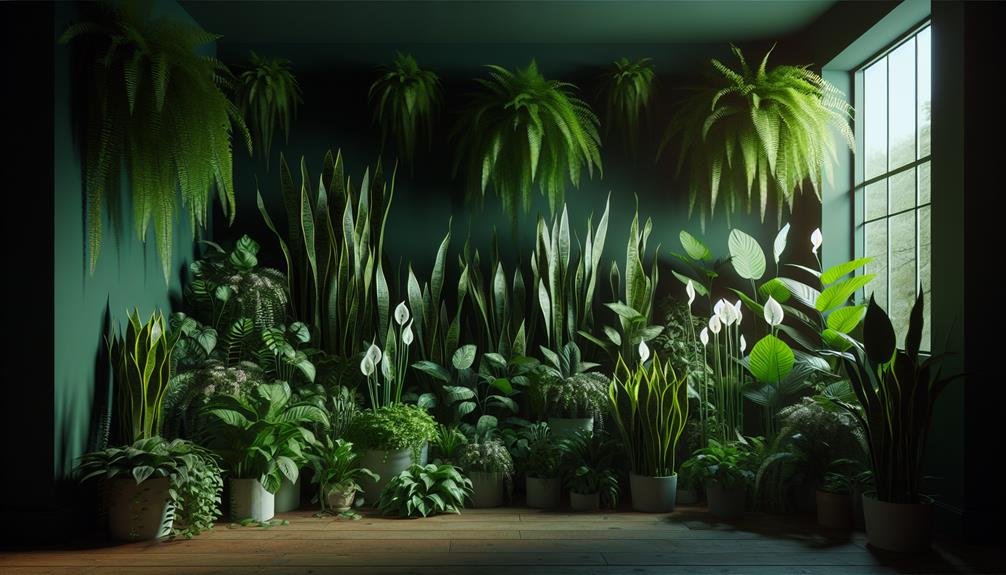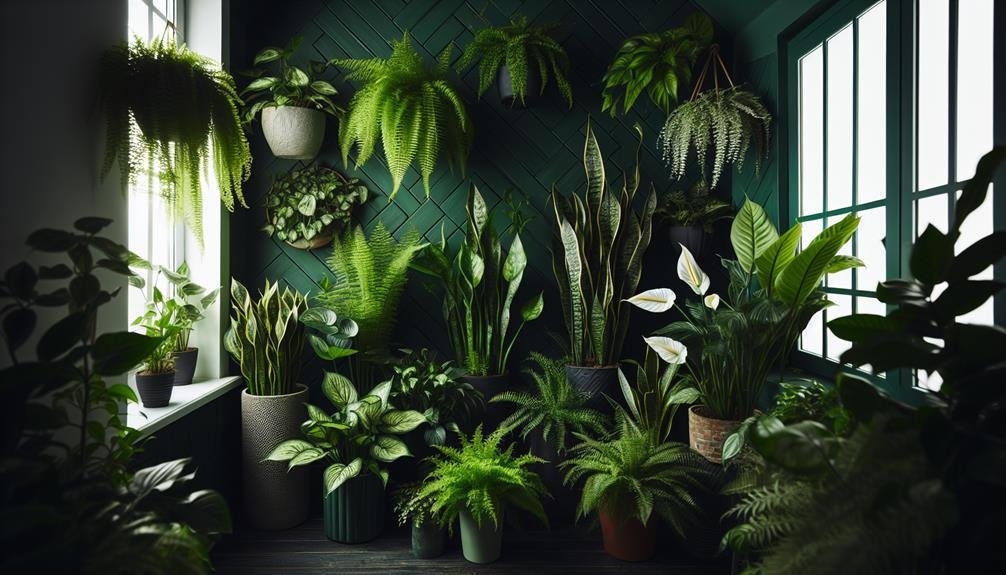
For thriving peace lilies: Place in bright, indirect light. Avoid direct sun to prevent leaf damage. Keep soil slightly moist; water when top inch is dry. Water soil directly to prevent rot; drooping leaves signal thirst. Aim for 40-60% humidity to prevent issues like brown tips. Repot every 1-2 years in well-draining soil. Guarantee drainage to avoid root rot. Watch for pests like mites; wipe leaves clean. Remove affected leaves promptly. Master these basics for healthy, vibrant peace lilies. More care insights await in the detailed guide.
Light Requirements
When caring for peace lilies, make sure they receive adequate light to thrive. Peace lilies generally prefer bright, indirect light. Placing them near a window where they can receive filtered sunlight is ideal. Make certain they aren't exposed to direct sunlight for extended periods as this can scorch their delicate leaves.
If you notice your peace lily's leaves turning yellow or brown, it may be a sign that they're getting too much light. On the other hand, if the plant isn't blooming or growing well, it might indicate that it needs more light. Observing your plant's response to its current lighting conditions can help you in finding the perfect spot for it to flourish.
Watering Schedule
To maintain the health of your peace lilies, it's important to establish a proper watering schedule. Peace lilies prefer slightly moist soil but can suffer if overwatered. A good rule of thumb is to water your peace lily when the top inch of soil feels dry to the touch. This usually translates to watering about once a week, but always check the soil moisture before watering to avoid drowning the roots.
When watering, make sure to water the soil directly rather than the leaves to prevent issues like leaf rot. Use room temperature water to avoid shocking the plant. If your peace lily's leaves start to droop, it might be a sign that it needs more water. On the other hand, yellowing leaves could indicate overwatering. Adjust your watering schedule accordingly based on how your plant reacts.
Humidity Levels
Sustain ideal humidity levels to secure the well-being of your peace lilies. Peace lilies thrive in environments with high humidity, ideally between 40% to 60%. Maintaining proper humidity levels is essential for the health of your plant, as it helps prevent issues like brown leaf tips and leaf droopiness.
To increase humidity around your peace lilies, you can use a few simple methods. Placing a humidifier nearby is an effective way to guarantee a consistent humidity level. You can also group your plants together, as they release moisture through their leaves, creating a naturally humid microclimate. Another option is to place a tray filled with water and pebbles near your plant; as the water evaporates, it increases the humidity around the plant.
Regularly misting your peace lilies can also help boost humidity, but be cautious not to overdo it, as too much water on the leaves can lead to fungal diseases. By paying attention to the humidity levels and implementing these strategies, you can provide your peace lilies with an environment where they can flourish and thrive.
Potting and Repotting
Maintain the health of your peace lilies by understanding the importance of proper potting and repotting practices. When it comes to potting your peace lily, select a pot that's only slightly larger than the current one to prevent waterlogging. Make sure there are drainage holes at the bottom of the pot to avoid root rot. Use a well-draining potting mix rich in peat moss and perlite to provide adequate aeration for the roots.
Repotting your peace lily is necessary when the roots outgrow the current pot, usually every 1-2 years. Signs that it's time to repot include roots growing out of the drainage holes or the plant becoming root-bound. Before repotting, gently loosen the roots and remove any dead or rotting ones. Place the peace lily in the new pot, add fresh soil around it, and water thoroughly. Remember to keep the plant in a shaded area for a few days after repotting to reduce stress.

Following these potting and repotting tips will help your peace lilies thrive and continue to brighten up your space.
Common Pests and Diseases
Combat common pests and diseases that may affect your peace lilies by staying vigilant and implementing preventive measures. Keep an eye out for spider mites, aphids, and mealybugs, which are common pests that can infest your plants. If you notice any of these critters, gently wipe the leaves with a damp cloth to remove them. For more stubborn infestations, consider using insecticidal soap or neem oil as natural remedies to safeguard your peace lilies.
Additionally, watch out for common diseases like root rot and leaf spot. To prevent root rot, make sure that your peace lily isn't sitting in waterlogged soil by allowing proper drainage. If you spot leaf spot, remove the affected leaves to prevent it from spreading further.
Regularly inspecting your peace lilies for pests and diseases will help you catch any issues early on, safeguarding the health and essentiality of your plants. By taking proactive measures and addressing problems promptly, you can enjoy beautiful and thriving peace lilies in your home.
Frequently Asked Questions
Can Peace Lilies Be Placed Near Radiators or Heating Vents?
Placing peace lilies near radiators or heating vents isn't ideal. These plants prefer consistent, moderate temperatures and high humidity. Heat sources like radiators can cause the air around the plant to become too dry, leading to stress and potential damage.
It's best to keep your peace lily in a location with stable temperatures and away from direct heat sources to guarantee its health and well-being.
Are Peace Lilies Safe for Pets to Be Around?
Peace lilies aren't safe for pets. Their leaves and flowers contain calcium oxalate crystals, causing irritation if ingested. Symptoms include drooling, vomiting, and difficulty swallowing. Keep peace lilies out of reach of pets or opt for pet-friendly plants.
If a pet ingests any part of a peace lily, contact a veterinarian immediately. It's vital to prioritize your pet's safety and well-being by choosing plants that won't harm them.
How Often Should I Fertilize My Peace Lily?
To keep your peace lily healthy, fertilize it every 6 to 8 weeks during the growing season. Use a balanced liquid fertilizer diluted to half strength.
Over-fertilizing can harm the plant, so it's better to err on the side of caution. Once the growing season ends, you can stop fertilizing until the next growing period.
This routine will provide your peace lily with the nutrients it needs without overwhelming it.
Can Peace Lilies Thrive in Low Light Conditions?
Peace lilies can thrive in low light conditions, making them versatile indoor plants. They're known for their ability to survive in areas with minimal sunlight.
While they prefer bright, indirect light, they can still grow and bloom in low light settings.
Peace lilies are a great choice for spaces that don't receive a lot of natural light, as they can adapt well to such environments and still flourish.
Do Peace Lilies Require Any Special Pruning or Grooming?
To keep your peace lilies in top shape, regular pruning and grooming are essential. Trimming off yellow or withered leaves helps the plant focus its energy on healthier growth. You can also remove spent flowers to encourage new blooms.
Gently wiping the leaves with a damp cloth keeps them clean and allows for better photosynthesis. Remember, a little grooming goes a long way in promoting the overall health and beauty of your peace lilies.
Conclusion
To sum up, taking good care of your peace lilies involves providing them with the right amount of light, water, humidity, and ensuring proper potting and repotting. By following these care tips, you can help your peace lilies thrive and stay healthy.
Remember to keep an eye out for common pests and diseases that may affect your plant, and address any issues promptly. With the right care, your peace lilies will continue to bring beauty and tranquility to your space.