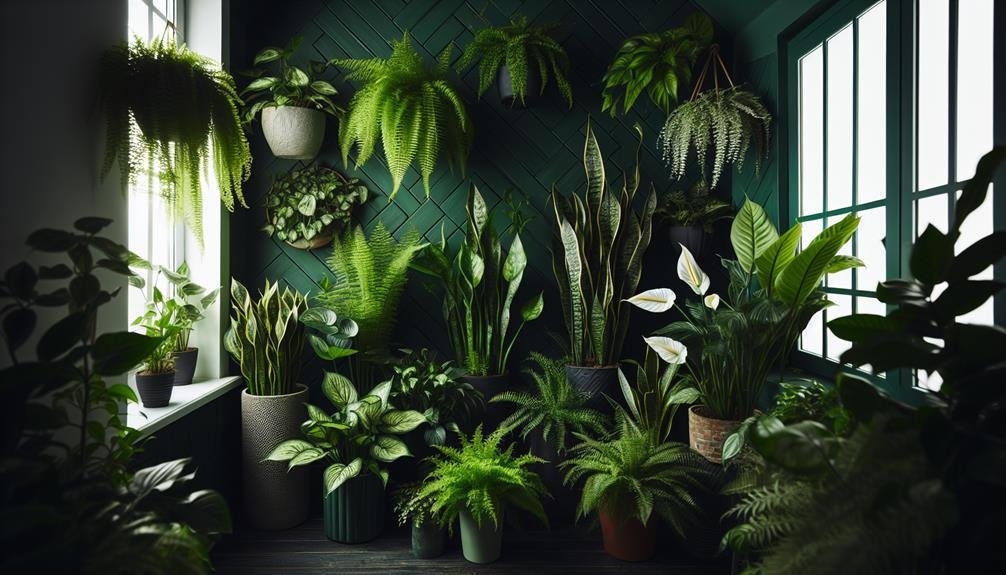
To cultivate luxuriant ferns successfully, select varieties based on light and moisture requirements. Sustain consistent soil moisture; water when the top inch is dry. Provide bright, indirect light, shielding from direct sun. Maintain humidity levels of 50-80% with misting or a humidifier. Fertilize with balanced food diluted every 2-4 weeks during growing seasons. Repot in a larger container when roots outgrow, using well-draining soil. Check for pests like spider mites and diseases; clean infected areas promptly. Master these basics for flourishing ferns. Your journey to vibrant ferns commences with these essential steps.
Choosing the Right Fern Variety
When selecting a fern variety, consider factors such as light exposure and moisture levels. Different fern species have varying light requirements, with some preferring bright indirect light while others thrive in low light conditions. Assess the lighting conditions in your home or garden to match them with the fern's needs for best growth.
Moisture levels are important for ferns as they generally prefer humid environments. Make sure the soil remains consistently moist but not waterlogged to prevent root rot. Regularly misting the fern's leaves can also help maintain the necessary humidity levels for healthy growth.
Consider the size of the space where you intend to place the fern. Some varieties grow larger and may require more room to spread out, while others stay more compact. Choose a fern variety that suits the available space and complements the aesthetic you desire.
Understanding Fern Watering Needs
To guarantee healthy growth and vibrant foliage, it's crucial to grasp the specific watering needs of your fern. Ferns generally prefer consistently moist soil but don't like to sit in water. Water your fern when the top inch of the soil feels dry to the touch.
Make sure that excess water can drain freely from the pot to prevent root rot. When watering, do so thoroughly, allowing the water to soak through the soil completely. In warmer months, your fern may require more frequent watering to combat evaporation. However, during the winter when growth slows, reduce the frequency of watering to prevent overwatering.
Providing Adequate Light for Ferns
Guarantee your fern thrives by understanding the importance of providing adequate light. Ferns generally prefer bright, indirect light. Placing your fern near a window with sheer curtains or in a room with filtered sunlight can be ideal.
Direct sunlight can scorch the delicate fronds, so it's essential to shield them from harsh rays. If natural light is limited in your space, consider supplementing with artificial light. LED grow lights are a great option for providing the right spectrum of light for ferns to flourish.
Humidity: A Key Factor for Fern Growth
Maintaining adequate humidity levels is crucial for the healthy growth of ferns. Ferns thrive in environments with high humidity because they naturally grow in damp, shaded areas like forests. To guarantee your ferns flourish, aim to keep the humidity levels around 50-80%.
You can boost humidity by misting your ferns regularly with water, placing a humidifier nearby, or creating a pebble tray by filling a shallow tray with water and placing it under your fern's pot. Another method is grouping your ferns together, as they release moisture through their leaves, creating a microclimate of increased humidity.

Remember to avoid placing your ferns near air vents or drafts, as these can dry out the air and harm your plants. By maintaining proper humidity levels, you'll provide your ferns with the moisture they need to thrive and grow lush, vibrant fronds.
Fertilizing Ferns for Optimal Health
Creating an ideal environment for your ferns involves not just ensuring proper humidity but also providing them with the essential nutrients they need through fertilization. Fertilizing your ferns is vital for their best health and growth. To keep your ferns thriving, consider using a balanced liquid fertilizer diluted to half strength. This type of fertilizer provides the necessary nutrients without overwhelming your ferns.
When fertilizing your ferns, aim to feed them every 2-4 weeks during the growing season, typically from spring to early fall. It's important not to over-fertilize, as this can lead to nutrient build-up in the soil, harming your ferns. Remember to water your ferns before fertilizing to prevent root burn.
Additionally, consider using a slow-release fertilizer for a more gradual nutrient release over time. Always follow the instructions on the fertilizer packaging, and adjust the frequency of fertilization based on your ferns' specific needs. With proper fertilization, your ferns will reward you with lush, vibrant growth.
Repotting Ferns When Necessary
Consider repotting your ferns when their roots start to outgrow their current container, ensuring they've ample space to continue thriving. When you notice the roots circling the pot's bottom or poking out from the drainage holes, it's time to give your fern a new home.
Choose a slightly larger pot with good drainage to prevent waterlogging. Before repotting, gently loosen the roots and remove any dead or decaying matter. Fill the new pot with fresh, well-draining potting mix, creating a hole in the center for the fern.
Place the fern in the hole, ensuring the roots are spread out, and cover them with soil. Water thoroughly and place the fern in a location with appropriate light levels. Repotting every 1-2 years will prevent the fern from becoming root-bound and promote healthy growth.
Managing Common Fern Pests and Diseases
To maintain the health of your ferns, regularly examine them for signs of common pests and diseases that may impact their growth and well-being. Pests like spider mites, aphids, and mealybugs can infest ferns, causing harm to their foliage.
If you observe any tiny webs, small insects, or white cottony masses on your ferns, take action promptly. You can gently wash the leaves with a mixture of water and mild soap to eliminate these pests.
Additionally, keep an eye out for diseases such as leaf spot or root rot. Leaf spot manifests as dark spots on the leaves, while root rot causes the roots to become mushy and discolored.
To prevent these diseases, avoid overwatering your ferns and ensure they've good air circulation. If you suspect your ferns are affected, remove and dispose of any infected parts to prevent the spread.
Frequently Asked Questions
Can Ferns Be Grown Outside in Cold Climates, or Are They Strictly Indoor Plants?
Ferns can be grown outside in cold climates. Some fern varieties are hardy and can thrive in cooler temperatures. It's important to choose the right type of fern for your specific climate conditions.
Consider factors like sunlight exposure, soil quality, and watering needs when planting ferns outdoors. With proper care and attention to their requirements, you can successfully grow lush ferns in colder regions, adding a touch of greenery to your outdoor space.
Do Ferns Require a Specific Type of Soil or Can They Thrive in Regular Potting Soil?
Ferns generally thrive in a specific type of soil that's well-draining and rich in organic matter. While they can survive in regular potting soil, they do best in a mix designed for ferns.
This specialized soil retains moisture without becoming waterlogged, providing the ideal growing conditions for your ferns to flourish. Choosing the right soil will help guarantee your ferns receive the nutrients and environment they need to thrive and grow lush and healthy.
Are There Any Fern Varieties That Are Particularly Low-Maintenance for Beginners?
Some fern varieties stand out for being low-maintenance, ideal for beginners. Look into the Boston fern or the Bird's Nest fern for easier care. These types generally adapt well to different conditions and require less attention compared to other fern varieties.
How Often Should Ferns Be Pruned or Trimmed to Maintain Their Lush Appearance?
To maintain the lush appearance of your ferns, you should prune or trim them regularly. It's recommended to trim your ferns every few months, focusing on removing any dead or yellowing fronds. This will help promote new growth and keep your ferns looking healthy and vibrant.
Remember to always use clean, sharp tools when pruning to prevent damage to the plant. Regular maintenance will guarantee your ferns stay in top condition throughout the year.
Can Ferns Be Propagated From Cuttings, and if So, What Is the Best Method to Do So?
To propagate ferns from cuttings, start by selecting a healthy frond and cutting it close to the base. Remove lower leaves to expose a node where roots can form. Plant the cutting in a mix of peat moss and perlite, ensuring it stays moist but not waterlogged.
Keep the cutting in a warm, humid environment with indirect light. In a few weeks, roots should develop, indicating successful propagation.
Conclusion
To sum up, cultivating lush ferns demands attention to detail and proper care. By selecting the right variety, understanding watering needs, providing sufficient light, maintaining humidity levels, fertilizing appropriately, repotting when necessary, and managing pests and diseases, you can guarantee the health and vitality of your ferns.
With these tips in mind, you can create a thriving environment for your ferns to flourish and enhance the beauty of your indoor space.