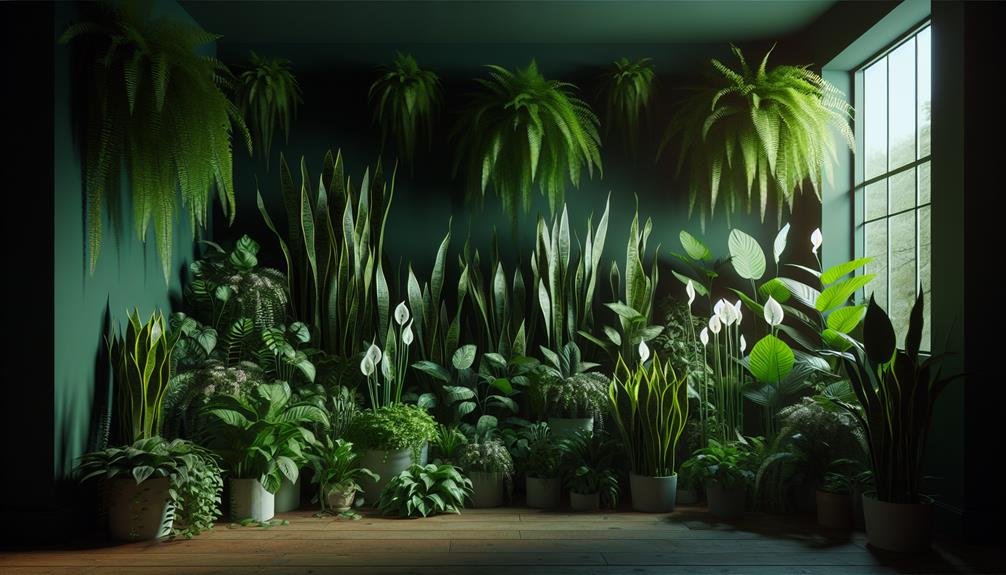
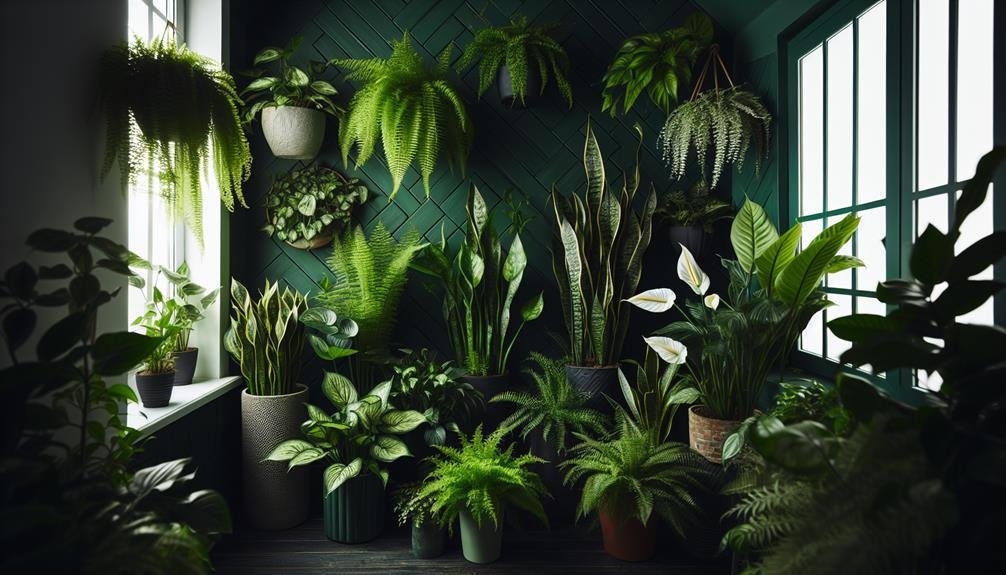
Guarantee your home with an indoor plant oasis. Choose low-maintenance plants like spider plants. Place them where they receive suitable light. Water as needed, avoiding overflows. Sustain humidity levels for growth. Utilize well-draining pots and proper sunlight exposure. Water consistently, fertilize sparingly, and avoid overwatering. Monitor for pests and diseases. Secure your oasis thrives; opt for plants wisely, maintain them diligently, and create a serene space with greenery.
Selecting the Right Plants
When creating your indoor plant oasis, selecting the right plants is crucial for their growth and overall aesthetic appeal. You want to choose plants that not only thrive indoors but also complement your space. Consider the lighting conditions in your home to make sure you pick plants that will flourish in those specific areas. Some popular low-light options include pothos, snake plants, and peace lilies, while succulents and cacti are great for sunny spots.
Another factor to keep in mind is the care requirements of the plants. If you have a busy schedule, opt for low-maintenance plants like spider plants or ZZ plants that don't need frequent watering. On the other hand, if you enjoy tending to your plants regularly, consider more high-maintenance options such as orchids or fiddle leaf figs.
Lastly, think about the size of the plants and how they'll fit into your space. Choose a variety of plant sizes to create visual interest and add depth to your indoor oasis. By selecting the right plants for your indoor garden, you can create a lush and vibrant environment that brings joy and tranquility to your home.
Choosing the Ideal Location
Consider the lighting conditions in your home when selecting the ideal location for your indoor plants to thrive. Different plants have varying light requirements, so it's crucial to match them with suitable spots in your home. Plants needing direct sunlight should be placed near south or west-facing windows, while those preferring indirect light can flourish a bit further away from windows or in rooms with filtered light. Be aware of any shadows cast by neighboring buildings or trees that might impact the light levels in your chosen spot.
Furthermore, take into account factors like temperature and humidity. Most indoor plants prefer temperatures between 60-75°F (15-24°C) and moderate humidity levels. Avoid placing plants near heating or cooling vents, as significant temperature fluctuations can stress them. Bathrooms with their higher humidity levels can be ideal for tropical plants, while drafty areas should be avoided.
Providing Adequate Light
To guarantee your indoor plants thrive, it's essential to provide them with sufficient light suited to their specific needs. Different plants require varying levels of light intensity. For instance, high-light plants like succulents need direct sunlight, while low-light plants such as snake plants can thrive in indirect light. Place your plants near windows to make sure they receive the appropriate amount of light.
East-facing windows provide gentle morning light, suitable for many plants, while south-facing windows offer bright, direct sunlight ideal for sun-loving plants. If natural light is limited in your space, consider supplementing with artificial grow lights, especially during darker months. LED grow lights are energy-efficient and emit light suitable for plant growth.
Be mindful of not placing plants too close to windows during extreme temperatures to avoid damage. By understanding your plants' light requirements and providing adequate light, you set the foundation for a flourishing indoor plant oasis.
Establishing a Watering Routine
Developing a consistent watering schedule is important for preserving the health and vitality of your indoor plants. Different plants have varying water needs, so it's crucial to understand the requirements of each type you have in your oasis. Overwatering can lead to root rot, while underwatering can cause wilting and stunted growth. Observing your plants regularly will help you determine when they need watering.

When establishing a watering routine, consider factors like the plant's size, type, and the pot it's in. Smaller pots dry out faster than larger ones, so they may need more frequent watering. Assess the moisture level of the soil by sticking your finger in about an inch deep—water if it feels dry to the touch.
Ensuring Proper Drainage
To prevent waterlogged soil and potential issues like root rot, ensuring proper drainage for your indoor plants is key. When selecting pots for your plants, opt for containers with drainage holes at the bottom. These holes allow excess water to escape, preventing it from pooling at the roots. You can also place a layer of rocks or pebbles at the bottom of the pot before adding soil to enhance drainage further. This simple step promotes airflow and prevents water from stagnating around the roots.
Additionally, using a well-draining potting mix is essential for maintaining proper moisture levels in the soil. Look for mixes specifically designed for indoor plants, as they provide the right balance of moisture retention and drainage. Overwatering is a common issue that can lead to root rot, so be mindful of how much water your plants actually need. By ensuring proper drainage through pots, soil, and watering practices, you can create a healthy environment for your indoor plant oasis to thrive.
Fertilizing Your Plants
For optimal growth and health of your indoor plants, it's important to provide them with the right nutrients through fertilization. Fertilizing your plants helps guarantee they've access to essential minerals and vitamins that may be lacking in the soil. There are various types of fertilizers available, such as liquid, granular, and organic options, each with its own benefits.
When selecting a fertilizer, consider the specific needs of your plants. Some plants may require a higher concentration of certain nutrients, while others may need a more balanced fertilizer. It's crucial to follow the instructions on the fertilizer package to prevent over-fertilization, which can harm your plants.
Typically, indoor plants should be fertilized every 2-4 weeks during their growing season, which is usually in the spring and summer months. During the fall and winter, when plants are dormant, fertilizing can be reduced or stopped altogether. Remember, a well-fertilized plant is more likely to thrive and reward you with lush foliage and vibrant blooms.
Monitoring Humidity Levels
Maintain ideal growth for your indoor plant oasis by regularly monitoring humidity levels. Humidity plays an essential role in the health and development of your plants. Most indoor plants thrive in environments with humidity levels between 40% to 60%. To monitor the humidity in your indoor oasis, you can use a hygrometer, a simple tool that measures the moisture content in the air.
Plants that require higher humidity levels can benefit from methods like misting their leaves with water, using a humidifier, or placing a tray of water near the plants to increase moisture in the air. On the other hand, if the humidity levels are too high, establish proper ventilation to prevent issues like mold and mildew.
Regularly check the humidity levels in different areas of your indoor space, as levels can vary. By keeping a close eye on humidity and making adjustments as needed, you can create an ideal environment for your indoor plants to flourish and thrive.
Troubleshooting Common Issues
Regularly monitoring humidity levels in your indoor plant oasis can help you troubleshoot common issues and guarantee your plants remain healthy and vibrant.
If you notice brown tips on your plant's leaves, it could be due to low humidity levels. Consider placing a humidifier near your plants or using a pebble tray to increase moisture in the air.
Yellowing leaves might indicate overwatering or poor drainage. Confirm your pots have drainage holes and adjust your watering schedule accordingly.
If your plants aren't flowering or growing as expected, they might need more sunlight. Move them to a brighter spot, but be cautious of direct sunlight, which can scorch the leaves.
Pests like spider mites and aphids can also be a common issue in indoor plant oases. Regularly inspect your plants for any signs of infestation and treat them promptly with insecticidal soap if needed.
Frequently Asked Questions
Can Indoor Plants Help Improve Air Quality in the Home?
Indoor plants can indeed help improve air quality in your home. They absorb carbon dioxide and release oxygen through photosynthesis, effectively purifying the air.
Additionally, plants can remove toxins like formaldehyde and benzene, making the air healthier to breathe.
What Are Some Low-Maintenance Indoor Plants for Beginners?
For beginners, consider low-maintenance indoor plants like pothos, spider plants, or snake plants. These plants thrive with minimal attention and are perfect for those new to indoor gardening.
Pothos are resilient and add a pop of green to any space. Spider plants are known for air-purifying qualities and are easy to care for. Snake plants are hardy and can survive with infrequent watering.
Start with these to kickstart your indoor plant oasis!
How Can I Prevent Pests From Infesting My Indoor Plants?
To prevent pests from infesting your indoor plants, start by regularly inspecting your plants for any signs of pests like webs, holes, or sticky residue. Keep your plants clean and remove any dead leaves or debris that can attract pests.
Consider using natural pest deterrents like neem oil or insecticidal soap. Quarantine new plants before introducing them to your indoor oasis to prevent spreading pests.
Are There Any Indoor Plants That Are Safe for Pets?
When it comes to indoor plants safe for pets, some popular options include spider plants, Boston ferns, and African violets. These plants are non-toxic to cats and dogs, making them a great choice for pet-friendly homes.
Remember to still keep an eye on your pets around plants and monitor for any signs of nibbling. Creating a safe environment for your furry friends and enjoying the benefits of indoor plants can go hand in hand.
How Often Should Indoor Plants Be Repotted for Optimal Growth?
To keep your indoor plants thriving, aim to repot them every 1-2 years, or when you notice roots becoming root-bound. This allows for fresh soil and more room for growth. Signs of needing repotting include roots growing through drainage holes or soil drying out quickly.
Gently remove the plant from its current pot, trim any dead roots, and place it in a slightly larger container with fresh soil. Your plants will thank you with lush growth!
Conclusion
To summarize, establishing an indoor plant oasis necessitates meticulous selection of plants, appropriate lighting, watering regimen, drainage, fertilization, and humidity monitoring. By adhering to these steps, you can nurture a flourishing indoor garden that enhances the beauty and serenity of your space.
Remember to troubleshoot any common issues that may arise to guarantee the health and growth of your plants. With dedication and attention to detail, you can relish a lush and vibrant indoor plant oasis in your home.