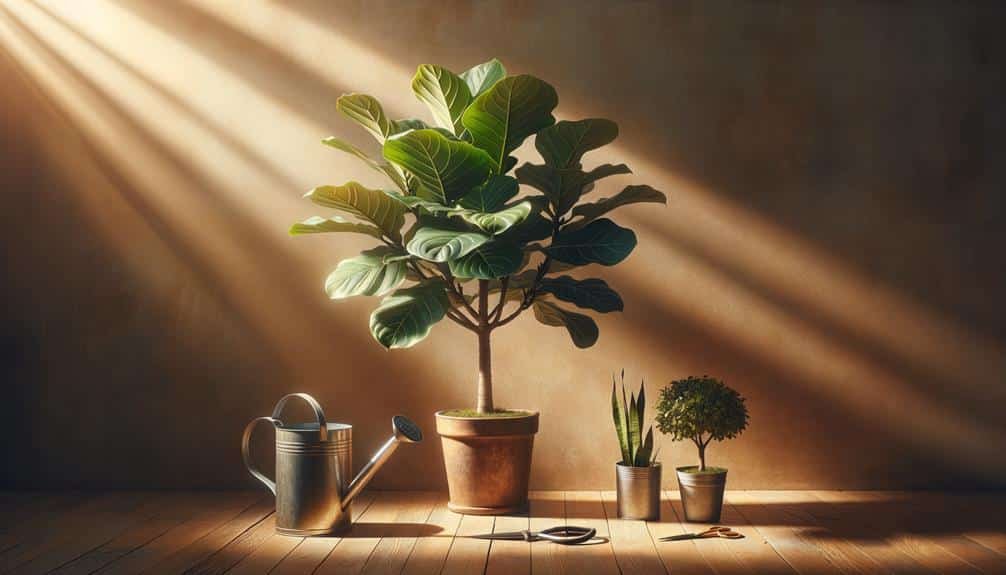
To cultivate thriving fiddle leaf fig plants, select vibrant ones without discoloration. Position close to a window for indirect light. Utilize well-draining soil mix, rich in nutrients, and a pot with drainage holes. Water when soil is dry and adjust as seasons change. Maintain moderate to high humidity and provide indirect sunlight. Address yellowing leaves, dryness, or pests promptly. A moist cloth can eliminate mites. Dust leaves for efficient photosynthesis. Guarantee proper care and attention for peak growth. Master the art of fiddle leaf fig care to nurture thriving plants. Enhance your plant care skills for flourishing fiddle leaf figs.
Plant Selection and Placement
When choosing a fiddle leaf fig plant for your home, prioritize selecting a specimen that displays vibrant green leaves and shows no signs of discoloration or wilting. These vibrant leaves indicate a healthy plant that will thrive in your care. Look for full, lush foliage that's evenly distributed around the plant. Avoid any leaves that appear yellowing, brown, or droopy, as these can be signs of stress or poor health.
Once you've found a healthy plant, consider where to place it in your home. Fiddle leaf figs love bright, indirect light, so aim to position your plant near a window where it can receive plenty of sunshine without direct exposure. Keep in mind that these plants don't appreciate sudden changes in light or temperature, so choose a spot where it can enjoy consistent conditions. By selecting a healthy plant and finding the perfect spot for it to thrive, you'll be well on your way to growing a beautiful fiddle leaf fig in your home.
Soil and Potting Recommendations
For ideal growth of your fiddle leaf fig plant, choose a well-draining potting mix rich in nutrients. Look for a mix specifically designed for indoor plants, ensuring good aeration for the roots. A blend of peat moss, perlite, and pine bark works well.
When potting your fiddle leaf fig, pick a container that's 2 inches larger in diameter than the current root ball. This allows room for growth without drowning the roots in excess water. The pot should have drainage holes to prevent waterlogging, essential for the health of your plant.
Remember, fiddle leaf figs prefer slightly acidic soil, so check the pH levels of your mix. Additionally, consider repotting your plant every 1-2 years, renewing the soil and providing new nutrients.
Watering and Humidity Needs
To guarantee the health and growth of your fiddle leaf fig plant, it's important to understand its watering and humidity needs. Fiddle leaf figs prefer evenly moist soil, so water your plant when the top inch of the soil feels dry to the touch. Make sure that excess water can drain from the pot to prevent root rot, as these plants are sensitive to overwatering. During the growing season, typically spring and summer, you may need to water more frequently, while in the dormant winter months, you can reduce the frequency.
Maintaining adequate humidity levels is also vital for your fiddle leaf fig's well-being. These plants thrive in moderate to high humidity environments, so consider using a humidifier or placing a tray of water near your plant to increase moisture in the air. Mist the leaves occasionally or gently wipe them with a damp cloth to prevent dust buildup and enhance humidity absorption.
Lighting Requirements
Understanding the lighting needs is essential for the best growth of your fiddle leaf fig plant. Fiddle leaf figs thrive in bright, indirect sunlight. Place your plant near a window where it can receive plenty of natural light, but avoid direct sunlight, which can scorch its leaves.
If your fiddle leaf fig isn't getting enough light, you may notice its leaves turning yellow and dropping off. On the other hand, too much light can cause its leaves to become crispy and brown. To make sure your plant gets adequate light, rotate it occasionally so all sides receive equal exposure. Consider using sheer curtains or blinds to filter the light if it's too intense.

Troubleshooting Common Issues
To address any issues with your fiddle leaf fig plant's growth, it's important to troubleshoot common problems that may arise.
Yellowing leaves could indicate overwatering, so check the soil moisture and adjust your watering schedule accordingly.
If the leaves are dropping or turning brown, it might be due to insufficient watering, so make sure your plant is receiving adequate water.
Pests like spider mites can be a nuisance; gently wipe the leaves with a damp cloth to remove them and consider using neem oil as a natural remedy.
If your fiddle leaf fig isn't growing as expected, it might need more sunlight or a boost of nutrients. Consider moving it to a brighter spot and fertilizing it lightly during the growing season.
Remember to dust the leaves occasionally to allow for proper photosynthesis.
Frequently Asked Questions
Can Fiddle Leaf Fig Plants Be Propagated From Cuttings?
Yes, fiddle leaf fig plants can indeed be propagated from cuttings. This method involves taking a healthy stem cutting and placing it in water or soil to encourage root growth.
It's a popular way to create new plants and expand your collection. By following proper techniques and providing the right conditions, you can successfully propagate your fiddle leaf fig plant from cuttings.
It's a rewarding process that allows you to share the beauty of these plants with others.
How Often Should Fiddle Leaf Fig Plants Be Fertilized?
To keep your fiddle leaf fig plants thriving, fertilize them every 4-6 weeks during the growing season, typically spring and summer. Choose a balanced liquid fertilizer specifically formulated for indoor plants.
Dilute it to half the recommended strength to avoid overfeeding. Always water your plant before fertilizing to prevent root burn. Regular fertilization will provide essential nutrients for healthy growth and vibrant foliage.
Are Fiddle Leaf Fig Plants Toxic to Pets?
Fiddle leaf fig plants can be toxic to pets if ingested. The sap contains compounds that may cause gastrointestinal distress like vomiting or diarrhea in cats and dogs.
It's important to keep these plants out of reach of your furry friends to prevent accidental ingestion.
If you suspect your pet has consumed any part of the fiddle leaf fig, contact your veterinarian immediately for guidance on how to proceed.
It's better to be safe than sorry!
What Are Some Creative Ways to Display Fiddle Leaf Fig Plants in the Home?
To showcase your fiddle leaf fig plants creatively in your home, consider using fashionable plant stands, ornamental pots that complement your interior design, or hanging baskets to add a touch of greenery to any room.
Placing your fiddle leaf fig near a window for natural light or integrating it into a plant grouping can enhance its visual appeal.
Remember to rotate the plant occasionally for even growth and keep it in a spot with sufficient sunlight for ideal health.
How Can I Encourage My Fiddle Leaf Fig Plant to Grow New Branches?
To encourage your fiddle leaf fig plant to grow new branches, start by pruning it carefully. Trim back any leggy growth to promote branching.
Make sure your plant gets enough sunlight and rotate it regularly for even growth.
Water consistently but avoid overwatering, as this can hinder new growth. Consider using a balanced fertilizer to provide essential nutrients for healthy branch development.
With proper care, your fiddle leaf fig should start sprouting new branches in no time.
Conclusion
To sum up, growing fiddle leaf fig plants requires attention to detail and proper care. By selecting the right plant, providing suitable soil and potting, watering consistently, and ensuring adequate lighting and humidity levels, you can successfully cultivate a thriving fiddle leaf fig.
Keep an eye out for common issues such as yellowing leaves or root rot, and address them promptly to maintain the health of your plant. With patience and dedication, your fiddle leaf fig will flourish in your home.