
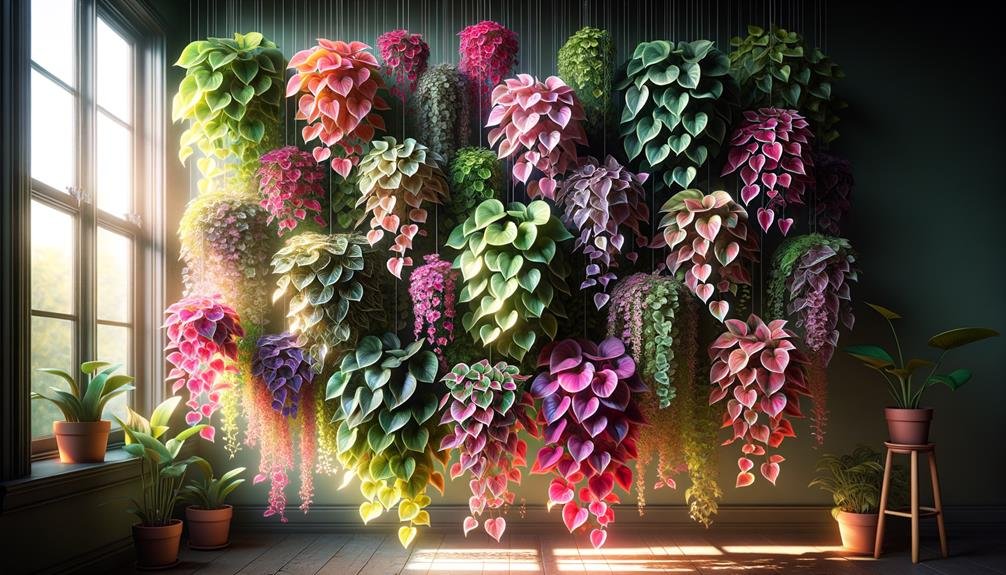
Transform your indoor garden with these stunning Hoya varieties. Hoya Carnosa excels in bright, indirect sunlight, needing dry soil before watering. Hoya Kerrii, symbolizing love, boasts heart-shaped leaves and thrives with moderate sunlight. Hoya Pubicalyx features dark green leaves splashed with silver, pink, and burgundy, flourishing in bright, indirect light. Hoya Australis' lance-shaped leaves and delicate white flowers swiftly impress with minimal watering needs. The Hindu Rope Plant, Hoya Lacunosa, wows with waxy, twisted rope-like leaves. Hoya Retusa's delicate elongated leaves flourish with bright, indirect light. Hoya Bella, from India and Southeast Asia, shines in similar conditions. Explore more stunning Hoya varieties for your indoor garden.
Hoya Carnosa
Hoya Carnosa, also referred to as the wax plant, thrives in indoor environments with bright, indirect sunlight. This exquisite plant is a perfect addition to your indoor garden, bringing a touch of nature into your home. When tending to your Hoya Carnosa, make sure it receives ample light without direct sun exposure. Water it only when the soil is dry to the touch, as overwatering can harm this resilient plant.
To keep your Hoya Carnosa healthy and vibrant, consider placing it near a window where it can soak up the sunlight it craves. Regularly dusting its leaves will help it photosynthesize efficiently, contributing to its overall well-being. Trimming any leggy stems will encourage new growth and maintain a compact shape. Remember to fertilize your Hoya Carnosa occasionally during the growing season to provide it with essential nutrients for robust growth.
With proper care and attention, your Hoya Carnosa will reward you with lush foliage and occasional clusters of fragrant flowers, enhancing the ambiance of your indoor space.
Hoya Kerrii
Occasionally seen as a symbol of love and good fortune, Hoya Kerrii is a unique and cherished addition to any indoor garden. This plant, also known as the sweetheart or the heart plant due to its heart-shaped leaves, is a delightful choice for those looking to add a touch of warmth and affection to their living space. Hoya Kerrii is relatively easy to care for, requiring moderate sunlight and well-draining soil to thrive. Its heart-shaped leaves can vary in size, with some individuals even producing heart-shaped flowers.
When it comes to propagation, Hoya Kerrii can be grown from single leaf cuttings, making it a popular choice for plant enthusiasts looking to expand their collection. This process involves placing a healthy leaf cutting in water until roots develop, and then transferring it to soil. With proper care and attention, your Hoya Kerrii plant can grow into a beautiful symbol of love and positivity in your indoor garden.
Hoya Pubicalyx
Adding to your collection of heart-shaped beauties, the Hoya Pubicalyx is a stunning addition to any indoor garden with its unique characteristics and charming presence. This gorgeous plant features dark green leaves adorned with splashes of silver, pink, and burgundy, making it a real eye-catcher. The Hoya Pubicalyx is also known for its delicate, star-shaped flowers that bloom in clusters, filling your space with a sweet, honey-like fragrance.
In terms of care, this hoya variety thrives in bright, indirect light and prefers well-draining soil to prevent overwatering. Keep the soil slightly moist and avoid letting it dry out completely between waterings. Regular pruning can help maintain its bushy shape and encourage new growth. Additionally, providing a trellis or support for the vine-like stems can help the plant climb and trail beautifully.
Hoya Australis
With its unique lance-shaped leaves and trailing growth habit, Hoya Australis is an enchanting addition to any indoor garden. This variety of Hoya, also known as the Wax Plant, delights with its elegant appearance and low-maintenance nature. Hoya Australis thrives in bright, indirect light and requires minimal watering, making it a perfect choice for busy plant enthusiasts.
The glossy green leaves of Hoya Australis add a touch of natural beauty to your living space while purifying the air. Its delicate white flowers, which bloom in clusters, release a sweet fragrance that enhances the ambiance of any room. You can train the trailing vines of Hoya Australis to climb or let them cascade gracefully from hanging baskets, creating a stunning visual effect.

To care for your Hoya Australis, place it in a well-draining potting mix and water sparingly, allowing the soil to dry out between waterings. Regular pruning will encourage bushier growth and more abundant flowering. With proper care, your Hoya Australis will reward you with its timeless beauty and charm.
Hoya Lacunosa
You'll be entranced by the enchanting allure of Hoya Lacunosa, a delightful addition to your indoor garden. This compact plant, also known as the 'Hindu Rope Plant', features thick, twisted vines adorned with clusters of fragrant, star-shaped flowers. Hoya Lacunosa is a low-maintenance plant that thrives in bright, indirect light and prefers well-draining soil. Its unique foliage, with waxy leaves that resemble twisted ropes, adds a touch of elegance to any space.
When tending to Hoya Lacunosa, make sure it receives moderate watering, allowing the soil to dry out slightly between waterings to prevent root rot. This plant also benefits from occasional misting to maintain humidity levels. Regular fertilization during the growing season will promote healthy growth and blooming.
With its captivating appearance and easy care requirements, Hoya Lacunosa is a perfect choice for both novice and experienced plant enthusiasts looking to enhance their indoor garden with a touch of natural beauty.
Hoya Obovata
Enchanted by the allure of Hoya Lacunosa, now turn your attention to the mesmerizing Hoya Obovata, a breathtaking addition to any indoor garden. Hoya Obovata, commonly known as the Wax Plant, features large, oval-shaped leaves that are a deep, glossy green, making it a striking sight in any space. This hoya variety is favored for its fragrant, star-shaped white flowers that bloom in clusters, filling your room with a delightful scent.
Caring for Hoya Obovata is a gratifying experience. It thrives in bright, indirect light and requires well-draining soil to prevent root rot. Water it moderately, allowing the soil to dry out between watering sessions. Regular pruning helps maintain its bushy appearance and encourages new growth.
With its elegant foliage and charming blooms, Hoya Obovata is a splendid choice for plant enthusiasts seeking to enhance their indoor oasis. Add this enchanting plant to your collection and enjoy the beauty it brings to your living space.
Hoya Serpens
Known for its distinctive trailing growth habit, Hoya Serpens is a compelling addition to any indoor garden. This charming plant features small, succulent leaves with a unique waxy texture, making it easy to care for and perfect for those looking to add a touch of greenery to their space. Hoya Serpens thrives in bright, indirect light and requires minimal watering, making it an ideal choice for busy plant lovers.
When caring for your Hoya Serpens, be sure to place it near a window where it can receive plenty of sunshine without being exposed to direct sunlight. Water your plant only when the top inch of the soil feels dry to the touch, ensuring that you don't overwater and cause root rot.
With its delicate appearance and low maintenance requirements, Hoya Serpens is sure to bring joy and beauty to your indoor garden. Consider adding this lovely plant to your collection for a touch of natural elegance.
Hoya Linearis
Hoya Linearis, a striking plant with long, trailing vines and slender leaves, is a mesmerizing addition to any indoor garden. Its unique appearance and elegant growth pattern make it a lovely choice for those looking to enhance their living space with a touch of nature.
Caring for Hoya Linearis is relatively simple, requiring moderate sunlight and well-draining soil to thrive. Regular watering when the soil is dry to the touch will keep this beauty flourishing.
When it comes to grooming, occasional pruning may be necessary to maintain its shape and encourage new growth. Trimming back any leggy vines will promote a fuller appearance, ensuring your Hoya Linearis remains lush and vibrant. This plant also appreciates a warm and humid environment, so misting its leaves every now and then will help mimic its natural habitat.
Hoya Retusa
With delicate elongated leaves and a distinctive growth habit, Hoya Retusa is a mesmerizing addition to any indoor garden. This charming plant, also known as the Grass Leafed Wax Flower, features thin, grass-like foliage that cascades elegantly, making it a perfect choice for hanging baskets or as a trailing plant on a shelf. Hoya Retusa is relatively easy to care for, thriving in bright, indirect light and requiring infrequent watering. Its unique appearance adds a touch of natural beauty to any room, creating a tranquil atmosphere.
When it comes to propagation, Hoya Retusa can be propagated from stem cuttings, making it simple to expand your collection or share with friends. This plant blooms with small, white flowers that have a sweet fragrance, adding another layer of sensory delight to your indoor space. Overall, Hoya Retusa is a lovely plant that brings a sense of calm and elegance to any indoor garden.
Hoya Bella
For a charming addition to your indoor garden, consider adding Hoya Bella, a delightful plant known for its cascading clusters of star-shaped flowers. This petite beauty, native to India and Southeast Asia, thrives in bright indirect light and enjoys regular watering with well-draining soil. Hoya Bella's slender vines can grow up to 4 feet long, making it a perfect choice for hanging baskets or trellises.
To care for your Hoya Bella, make sure it's placed in a warm environment with temperatures above 60°F (15°C). Regular misting will help maintain the plant's desired humidity levels. Fertilize your Hoya Bella sparingly during the growing season to encourage blooming.
One of the unique characteristics of Hoya Bella is its sweet fragrance, which intensifies in the evening, making it a delightful addition to your evening relaxation routine. With proper care, your Hoya Bella will reward you with stunning blooms that can last for weeks, bringing a touch of elegance to your indoor space.
Frequently Asked Questions
Can Hoya Plants Be Grown Outdoors in Colder Climates?
Hoya plants can be grown outdoors in colder climates, but they prefer warmer conditions. In colder areas, it's crucial to protect them from frost and extreme temperatures. Consider planting them in pots that can be moved indoors during winter or provide shelter like a greenhouse.
Keep an eye on temperature fluctuations and adjust care accordingly to make certain your hoya plants thrive despite the chillier environment.
How Often Should Hoya Plants Be Fertilized?
To keep your hoya plants healthy, fertilize them every 4-6 weeks during the growing season, typically spring and summer. Use a balanced liquid fertilizer diluted to half the recommended strength.
Over-fertilizing can harm your plant, so it's best to err on the side of caution. Remember to water your hoya before fertilizing to prevent root burn.
Regular fertilization will promote growth and flowering in your hoya plants.
Are Hoya Plants Toxic to Pets?
Hoya plants can be critical to pets if ingested. The sap of the hoya plant contains compounds that may cause gastrointestinal issues like vomiting or diarrhea in pets.
It's vital to keep your furry friends away from hoya plants to prevent any potential harm.
If you suspect your pet has ingested any part of a hoya plant and is showing symptoms of illness, contact your veterinarian immediately for guidance and assistance.
What Is the Best Way to Propagate Hoya Plants?
To propagate hoya plants, the best way is through stem cuttings. Select a healthy stem with at least two nodes, cut it below a node, and remove any leaves near the cut.
Let the cutting callus over for a few days before placing it in well-draining soil. Keep the soil lightly moist and the cutting in a warm, bright location.
Within a few weeks, roots should develop, indicating successful propagation.
Do Hoya Plants Require a Lot of Sunlight to Thrive?
Hoya plants thrive in bright, indirect sunlight. While they can tolerate lower light conditions, they won't bloom as well. It's crucial to give them about 4-6 hours of sunlight daily for best growth.
Placing them near a window with sheer curtains or in a well-lit room is ideal. Be cautious of direct sunlight, as it can scorch their leaves. Find the right balance to keep your hoya plants healthy and flourishing indoors.
Conclusion
To sum up, hoya plants are a fantastic addition to any indoor garden, offering a variety of stunning varieties to choose from.
Whether you prefer the classic Hoya Carnosa or the unique Hoya Kerrii, there's a hoya plant to suit every taste and space.
With their beautiful foliage and low maintenance requirements, hoya plants are a perfect choice for beginner and experienced gardeners alike.
Consider adding one of these hoya varieties to your collection for a touch of greenery and beauty in your home.



