
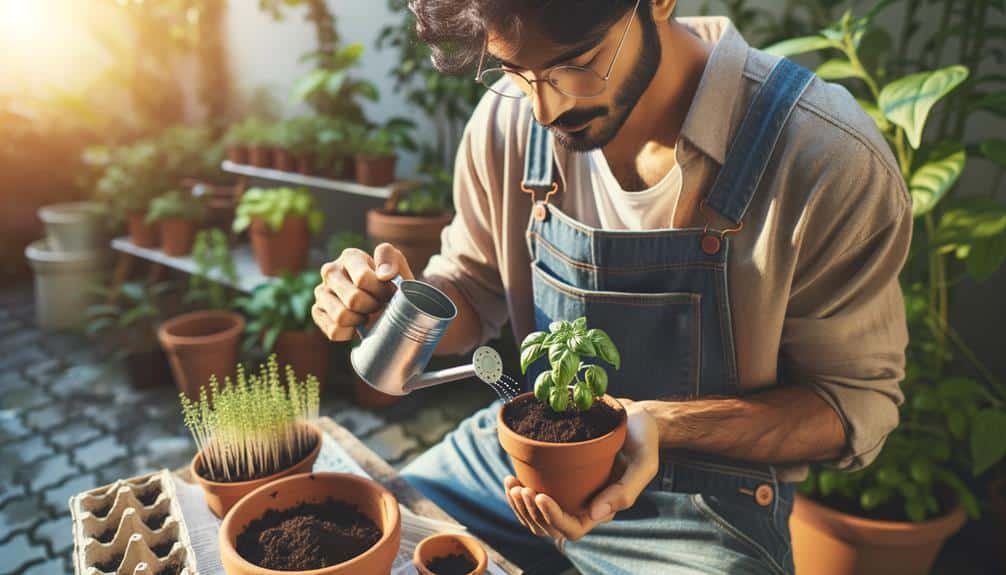
To cultivate Ocimum Basilicum successfully, place it in full sunlight for 6 to 8 hours daily. Use well-draining soil and guarantee good air circulation. Clear debris, loosen soil, and enrich with compost before planting. Water thoroughly, keeping soil moist but not waterlogged. Add balanced liquid fertilizer every 3-4 weeks, following instructions carefully. Harvest by plucking leaves above a node, pruning regularly for bushier growth, and trimming flowers to promote leaf production. For more detailed guidance on growing healthy basil, make sure you grasp each step thoroughly.
Choosing the Right Location
When selecting a location to grow Ocimum Basilicum, consider the amount of sunlight available. Basil plants thrive in full sunlight, so choose a spot in your garden that receives at least 6 to 8 hours of direct sunlight each day. This will guarantee that your basil grows healthy and flavorful leaves, perfect for enhancing your dishes.
In addition to sunlight, make sure the location has well-draining soil to prevent waterlogging, as basil plants don't like to have their roots sitting in water. Good air circulation is also crucial to prevent diseases that can affect the plants.
If you're growing basil in a pot, place it near a sunny window or on a sunny balcony. Remember to rotate the pot occasionally to make certain that all sides of the plant receive adequate sunlight.
Preparing the Soil
To prepare the soil for growing Ocimum Basilicum, make sure it's well-draining and rich in nutrients. Start by clearing the area of any debris or weeds. Loosen the soil to about 12 inches deep, making certain it's not compacted. This step helps the roots to spread easily and access water and nutrients.
Next, consider adding organic matter like compost or well-rotted manure to enrich the soil. This boosts nutrient levels and improves soil structure, promoting healthy plant growth. Mix the organic matter into the soil thoroughly, distributing it evenly.
Test the soil pH to ensure it falls within the ideal range for basil, which is typically between 6 and 7. You can adjust the pH by adding amendments if needed.
Lastly, ensure proper drainage by checking that the soil doesn't become waterlogged. Basil plants prefer moist but well-drained soil to thrive. Proper soil preparation sets the foundation for healthy Ocimum Basilicum growth.
Planting Ocimum Basilicum
Once the soil is properly prepared, you can proceed to plant Ocimum Basilicum for successful growth. Choose a sunny spot in your garden or a suitable container with good drainage. Begin by digging a small hole that's slightly larger than the root ball of your basil plant. Gently remove the plant from its container, being careful not to damage the roots. Place the plant in the hole, making sure it sits at the same depth as it was in the container. Fill in the hole with soil and pat it down gently to secure the plant in place.
Water the newly planted basil thoroughly to help settle the soil around the roots. Ensuring to keep the soil moist but not waterlogged during the initial growth period is necessary. Remember to space multiple plants about 12 inches apart to allow for proper air circulation and growth. Once planted, your Ocimum Basilicum will thrive with proper care and attention.

Watering and Fertilizing Tips
For successful growth of your Ocimum Basilicum, make sure to water and fertilize the plant properly. Water your basil plant consistently, keeping the soil moist but not waterlogged. Aim to water the plant at the base to avoid getting the leaves wet, which can lead to disease. During hot weather, you may need to water more frequently to prevent the soil from drying out.
When it comes to fertilizing your Ocimum Basilicum, use a balanced liquid fertilizer every 3-4 weeks during the growing season. Make sure to follow the instructions on the fertilizer package to avoid overfeeding, which can harm the plant. Organic fertilizers are a great option as they provide nutrients gradually and promote healthy growth without the risk of chemical build-up in the soil.
Harvesting and Pruning Techniques
When it's time to harvest and prune your Ocimum Basilicum, make sure you employ proper techniques to maintain the plant's health and promote continued growth.
Harvest basil leaves by gently plucking them off just above a leaf node, which will stimulate new growth. Regular harvesting fosters bushier plants.
To prune, eliminate any yellow or damaged leaves by gently plucking them off at the stem. This assists the plant in directing its energy towards producing new, healthy growth. Additionally, trim any flowers that appear to prevent the plant from setting seed and promote the production of more leaves.
Remember to harvest and prune basil regularly to prevent it from becoming leggy and encourage a more compact growth pattern. By following these simple techniques, you can guarantee a plentiful harvest of fresh basil leaves for your culinary creations.
Frequently Asked Questions
Can Ocimum Basilicum Be Grown Indoors?
Yes, Ocimum Basilicum can flourish indoors if provided ample light, water, and well-draining soil. Place the plant near a sunny window or use grow lights for adequate light exposure.
Water when the soil is dry to the touch, but avoid overwatering. Guarantee good air circulation around the plant.
With proper care, you can enjoy fresh basil right from your indoor garden.
Are There Any Common Pests or Diseases That Affect Ocimum Basilicum?
Common pests that may affect Ocimum Basilicum include aphids, spider mites, and whiteflies. Diseases like powdery mildew and fusarium wilt can also impact the plant.
To safeguard against these issues, maintain proper air circulation, refrain from overwatering, and inspect your plants regularly. Consider utilizing natural remedies or insecticidal soaps to manage pests, and promptly remove any infected leaves.
Vigilance and good plant care practices are essential for keeping your Ocimum Basilicum healthy.
How Long Does It Take for Ocimum Basilicum to Reach Maturity?
Ocimum basilicum typically takes about six to eight weeks to reach maturity. During this time, guarantee proper sunlight, watering, and soil conditions to support its growth.
Regularly monitor its progress and adjust care as needed. Remember to harvest leaves regularly to encourage new growth and maintain plant health.
Can Ocimum Basilicum Be Grown Alongside Other Plants in a Garden?
Certainly, Ocimum Basilicum can be effectively cultivated alongside other plants in a garden. It's a versatile herb that flourishes in various conditions, making it a great companion plant.
Its fragrant leaves can also assist in deterring pests from neighboring plants. Just make sure it receives adequate sunlight and well-draining soil.
Consider planting it near tomatoes, peppers, or marigolds for a mutually beneficial garden ecosystem.
Happy gardening!
Are There Any Culinary or Medicinal Uses for Ocimum Basilicum Besides Seasoning Dishes?
Besides seasoning dishes, Ocimum basilicum, commonly known as basil, has various culinary and medicinal uses. In cooking, it can be used to make pesto, salads, and infused oils.
Medicinally, basil is valued for its anti-inflammatory and antioxidant properties. It can be used to make teas, essential oils, and herbal remedies for coughs and indigestion.
Incorporating basil into your diet and health routine can offer a range of benefits beyond just flavoring your dishes.
Conclusion
To sum up, cultivating ocimum basilicum requires selecting the right location, preparing the soil properly, sowing the seeds or seedlings, watering and fertilizing consistently, and harvesting and pruning as needed. By following these steps, you can successfully grow this fragrant herb in your garden or container.
Remember to provide sufficient sunlight, well-draining soil, and regular care to guarantee a bountiful harvest of fresh basil for culinary use. Happy gardening!



