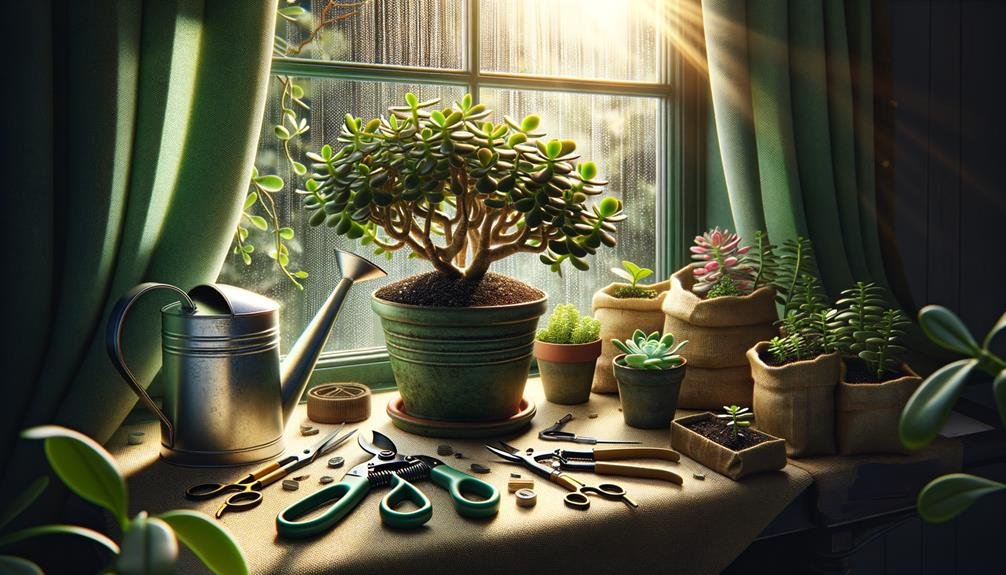
Keep your jade plant healthy by watering every 1-2 weeks, allowing soil to dry out in between. Provide bright, indirect sunlight, avoiding direct rays. Use well-draining soil mixed with perlite, sand, and peat moss. Trim leggy growth for a compact look with sharp shears. Propagate using stem or leaf cuttings, ensuring they callus before planting. Water sparingly until roots form. For thriving jade plants, follow these tips closely. More expert advice awaits for enhancing your jade plant care.
Watering Schedule
To keep your jade plant healthy, water it every 1-2 weeks, allowing the soil to dry out between waterings. Over-watering can lead to root rot, so it's important to let the soil breathe. When watering, make sure that excess water can drain out of the pot to prevent waterlogging. A good technique is to water the plant thoroughly until you see water coming out of the drainage holes.
Check the soil moisture level before watering by sticking your finger about an inch into the soil. If it feels dry, it's time to water your jade plant. However, if it still feels moist, hold off on watering for a few more days. Remember, jade plants are native to arid environments, so they prefer drier conditions. Be mindful not to underwater either, as jade plants store water in their leaves and stems.
Sunlight Requirements
Maintain the health of your jade plant by guaranteeing it receives adequate sunlight according to its requirements.
Jade plants flourish in bright, indirect sunlight. Position your plant near a window where it can receive plenty of natural light throughout the day. However, be careful of direct sunlight, as too much intense light can scorch the leaves of your jade plant. If you observe the leaves turning brown or white, it might be receiving too much sun.
Conversely, if your jade plant isn't receiving sufficient light, it may become leggy, with elongated stems and sparse leaves. If natural light is limited in your space, you can supplement with artificial grow lights designed for indoor plants. Remember to rotate your plant occasionally to ensure even growth on all sides.
Soil Type and Drainage
For ideal growth and health of your jade plant, selecting the right soil type and ensuring proper drainage are key factors to keep in mind. Jade plants thrive in well-draining soil that's slightly acidic. A combination of cactus potting mix and perlite or sand works well to provide the right balance of moisture retention and drainage. You can also add some peat moss to enhance soil structure and aeration.
When choosing a pot for your jade plant, ensure it has drainage holes at the bottom to prevent water from accumulating around the roots. Excess water can cause root rot, which is harmful to the plant's health. Adding a layer of small rocks or pebbles at the base of the pot can further improve drainage.
Remember to water your jade plant only when the top inch of the soil feels dry to the touch. Overwatering can be harmful, so it's important to find a balance to keep your jade plant healthy and flourishing.
Pruning and Shaping Tips
When shaping your jade plant, consider trimming back leggy growth to encourage a more compact and bushy appearance. Pruning your jade plant is essential for maintaining its vitality and promoting new growth. Use sharp, clean shears to trim off any overgrown or damaged branches. Focus on cutting just above a leaf node to encourage branching. Removing dead or yellowing leaves will also help the plant redirect its energy to healthier parts. Remember to step back occasionally to assess the overall shape and symmetry of the plant as you prune.

Shaping your jade plant can be a creative process, allowing you to sculpt it into your desired form. You can prune it into a more rounded shape or let it grow tall for a tree-like appearance. Regularly pruning and shaping your jade plant won't only enhance its aesthetic appeal but also improve its overall growth and vitality. Don't be afraid to experiment with different pruning techniques to find what works best for your plant.
Propagation Techniques
To propagate your jade plant, consider utilizing techniques such as stem cuttings or leaf cuttings to expand your plant collection. Stem cuttings involve taking a cutting from a healthy stem of your jade plant, allowing it to callus for a few days, and then planting it in a well-draining soil mix. Make sure the cutting has a few leaves at the top and remove any excess leaves to prevent moisture loss. Water sparingly until roots develop.
Leaf cuttings are another popular method where you can remove a healthy leaf from your jade plant, let it dry for a couple of days, and then lay it on a soil mix. Mist the leaf occasionally and wait for roots to grow from the base of the leaf. Once roots are established, you can plant it into its own pot.
Both methods are effective ways to propagate your jade plant and create new plants for yourself or to share with friends and family.
Frequently Asked Questions
Can Jade Plants Be Grown Outdoors in Cold Climates?
Certainly, jade plants can be grown outdoors in cold climates as long as specific precautions are taken. Confirm they're positioned in a spot that receives ample sunlight and is shielded from harsh winds.
During winter, bring them indoors or shield them with blankets or cloths during freezing temperatures. Proper care will help your jade plants thrive even in colder environments, enabling you to appreciate their beauty year-round.
Are There Any Common Pests or Diseases That Jade Plants Are Susceptible To?
Common pests and diseases that jade plants can fall prey to include mealybugs, spider mites, and root rot. These nuisances can harm your plant if not addressed promptly. Keep an eye out for any signs of infestation, such as white cottony clusters or webbing.
Regularly inspect your jade plant's leaves and soil to catch any issues early. Quick action and proper care can help keep your plant healthy and thriving.
How Often Should I Repot My Jade Plant?
To keep your jade plant healthy, repot it every 2-3 years. Check if the roots are circling the pot's bottom; this means it's time for a bigger home.
Early spring is ideal for repotting, as the plant enters its growth phase. Choose a slightly larger pot with drainage holes to prevent root rot. Use well-draining soil to keep your jade thriving.
Can Jade Plants Be Grown in Hydroponic Systems?
Yes, jade plants can thrive in hydroponic systems. They adapt well to this method of cultivation, as long as you provide the correct conditions.
Make sure the hydroponic system has proper drainage to prevent waterlogging, which can harm the plant. Also, monitor the nutrient levels closely to guarantee your jade plant receives the necessary minerals for healthy growth.
With the right setup, you can enjoy a flourishing jade plant in a hydroponic system.
Are There Any Specific Fertilizers or Nutrients That Jade Plants Require?
When caring for jade plants, it's important to provide them with the right nutrients. A balanced fertilizer with equal parts nitrogen, phosphorus, and potassium is ideal.
Look for a fertilizer labeled for use on succulents or cacti, as they've the right mix of nutrients for jade plants.
Applying the fertilizer sparingly during the growing season, usually in spring and summer, will help keep your jade plant healthy and thriving.
Conclusion
To sum up, by following a consistent watering schedule, providing adequate sunlight, using well-draining soil, pruning regularly, and utilizing proper propagation techniques, you can guarantee the best care for your jade plants.
Remember to monitor the moisture levels in the soil, adjust sunlight exposure as needed, maintain soil quality, shape the plant to encourage growth, and propagate with care.
With these tips in mind, your jade plant will thrive and bring beauty to your space for years to come.