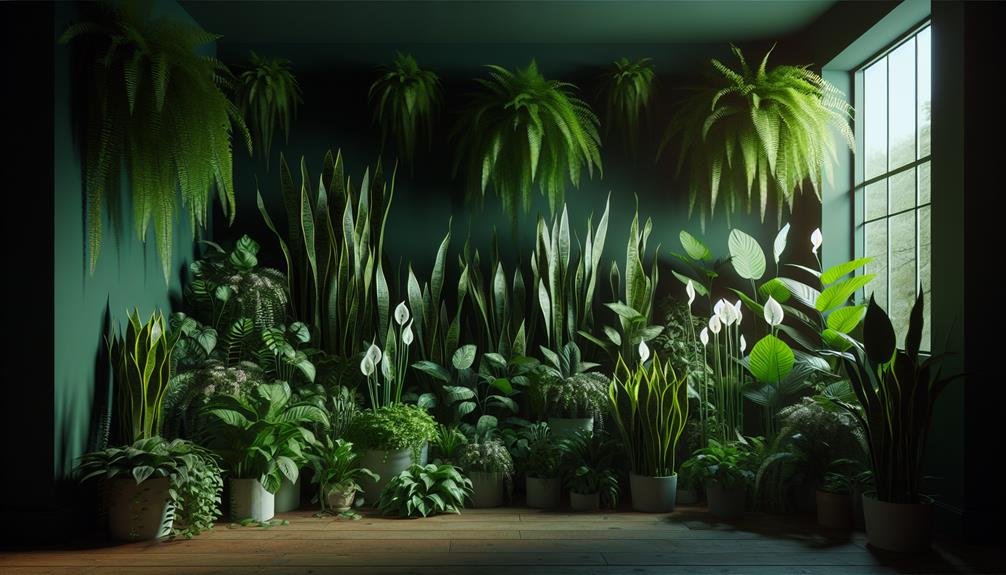
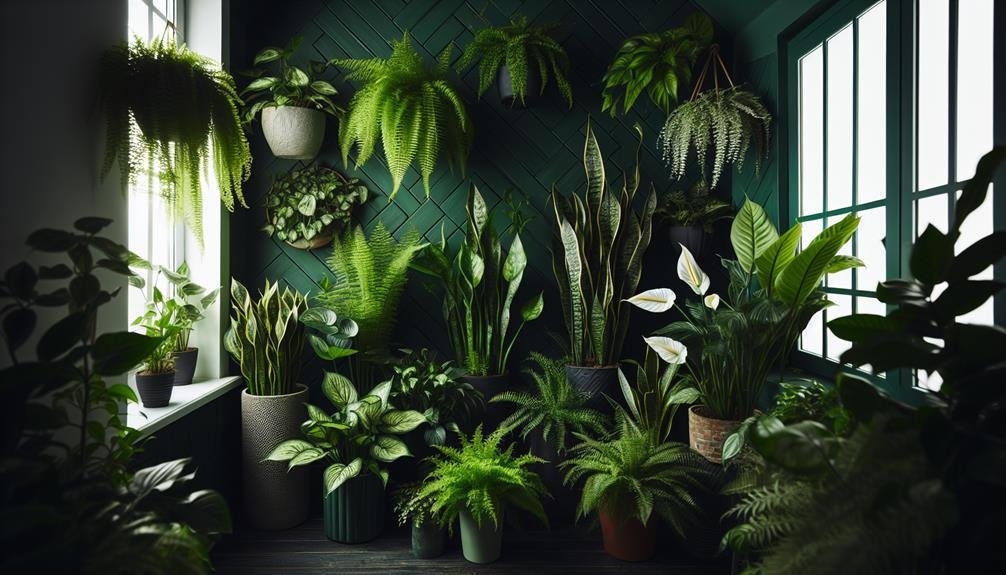
In the realm of indoor gardening, sunlight serves as the lifeblood for your leafy companions, but what about those dim corners where natural light struggles to reach?
Don't fret; there are resilient plant varieties that can thrive in such shadows, bringing a touch of green to your space.
Let's uncover the secrets of these low-light champions and how they can transform your home into a lush oasis, even in the darkest nooks.
Benefits of Houseplants in Low Light
Houseplants thrive in low light conditions due to their ability to adapt and thrive with minimal sunlight. This adaptability makes them perfect for spaces with limited natural light, such as offices or rooms with small windows. Even if your living space lacks brightness, you can still enjoy the benefits of having greenery around you.
One major benefit of houseplants in low light is their air-purifying qualities. Plants like peace lilies, spider plants, and pothos can help remove toxins from the air, improving its quality and making your space healthier to breathe in. Additionally, these plants can boost your mood and productivity. Studies have shown that being around greenery can reduce stress levels and increase feelings of well-being.
Another advantage is that low-light houseplants are generally easier to care for. They require less maintenance and attention compared to plants that need direct sunlight. This makes them ideal for busy individuals or those new to plant parenthood. With the right selection of low-light plants, you can effortlessly bring life and freshness into any room.
Top Considerations for Low-Light Plants
Considering the lighting conditions of your space, selecting low-light plants that match these requirements is key to their successful growth and development. When choosing houseplants for minimal sunlight, it's essential to look for species that are known to thrive in low-light environments.
Some top considerations include peace lilies, snake plants, and pothos, which are all renowned for their ability to flourish with minimal natural light. These plants are resilient and can adapt well to indoor settings with limited sunshine.
Another important factor to consider is the watering needs of low-light plants. Since these plants may not receive as much light to aid in the photosynthesis process, they generally require less frequent watering compared to plants in brighter conditions. Overwatering can be detrimental to their health, so it's crucial to allow the soil to partially dry out between watering sessions.
Easy-to-Care-for Low-Light Houseplants
When caring for low-light houseplants, it's essential to choose varieties that require minimal sunlight and are easy to maintain. Some great options for easy-to-care-for low-light houseplants include the resilient snake plant, known for its ability to thrive in low light conditions and requiring minimal watering.

Another excellent choice is the pothos plant, which can adapt to various light levels and is forgiving if you forget to water it occasionally. The peace lily is also a fantastic low-light plant that adds a touch of elegance with its white blooms while purifying the air.
If you prefer a hanging plant, consider the spider plant, which isn't only low-maintenance but also produces baby spider plants that you can propagate. For a pop of color, the African violet is a beautiful choice that can bloom in low-light settings. Lastly, the ZZ plant is practically indestructible, thriving in low light without much attention.
Incorporating these easy-to-care-for low-light houseplants into your space can brighten up any dim corner with minimal effort.
Stylish Planters for Dim Spaces
To add a touch of style to dim spaces, explore a variety of planters that complement your decor while providing a home for your low-light houseplants.
When choosing planters for low-light areas, consider options that not only enhance the aesthetic appeal but also suit the specific needs of your plants. Sleek ceramic pots in neutral tones like white or grey can add a modern touch to your space while allowing the focus to remain on your greenery.
Hanging planters are great for maximizing space in small rooms and can create an eye-catching display when placed at different heights. For a bohemian vibe, woven baskets or macramé plant hangers offer a trendy alternative to traditional planters.
Terracotta pots are a classic choice that can bring warmth to your room and are perfect for plants that prefer drier soil conditions. Whatever style you choose, make sure the planters have proper drainage to prevent overwatering and promote healthy growth in your dimly lit space.
Tips for Thriving Low-Light Gardens
Explore practical techniques to ensure your low-light gardens thrive with vitality and lush greenery. When dealing with minimal sunlight, it's crucial to select the right plants. Opt for low-light tolerant varieties such as snake plants, pothos, or peace lilies. These plants can thrive in shaded environments and require minimal maintenance.
To enhance the growth of your low-light garden, proper watering is essential. Overwatering can lead to root rot, so allow the soil to dry out slightly between waterings. Additionally, consider using a well-draining potting mix to prevent waterlogging.
Another tip for flourishing low-light gardens is to regularly dust the leaves of your plants. Dust can accumulate on the foliage, hindering the plant's ability to photosynthesize effectively. Simply wipe the leaves gently with a damp cloth to keep them clean and allow for optimal light absorption.
Lastly, rotating your plants periodically can help promote even growth. Since light may be limited in certain areas, rotating the plants ensures that all sides receive adequate light exposure. By following these tips, you can create a thriving low-light garden filled with healthy and vibrant plants.
Frequently Asked Questions
Can Low-Light Houseplants Help Improve Indoor Air Quality?
Yes, low-light houseplants can indeed help improve indoor air quality. These plants are adept at absorbing pollutants and releasing oxygen, ultimately creating a cleaner and fresher environment for you.
Their ability to thrive in minimal sunlight makes them a convenient and effective option for enhancing the air quality in your home.
Are There Any Low-Light Houseplants That Are Safe for Pets?
When looking for low-light houseplants safe for pets, consider options like spider plants, parlor palms, or Boston ferns.
These plants aren't only pet-friendly but also thrive in environments with minimal sunlight.
Remember to place them out of reach of curious pets to prevent any unwanted nibbling.
With these choices, you can enjoy greenery in your home without worrying about your furry friends' safety.
How Often Should I Water Low-Light Houseplants?
When caring for low-light houseplants, remember to water them consistently but not too frequently. Check the soil moisture by sticking your finger in about an inch deep – if it feels dry, it's time to water. Overwatering can be harmful, so ensure proper drainage.
Generally, once every 1-2 weeks should suffice, but adjust based on your plant's specific needs. This routine will help your plants thrive in low-light conditions.
Can Low-Light Houseplants Thrive in Humid Environments?
Yes, low-light houseplants can thrive in humid environments. The moisture in the air can benefit these plants by helping them retain water through their leaves. Humidity can also prevent issues like dryness and wilting.
Make sure not to overwater though, as excess moisture can lead to root rot. Overall, keeping your low-light houseplants in a humid environment can contribute to their health and growth.
Are There Any Low-Light Houseplants That Can Help Reduce Stress and Increase Productivity?
Looking to boost productivity and reduce stress with low-light houseplants? You're in luck! Some indoor plants, like snake plants and peace lilies, can thrive even in minimal sunlight.
These green buddies not only add a touch of nature to your space but also have been shown to improve air quality and create a calming atmosphere.
Conclusion
Overall, incorporating houseplants into your home, even in minimal sunlight conditions, can bring numerous benefits such as improved air quality, mood enhancement, and a touch of nature indoors.
By selecting low-light plants that are easy to care for and pairing them with stylish planters, you can create a thriving green oasis in any dim space.
With a little bit of attention and care, your low-light garden can flourish and bring beauty to your home.