
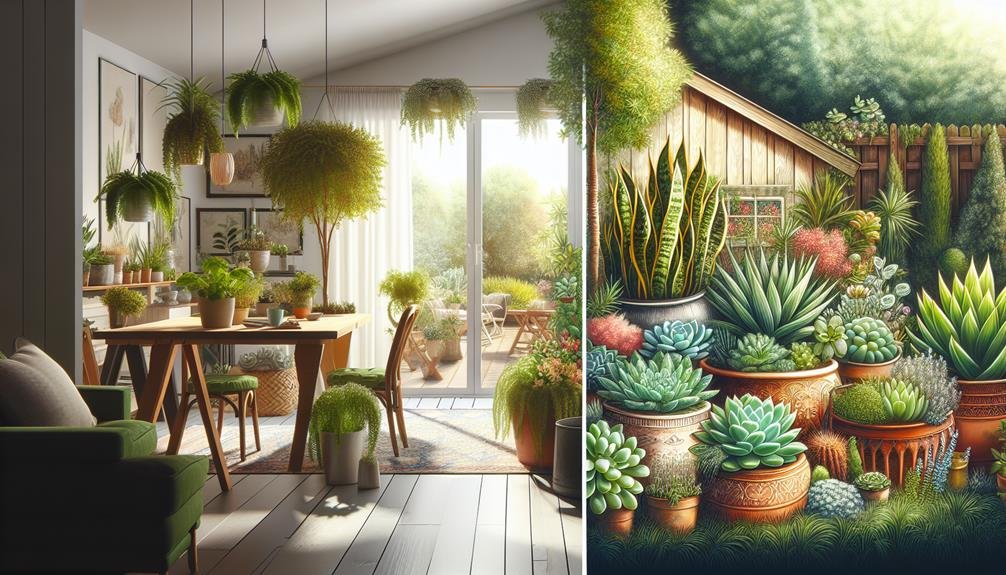
Indoor plants can offer a touch of greenery to your living space, while outdoor gardening allows you to connect with nature in a more expansive way.
But which one is best for beginners looking to cultivate their green thumbs?
As you ponder this question, consider the unique benefits each setting provides for plant growth and maintenance.
Understanding the distinctions between indoor and outdoor plants tailored for beginners might just be the key to kickstarting your journey into the world of gardening.
Benefits of Indoor Plants
Indoor plants not only add beauty to your living space but also contribute to better air quality and overall well-being. Having plants around your home can improve the quality of the air you breathe by releasing oxygen and absorbing carbon dioxide. This natural process helps to purify the air, reducing toxins and pollutants that can be harmful to your health.
In addition to cleaner air, indoor plants have been shown to boost your mood and reduce stress levels. The presence of greenery in your surroundings can create a sense of calm and relaxation, promoting a healthier mental state. Caring for plants also provides a sense of purpose and accomplishment, which can increase your overall well-being.
Furthermore, having indoor plants can help increase your focus and productivity. Studies have shown that being around plants can enhance cognitive function and concentration, making them great additions to your home office or study area. So not only do indoor plants look beautiful, but they also offer a wide range of benefits for your health and happiness.
Top Indoor Plants for Beginners
Looking to start your indoor plant collection as a beginner? Here are some top indoor plants that are perfect for beginners due to their low maintenance and resilience.
The Snake Plant, also known as Mother-in-Law's Tongue, thrives in various lighting conditions and requires minimal watering. It's a great air purifier too.
Another excellent choice is the Spider Plant, known for its air-purifying qualities and ability to thrive in different environments. Spider Plants are also safe for pets.

If you prefer flowering plants, the Peace Lily is a fantastic option. With its beautiful white flowers and easy care requirements, it's a popular choice for beginners.
The Pothos plant is virtually indestructible and can survive in low light and irregular watering.
Lastly, the ZZ Plant is a hardy plant that can endure neglect and low light conditions. These indoor plants not only enhance your living space but also provide a sense of accomplishment for beginners.
Advantages of Outdoor Gardening
For beginners, outdoor gardening offers numerous advantages that can enhance your gardening experience and connection with nature. One of the primary benefits is the abundance of natural sunlight available outdoors, which is crucial for plant growth. Unlike indoor plants that rely on artificial light sources, outdoor plants benefit from the full spectrum of sunlight, helping them thrive and develop vibrant foliage.
Additionally, outdoor gardening allows you to grow a wider variety of plants due to the unlimited space and natural soil. You can experiment with different plant species and create diverse landscapes in your outdoor garden.
Moreover, outdoor gardening provides a more natural environment for plants, allowing them to interact with beneficial insects, birds, and other wildlife that can help with pollination and pest control. Being surrounded by the sights, sounds, and scents of nature while tending to your garden can also have a therapeutic effect, reducing stress and promoting overall well-being.
Best Outdoor Plants for Beginners
When starting your outdoor gardening journey as a beginner, consider choosing hardy and low-maintenance plants to build your confidence and skills. Opt for plants like marigolds, which are vibrant, pest-resistant, and bloom abundantly throughout the season.
Another excellent choice is the daylily, known for its resilience and beautiful blooms in various colors. For a touch of fragrance, lavender is a great option that thrives in sunny spots with well-draining soil.
If you prefer edible plants, try growing herbs like mint or basil, which are forgiving and versatile in their uses. Succulents such as sedum or sempervivum are also fantastic choices due to their drought tolerance and unique appearance.
Remember to consider your local climate and sunlight conditions when selecting outdoor plants to ensure they'll thrive in your garden. By starting with these beginner-friendly outdoor plants, you can enjoy the process of gardening while gaining valuable experience.
Tips for Successful Plant Care
To ensure the health and vitality of your plants, it's essential to adhere to a consistent watering schedule and provide adequate sunlight for their growth. Water your plants when the top inch of soil feels dry to the touch, as overwatering can lead to root rot. Ensure proper drainage in your pots to prevent waterlogging. When it comes to sunlight, most indoor plants thrive in bright, indirect light. Rotate your plants occasionally to ensure even growth on all sides.
In addition to water and sunlight, regular pruning and trimming can help your plants stay healthy. Remove dead or yellowing leaves to promote new growth and prevent disease. Fertilize your plants during the growing season to replenish nutrients in the soil. Use a balanced fertilizer or one specifically formulated for the type of plant you're growing.
Lastly, keep an eye out for pests and diseases. Inspect your plants regularly for any signs of trouble, such as yellowing leaves, holes, or webs. If you notice any issues, take action promptly to prevent them from spreading to other plants. With proper care and attention, your plants will flourish and bring beauty to your space.
Frequently Asked Questions
Can Indoor Plants Be Placed Outdoors During Certain Times of the Year?
Yes, you can place indoor plants outdoors during certain times of the year.
It's important to gradually acclimate them to the outdoor environment to prevent shock. Start by moving them to a shaded area for a few hours a day, then gradually increase their exposure to sunlight.
Keep an eye on them for any signs of stress like wilting or discoloration.
Remember to bring them back inside before temperatures drop too low.
Are There Any Indoor Plants That Are Safe for Pets?
When choosing indoor plants safe for pets, opt for options like spider plants, Boston ferns, or African violets. These varieties are non-toxic to dogs and cats, making them a great choice for pet-friendly homes.
Remember to research specific plant toxicity levels and consider pet behavior before introducing any new greenery into your space. Always prioritize the safety and well-being of your furry friends when selecting indoor plants.
How Can Beginners Determine the Best Lighting Conditions for Their Indoor Plants?
To determine the best lighting conditions for your indoor plants as a beginner, start by observing the natural light in your home. Place light-loving plants near bright windows and low-light plants in shadier spots.
Remember, most plants need some sunlight but can burn from direct exposure. Monitor your plants' response to their location and adjust as needed.
With time and attention, you'll find the perfect lighting balance for your indoor garden.
Are There Any Outdoor Plants That Can Thrive in Both Sun and Shade?
You can find outdoor plants that thrive in both sun and shade. Some options include hostas, hydrangeas, and impatiens. These plants are versatile and can adapt to different lighting conditions, making them suitable for various areas in your garden.
What Are Some Common Mistakes to Avoid When Caring for Indoor and Outdoor Plants?
When caring for indoor and outdoor plants, remember to avoid overwatering. Ensure proper drainage to prevent root rot.
Don't forget to provide adequate sunlight for outdoor plants and monitor humidity levels for indoor ones. Regularly check for pests and diseases, addressing them promptly.
Lastly, avoid placing indoor plants near drafts or heating vents. By being attentive to these details, you can help your plants thrive and grow beautifully.
Conclusion
In conclusion, whether you choose to start with indoor or outdoor plants, gardening is a rewarding and enjoyable hobby for beginners. Indoor plants offer the benefit of clean air and easy maintenance, while outdoor gardening allows you to connect with nature and enjoy the beauty of your surroundings.
Remember to choose plants that suit your space and lifestyle, and don't forget to give them the love and care they need to thrive. Happy gardening!



