
You might think that taking care of houseplants is too time-consuming or difficult, but what if incorporating a few plants into your living space could significantly enhance your mental well-being?
Picture this: the serene presence of greenery, the calming effect of nurturing life, and the fresh oxygen released by your leafy companions.
Intrigued by the idea of boosting your mental health through houseplant therapy?
Stay tuned to discover the science-backed benefits and practical tips that could transform your home into a sanctuary of tranquility.
Health Benefits of Houseplant Therapy
Houseplant therapy offers numerous health benefits, from improving air quality to reducing stress levels. Having plants in your living space can help purify the air by absorbing toxins and releasing oxygen, creating a healthier environment for you to breathe in. The presence of greenery indoors has also been linked to lowering stress levels and promoting a sense of calmness and well-being.
In addition to these benefits, houseplants can enhance your mood and boost your mental health. The act of caring for plants can provide a sense of purpose and accomplishment, which can be particularly beneficial for those dealing with anxiety or depression. The visual appeal of plants and their vibrant colors can also help uplift your spirits and create a more positive atmosphere in your home.
Best Houseplants for Mental Well-being
To improve your mental well-being through houseplants, consider selecting varieties known for their calming properties and low maintenance requirements. Peace lilies are an excellent choice, as they not only add a touch of elegance to your space but also help purify the air and thrive in low light conditions.
Snake plants are another great option, known for their ability to improve indoor air quality and require minimal watering. If you're looking for a pop of color, consider getting a spider plant, which is easy to care for and can help reduce stress levels.
Aloe vera plants aren't only soothing for minor burns but also add a refreshing touch to your home environment. Lastly, lavender plants not only smell delightful but are also known for their calming effects, promoting relaxation and better sleep.
Incorporating these houseplants into your living space can significantly contribute to enhancing your mental well-being.

Tips for Caring for Indoor Plants
Considering the mental benefits of having indoor plants, ensuring proper care for your green companions is vital for their well-being and longevity. To help your plants thrive, make sure to place them in areas with adequate sunlight, as different plants have varying light requirements. Water your plants regularly but be cautious not to overwater, as this can lead to root rot. It's important to check the soil moisture levels before watering to avoid drowning your plants.
Additionally, dust off your plant's leaves regularly to allow for proper absorption of sunlight and air. Prune any dead or yellowing leaves to encourage new growth and maintain the overall health of your plant. Lastly, consider repotting your plants when they outgrow their current containers to provide them with more space to flourish. By following these simple care tips, you can ensure a healthy and thriving indoor plant environment that contributes positively to your mental well-being.
Creating a Relaxing Plant-Filled Space
For a calming and rejuvenating environment, strategically arranging plants in your space can enhance relaxation and create a peaceful ambiance. Start by placing plants like lavender, aloe vera, or snake plants in key areas of your home. Lavender is known for its calming scent, aloe vera purifies the air, and snake plants are easy to care for.
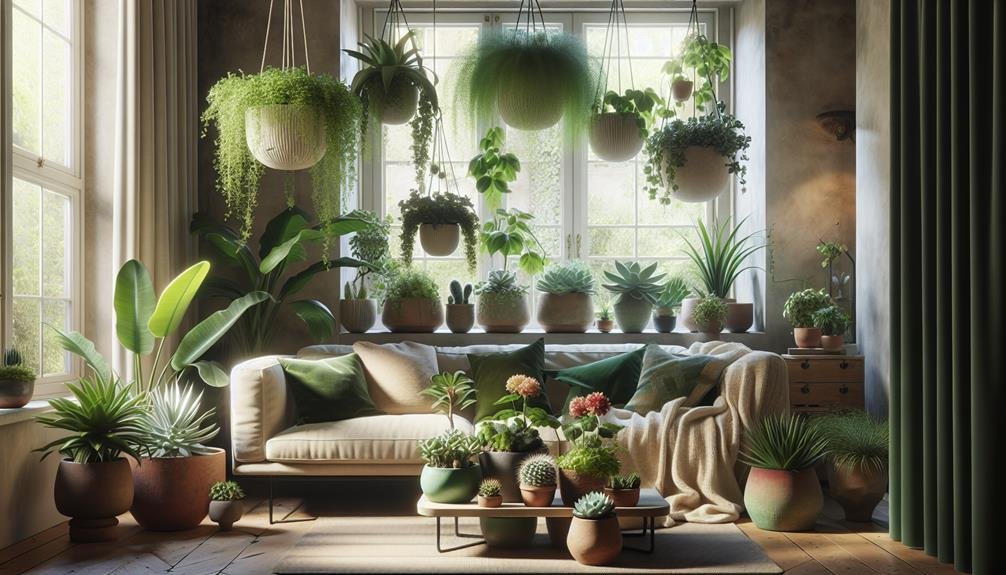
Consider creating a green oasis in your living room by arranging a variety of plants on shelves, tables, and window sills. Hanging planters can add a touch of nature to your space without taking up floor space. Introduce different textures and heights to make the space visually appealing and dynamic. Incorporating plants with varying leaf shapes and sizes can add interest to your plant-filled sanctuary.
Remember to place plants near natural light sources to ensure they thrive and contribute to a serene atmosphere. By creating a relaxing plant-filled space, you can transform your home into a tranquil retreat that promotes mental well-being.
Incorporating Plants Into Your Daily Routine
Enhance your daily routine by seamlessly integrating plants into your living space. Start your day by greeting your leafy companions, checking for new growth or signs of care needed. Incorporate plant care tasks into your morning or evening rituals, such as watering them while you brew your coffee or winding down by misting them before bed. Place plants strategically in areas you frequent, like near your workspace or in the kitchen, to remind you to take moments for mindfulness. Engage with your plants by talking to them or playing calming music, fostering a sense of connection and calm in your daily life.
Make plant care a part of your routine by setting aside specific times for tasks like pruning, repotting, or fertilizing. These activities not only benefit your plants but also provide you with a sense of accomplishment and purpose. Consider incorporating plant-related hobbies like propagating or researching different species to deepen your connection with your green companions. By seamlessly blending plants into your daily life, you can cultivate a more mindful and mentally healthy existence.
Frequently Asked Questions
Can Houseplant Therapy Be Used as a Replacement for Traditional Mental Health Treatments?
Houseplant therapy can be a beneficial addition to traditional mental health treatments, but it shouldn't replace them entirely. While plants can provide a sense of calm and improve your mood, they aren't a substitute for professional help.
It's essential to combine houseplant therapy with other forms of mental health care to ensure you receive comprehensive support. Remember, it's okay to seek help from multiple sources to take care of your mental well-being.
Are There Specific Houseplants That Should Be Avoided for Individuals With Allergies or Respiratory Issues?
When dealing with allergies or respiratory issues, you should steer clear of certain houseplants. Some plants like pollen-heavy flowers or ferns can trigger your symptoms.
It's best to avoid plants like lilies, chrysanthemums, and certain types of ferns if you're prone to allergies or have respiratory problems. Keep an eye out for plants that might aggravate your condition and opt for hypoallergenic or low-pollen options to ensure your well-being.
How Can Houseplant Therapy Be Incorporated Into Workplace Environments to Boost Mental Well-Being?
To boost mental well-being at work, try incorporating houseplant therapy. Plants can improve air quality, reduce stress, and increase productivity. Choose low-maintenance options like pothos or snake plants.
Place them near natural light sources and water them regularly. Encourage coworkers to participate by creating a shared plant care schedule.
This simple addition can create a more calming and productive environment for all.
Are There Any Specific Techniques or Practices to Enhance the Benefits of Houseplant Therapy?
To enhance the benefits of houseplant therapy, consider incorporating mindfulness practices like deep breathing or meditation while tending to your plants.
Regularly talk to your plants in a positive and caring manner, fostering a sense of connection.
Rotate your plants to ensure they receive balanced sunlight exposure.
Lastly, stay consistent with your plant care routine to establish a sense of stability and nurture well-being through this practice.
Can Houseplant Therapy Have a Positive Impact on Children's Mental Health and Development?
Houseplant therapy can have a positive impact on children's mental health and development. It offers a great way to connect with nature, learn responsibility, and provide a sense of accomplishment.
Conclusion
In conclusion, houseplant therapy can be a simple and effective way to boost your mental health. By incorporating plants into your daily routine, caring for them, and creating a relaxing plant-filled space, you can experience the many benefits they offer.
So go ahead and add some greenery to your home or workspace to improve your mood, reduce stress, and enhance your overall well-being. Your mind and body will thank you for it.



