You might be surprised to learn that something as simple as watering your indoor plants can sometimes be more complex than it seems.
Overwatering is a common mistake that many plant owners unknowingly make, causing more harm than good to your green companions. But that's just the tip of the iceberg when it comes to watering mishaps.
Understanding the nuances of proper watering techniques can make all the difference in the health and longevity of your indoor plants.
Curious to know more about these common mistakes? Keep on reading to uncover the secrets to successful indoor plant care.
Overwatering
If you notice your indoor plants' soil consistently soggy or water pooling at the bottom of the pot, you might be overwatering them. Overwatering is a common mistake many plant owners make, thinking they're providing adequate hydration when, in fact, they're drowning their plants. When the soil is excessively wet, it restricts the oxygen flow to the roots, leading to root rot and other issues.
To prevent overwatering, ensure you're using pots with drainage holes to allow excess water to escape. Before watering your plants, always check the soil moisture level by sticking your finger about an inch deep into the soil. If it feels moist, hold off on watering. Different plants have varying water requirements, so it's essential to understand the specific needs of each plant in your care.
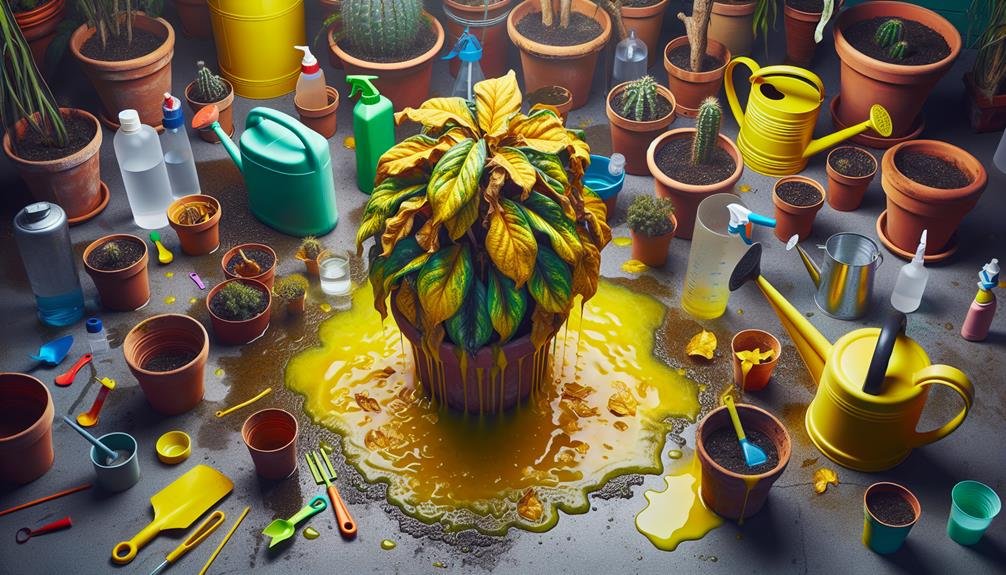
Overwatering can be detrimental to your indoor plants' health, causing wilting, yellowing leaves, and ultimately death. By adjusting your watering habits and paying closer attention to your plants' needs, you can help them thrive and flourish.
Underwatering
Underwatering indoor plants can be just as harmful as overwatering them, leading to dehydration and stunted growth. When you neglect to water your indoor plants enough, you deprive them of essential moisture needed for their survival and development. Signs of underwatering include dry, crispy leaves, wilting, and slow growth. Without an adequate water supply, the roots can't uptake nutrients effectively, causing the plant to weaken over time.
To prevent underwatering, make sure to check the moisture levels in the soil regularly. Stick your finger about an inch into the soil; if it feels dry, it's time to water your plant. Different plants have varying water requirements, so it's essential to understand the needs of each species you have at home. If you notice signs of dehydration, adjust your watering schedule accordingly to help your indoor plants thrive and flourish. Remember, finding the right balance is key to maintaining healthy and vibrant indoor plants.
Incorrect Frequency
Many indoor plant owners often struggle with watering their plants at the correct frequency, which is crucial for their health and growth. Overwatering or underwatering can both have detrimental effects on your indoor plants.

Watering too frequently can lead to waterlogged soil, depriving the roots of oxygen and causing root rot. On the other hand, watering too infrequently can result in dry, nutrient-deprived soil, causing your plants to wither and die. Finding the right balance is key.
To determine the correct watering frequency for your plants, consider factors such as plant type, size of the pot, humidity levels, and the season. Some plants may require more frequent watering during their active growing seasons, while others may need less water during dormancy.
It's essential to observe your plants closely and check the soil moisture regularly. Stick your finger into the soil – if it feels dry an inch below the surface, it's time to water. Adjusting your watering schedule based on these observations will help ensure your indoor plants thrive.
Improper Drainage
Improper drainage can cause serious issues for your indoor plants, affecting their overall health and growth. When pots lack proper drainage holes or if the pots are placed in trays that accumulate excess water, the roots can become waterlogged. This leads to root rot, where the roots suffocate due to lack of oxygen, making it difficult for plants to absorb nutrients effectively. Additionally, stagnant water in the soil can create a breeding ground for harmful bacteria and fungi, further compromising the plant's health.
To ensure proper drainage, always choose pots with drainage holes at the bottom to allow excess water to escape. If you have decorative pots without drainage, consider using a plastic grower pot with drainage inside the decorative one. When watering, ensure that excess water flows out of the pot and doesn't collect in the bottom. By addressing improper drainage, you can prevent root rot and other water-related issues, promoting healthier indoor plants.
Using Wrong Water Temperature
Using water at the wrong temperature when watering your indoor plants can have negative effects on their health and growth. Extreme temperatures, both hot and cold, can shock the roots and foliage of your plants, leading to stress and potential damage. Water that's too hot can scald the roots, disrupting their ability to absorb nutrients and water effectively. On the other hand, cold water can chill the roots, slowing down their metabolic processes and stunting growth.
To avoid these issues, aim to use room temperature water when watering your indoor plants. This temperature is comfortable for most plants and prevents any sudden temperature changes that could harm them. You can leave water out overnight to allow it to reach room temperature or use a thermometer to check before watering. By taking this simple step, you can ensure that your indoor plants receive water at the optimal temperature, promoting their overall health and vitality.
Frequently Asked Questions
Can Indoor Plants Be Watered With Distilled Water?
Yes, you can water indoor plants with distilled water. Distilled water is free of minerals and chemicals that can harm your plants. It's a great option for sensitive plants or if you have hard tap water.
Just ensure you're not over-watering your plants, as this can lead to root rot. Check the soil moisture levels regularly to make sure you're providing just the right amount of water for your indoor plants.
Is It Possible to Overwater Certain Types of Indoor Plants, Even if They Are Labeled as Low Maintenance?
Yes, it's possible to overwater certain types of indoor plants, even if they're labeled as low maintenance. Some plants, like succulents or cacti, are sensitive to excess water and can suffer if they're watered too frequently.
Keep an eye on the soil moisture levels and adjust your watering schedule accordingly to avoid overwatering these plants. Remember, it's better to underwater than overwater when caring for your indoor plants.
How Can I Tell if My Indoor Plant Is Receiving Too Much Sunlight or Not Enough Water?
To determine if your indoor plant is getting too much sunlight or needs more water, observe its leaves. If they're turning yellow or brown and crispy, it might be getting too much sun.
If the soil is dry to touch and the plant appears droopy, it could be thirsty. Adjust the placement to control sunlight exposure and check the soil moisture regularly to keep your plant healthy.
Are There Any Indoor Plants That Require More Frequent Watering Than Others?
Some indoor plants do require more frequent watering than others. Factors like plant type, pot size, and environmental conditions can influence watering needs.
Plants like peace lilies, ferns, and spider plants typically need more water due to their preference for moist soil.
It's important to check the specific care instructions for each plant to ensure you're providing the right amount of water to keep them healthy and thriving.
What Are Some Signs That My Indoor Plant May Be Suffering From Root Rot Due to Overwatering?
If your indoor plant is showing signs of root rot from overwatering, look out for wilting leaves, yellowing foliage, and a musty smell. The soil may feel soggy, and the roots could be mushy or discolored.
To save your plant, stop watering immediately, trim off any affected roots, and repot it in fresh, well-draining soil. Adjust your watering schedule to prevent future issues and ensure proper drainage for your plant's health.
Conclusion
Overall, it's important to remember that watering your indoor plants is a balancing act. Avoid overwatering or underwatering, make sure to water at the correct frequency, ensure proper drainage, and use the right water temperature.
By being mindful of these common mistakes, you can help your indoor plants thrive and grow beautifully. Keep these tips in mind to keep your green friends happy and healthy!