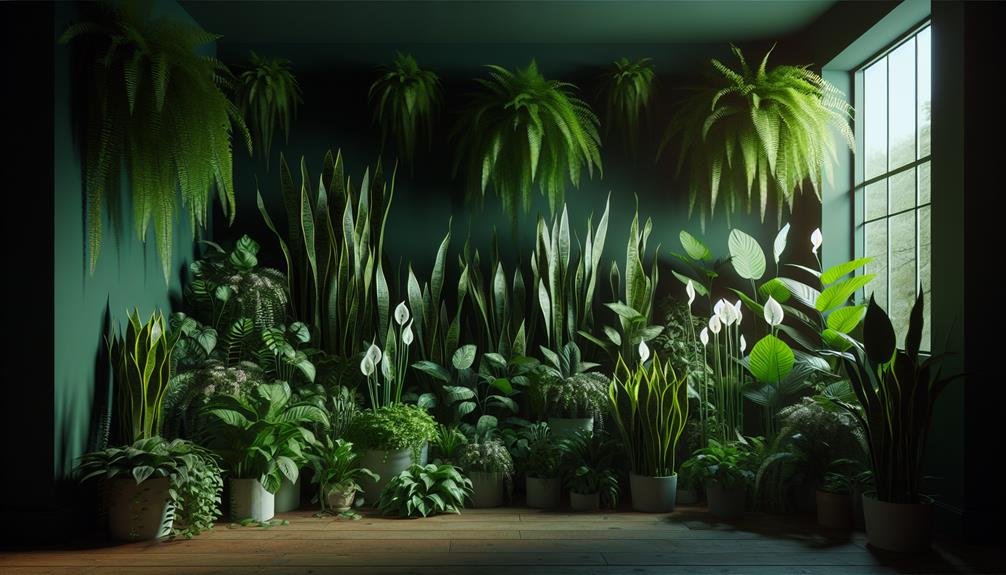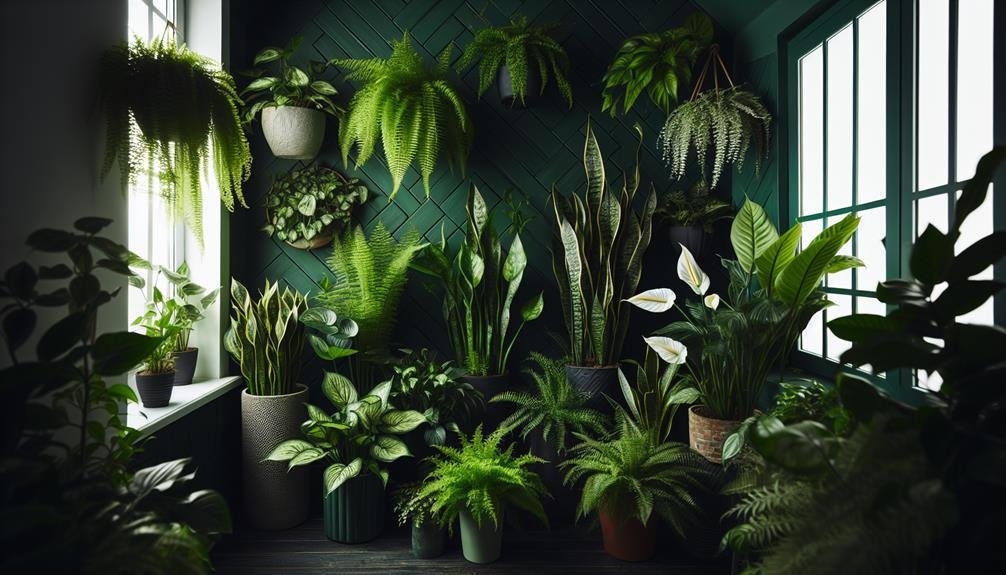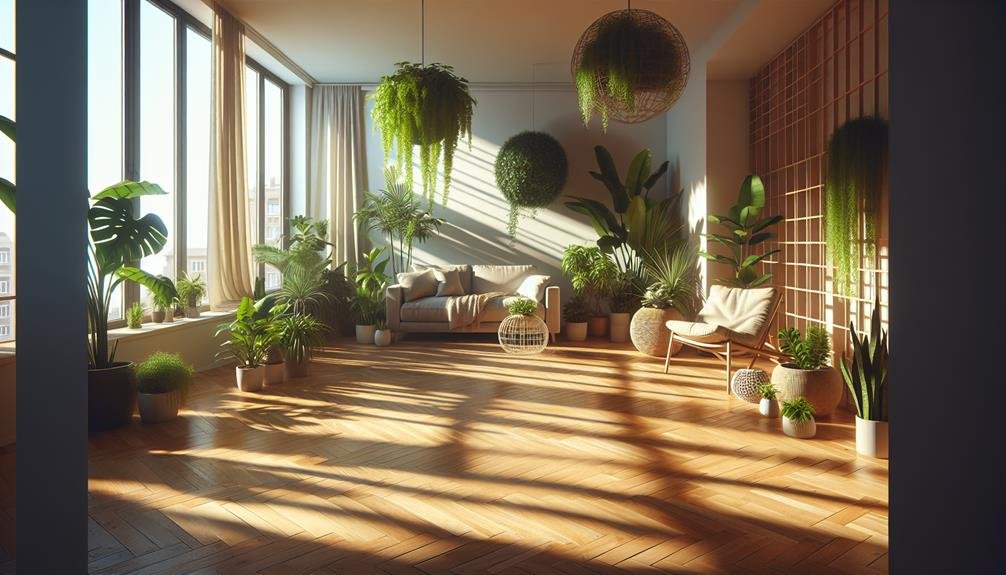
Imagine your home as a canvas, waiting for the gentle strokes of green to bring it to life. Just like a painter carefully selects the right shades for a masterpiece, choosing the perfect houseplants can transform your living space into a serene oasis.
But how do you know which plants will thrive in your home environment? Stay tuned to uncover the secrets of creating a natural sanctuary where tranquility and nature coexist seamlessly.
Benefits of Houseplants
Houseplants not only add beauty to your home but also improve air quality by removing toxins. They act as natural air purifiers, enhancing the overall health and well-being of your living space. These green companions have been shown to reduce stress, boost mood, and increase productivity. By releasing oxygen and absorbing carbon dioxide, houseplants create a fresh and rejuvenating atmosphere. Additionally, some plants have the ability to remove harmful chemicals like formaldehyde, benzene, and trichloroethylene from the air, promoting a healthier indoor environment for you and your family.
Incorporating houseplants into your home decor can also help regulate humidity levels, prevent airborne illnesses, and reduce background noise. The presence of plants can even speed up recovery time for individuals healing from illnesses or surgeries. With their various shapes, sizes, and colors, houseplants offer a versatile and natural way to enhance the aesthetics of any room while reaping the numerous health benefits they provide.
Selecting the Right Plants
To create a thriving indoor oasis, consider selecting plants that suit your space's lighting conditions and your level of commitment to maintenance.
When choosing houseplants, take into account the amount of natural light your space receives. If you have a bright, sunny room, plants like succulents, cacti, or spider plants thrive in such conditions. For lower light areas, consider plants like pothos, peace lilies, or snake plants that can tolerate shade.
Another factor to consider is your maintenance routine. If you have a busy schedule or tend to forget watering, opt for plants that are more forgiving, such as aloe vera, zz plants, or snake plants, which require minimal attention. On the other hand, if you enjoy tending to plants and have time for regular care, you might explore more high-maintenance options like orchids or fiddle leaf figs.
Caring for Your Plants
Consider implementing a consistent watering schedule and monitoring your plants' health to ensure they thrive in your indoor oasis. Proper watering is crucial for plant care. Overwatering can lead to root rot, while underwatering can cause wilting. Check the soil moisture level by sticking your finger into the soil; if it feels dry, it's time to water. Different plants have varying water requirements, so research each plant's specific needs.
Ensure your plants receive adequate sunlight. Most houseplants thrive in bright, indirect light. Rotate your plants occasionally to promote even growth. Dust the leaves regularly to help them absorb more light.
Keep an eye out for pests like spider mites or aphids. If you notice any issues, address them promptly to prevent infestations. Prune your plants to encourage healthy growth and remove dead or yellowing leaves.

With proper care and attention, your indoor oasis will flourish, bringing a touch of nature into your home.
Arranging Houseplants in Your Home
When incorporating houseplants into your home decor, be mindful of their placement to create an aesthetically pleasing and harmonious environment. Consider the light requirements of each plant and place them accordingly. Plants that need a lot of sunlight should be placed near windows, while those that prefer shade can thrive in corners or areas with less direct light. Grouping plants with similar watering needs together can make maintenance easier.
Experiment with different arrangements to find what works best for your space. Hanging plants can add a dynamic element to your decor, while tall floor plants can create a striking focal point. Utilize shelves, plant stands, or wall-mounted holders to display your plants at varying heights. Mixing different plant sizes and textures can add visual interest and depth to your home oasis. Remember to leave enough space between plants to allow for growth and airflow. By thoughtfully arranging your houseplants, you can transform your home into a lush and inviting sanctuary.
Creating a Relaxing Ambiance
Enhance your living space with the soothing presence of houseplants to create a relaxing ambiance. Imagine coming home to a tranquil environment filled with greenery that instantly calms your mind. Strategically placing plants like lavender, aloe vera, or peace lilies can help reduce stress and promote a sense of peace within your home. The gentle rustle of leaves in the breeze or the soft fragrance of blooming flowers can transport you to a state of relaxation after a long day.
Incorporating houseplants into your decor not only adds visual appeal but also contributes to improving air quality. Plants release oxygen while absorbing carbon dioxide and other toxins, creating a healthier indoor environment. By nurturing your houseplants, you establish a nurturing connection with nature that enhances your well-being.
To fully embrace the calming benefits of houseplants, consider creating designated relaxation areas where you can unwind surrounded by nature's beauty. Whether it's a cozy reading nook filled with ferns or a bedroom oasis adorned with snake plants, the presence of greenery will envelop you in a sense of tranquility.
Frequently Asked Questions
What Are Some Unique Ways to Display Houseplants in Small Living Spaces?
When you have limited space, get creative with your houseplant displays. Utilize wall-mounted shelves, hanging planters, or tiered plant stands to maximize vertical space.
Consider grouping small plants together in a cluster to create a mini garden effect. Use decorative pots or repurpose unique containers like teacups or mason jars for a personalized touch.
Experiment with different heights and arrangements to make the most of your small living space.
How Can I Prevent Pests From Infesting My Houseplants?
To prevent pests from infesting your houseplants, regularly inspect the leaves and soil for any signs of bugs.
Wipe down the leaves with a damp cloth and gently rinse the plant under water to remove any pests.
Avoid overwatering as it can attract insects.
Introduce natural predators like ladybugs or use insecticidal soap for more severe infestations.
Keeping your plants healthy and clean is key to pest prevention.
Are There Any Houseplants That Are Safe for Pets to Be Around?
When choosing houseplants safe for pets, opt for non-toxic varieties like spider plants, Boston ferns, or African violets. These plants are pet-friendly and won't harm your furry friends if they decide to take a nibble.
Make sure to research each plant's toxicity level before bringing it home to ensure a safe environment for both your plants and pets.
Enjoy creating a lush and safe space for everyone in your home!
Can Houseplants Improve Indoor Air Quality in a Home With Smokers?
Houseplants can indeed improve indoor air quality in a home with smokers. They help by absorbing some of the harmful chemicals present in cigarette smoke, making the air cleaner and healthier for you.
Consider adding plants like spider plants, peace lilies, or snake plants to your space to help combat the effects of smoking indoors. With proper care, these plants can make a positive impact on your home environment.
What Are Some Low-Maintenance Houseplants for Beginners With a Busy Lifestyle?
Looking for low-maintenance houseplants to fit your busy lifestyle? Consider starting with options like pothos, snake plants, or spider plants. These plants require minimal attention and can thrive even if you forget to water them occasionally.
With their resilience and air-purifying benefits, these beginner-friendly houseplants can bring a touch of greenery to your home oasis without demanding too much of your time and energy.
Conclusion
In conclusion, by incorporating houseplants into your home, you can create a natural oasis that not only enhances your space aesthetically but also benefits your overall well-being.
Selecting the right plants, caring for them properly, and arranging them strategically can help you achieve a relaxing ambiance that promotes peace and tranquility.
So go ahead, bring some greenery into your home and experience the positive impact it can have on your daily life.