When it comes to choosing indoor plants for dimly lit spaces, you may have heard the saying, 'Where there's a will, there's a way.' In the realm of greenery, finding the right plants that thrive in low light conditions can be quite the challenge.
However, fear not, as there are resilient options that can flourish even in the darkest corners of your home. These plants not only add a touch of nature to your space but also require minimal effort to maintain.
Intrigued to discover which green companions can brighten up your dimly lit room effortlessly?
Top Low-Light Indoor Plants
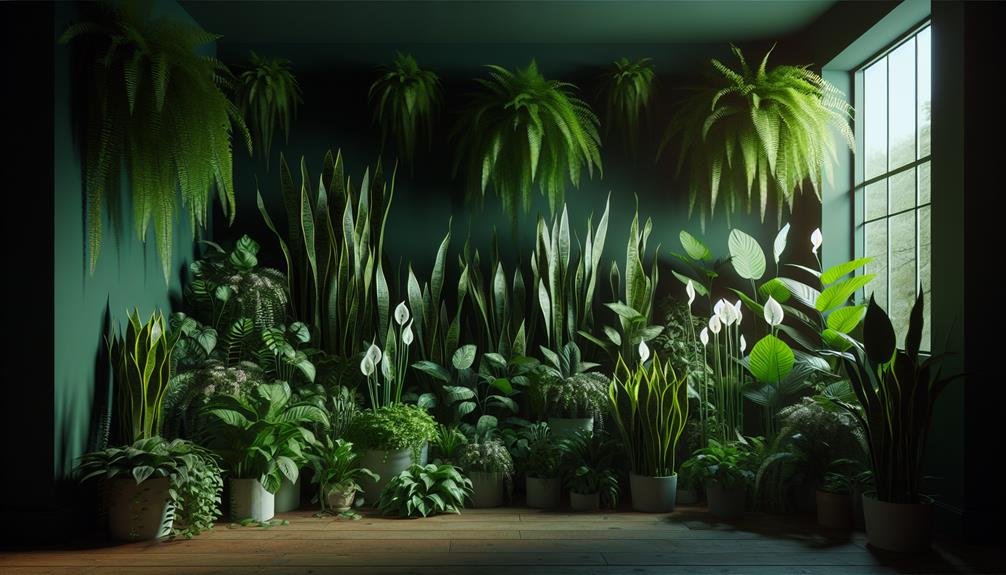
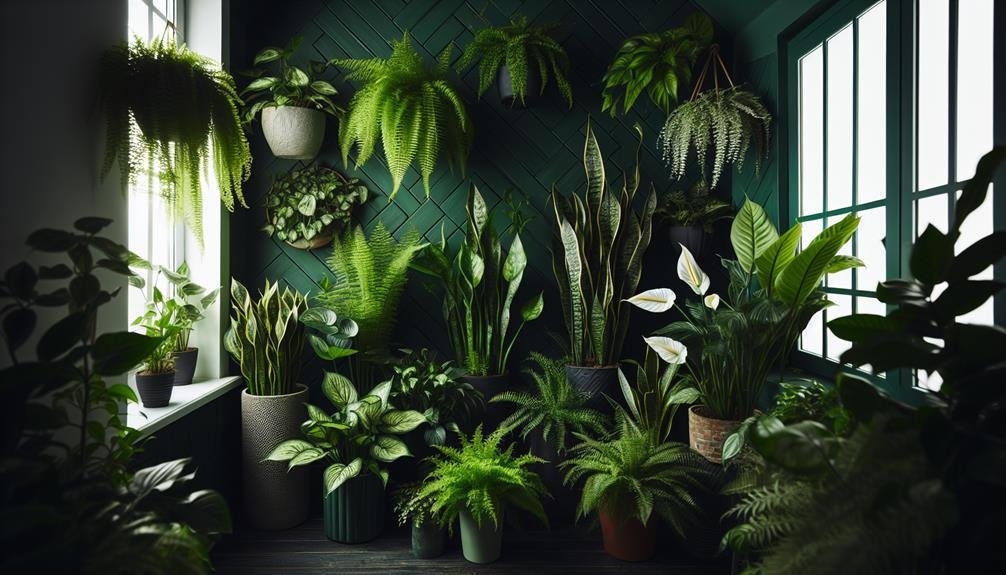
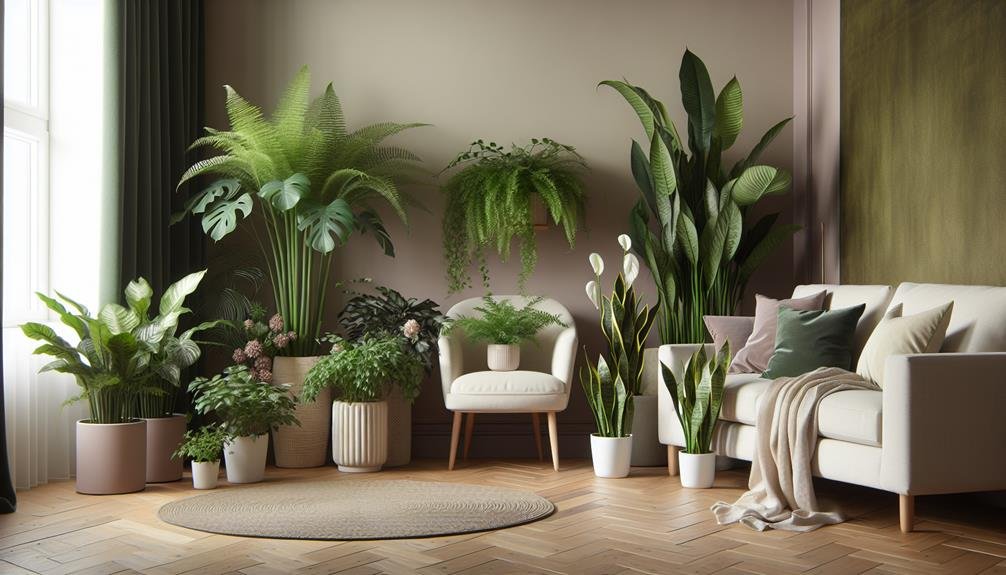
When looking for low-light indoor plants, consider options such as snake plants and pothos for their ability to thrive in dimly lit spaces. Snake plants, also known as mother-in-law's tongue, are hardy plants that require minimal maintenance and can tolerate low light conditions. Their striking tall, variegated leaves make them a popular choice for adding a touch of green to any room. Pothos, another excellent choice, are trailing vines with heart-shaped leaves that come in various shades of green. These plants are incredibly adaptable and can survive in low light while also helping purify the air.
For a pop of color in darker corners, consider the peace lily. This plant produces beautiful white flowers and can bloom even in low light settings. Cast-iron plants are also a great option for low-light areas due to their resilience and ability to withstand neglect. By choosing these top low-light indoor plants, you can bring life and greenery into spaces that receive minimal natural light.
Easy-Care Dim-Loving Plants
For low-maintenance plant enthusiasts seeking greenery in dimly lit spaces, consider easy-care dim-loving plants as a great solution. These plants thrive in low-light conditions and require minimal attention, making them perfect for those with busy schedules or little gardening experience.
One excellent option is the resilient Snake Plant. It can survive in almost any light conditions and only needs occasional watering.
Another fantastic choice is the Peace Lily, known for its elegant white blooms and ability to purify the air. This plant prefers shade and only requires weekly watering.
If you're looking for a hanging plant, the Spider Plant is a great low-light option. It's virtually indestructible and produces baby spider plants that you can propagate.
The English Ivy is also a popular choice for its cascading vines and adaptability to dim environments.

Best Plants for Dark Spaces
Considering dimly lit spaces, selecting the best plants can make a significant impact on the ambiance and air quality of your indoor environment.
When choosing plants for dark spaces, opt for varieties that thrive in low light conditions. Snake plants, also known as Sansevieria, are excellent choices as they can survive with minimal sunlight and require infrequent watering.
Peace lilies are another great option for dark rooms, as they can bloom in low light and help purify the air. Chinese evergreens are perfect for low-light settings and are easy to care for, making them ideal for beginners.
Pothos plants are hardy and can grow in various light conditions, including dimly lit areas. Lastly, ZZ plants are resilient and can thrive in low light, making them a perfect addition to any dark space in your home.
Thriving in Dimly Lit Rooms
To thrive in dimly lit rooms, select plants that are specifically adapted to low light conditions. These plants have evolved to make the most of minimal light, requiring less sunlight to carry out essential processes like photosynthesis. When choosing plants for these spaces, consider options such as snake plants, pothos, or peace lilies. These species are known for their ability to thrive in low light environments, making them ideal choices for dimly lit rooms.
Snake plants, with their striking vertical leaves, are resilient and can survive with little light. Pothos, known for their trailing vines, are adaptable and can thrive in various lighting conditions, including low light. Peace lilies, with their elegant white blooms, are excellent for adding a touch of beauty to dimly lit spaces while also purifying the air.
Indoor Plants for Low Light
When seeking indoor plants that thrive in low light conditions, prioritize species known for their adaptability to dim environments. Peace lilies are excellent choices, with their elegant white blooms and ability to purify the air. These plants can survive in low light but will also flourish in brighter settings if provided.
Consider the resilient snake plant, also called mother-in-law's tongue, which thrives in low light and requires minimal maintenance. The spider plant is another versatile option that can tolerate various light conditions, making it ideal for dimly lit spaces. Its arching leaves and air-purifying qualities add a touch of freshness to any room.
Pothos, with its cascading vines, is a hardy plant that can grow in low light, though it appreciates some indirect sunlight. By selecting these adaptable indoor plants, you can bring life and greenery into even the darkest corners of your home.
Frequently Asked Questions
Can Indoor Plants Survive in Complete Darkness or Do They Need Some Natural Light to Thrive?
Indoor plants mightn't survive in complete darkness since they usually need some natural light to grow well. Light plays a crucial role in the photosynthesis process, which helps plants produce energy.
However, certain low-light plants can adapt to dimly lit spaces and survive with minimal light exposure. It's essential to choose the right plants and provide them with suitable conditions to thrive even in low-light environments.
Are There Any Indoor Plants That Can Purify the Air in Dimly Lit Spaces as Effectively as Plants in Well-Lit Areas?
In dimly lit spaces, certain indoor plants can still effectively purify the air. While some plants thrive better in well-lit areas, options like snake plants, peace lilies, or ZZ plants can filter the air in low-light conditions.
These plants are known for their resilience and ability to adapt to different light levels, making them dependable choices for improving air quality even in dimly lit spaces.
How Often Should Indoor Plants in Low-Light Environments Be Watered Compared to Plants in Brighter Settings?
When caring for indoor plants in low-light areas, you should water them less frequently compared to plants in brighter spots. Light directly impacts how quickly plants use up water, so in dimly lit spaces, the water absorption rate is slower.
Be mindful not to overwater these plants, as they won't dry out as fast. Adjust your watering schedule accordingly to keep your low-light plants healthy and thriving.
What Are Some Signs That Indicate an Indoor Plant Is Not Receiving Enough Light and How Can This Be Remedied?
If your indoor plant isn't getting enough light, it may show signs like leggy growth or yellowing leaves. To fix this, consider moving it to a brighter spot, closer to a window perhaps.
You could also supplement with artificial grow lights. Remember, plants need light to thrive, so watch out for these indicators and adjust their location accordingly.
Your green companions will thank you with vibrant growth!
Are There Any Specific Types of Indoor Plants That Are More Suitable for Dimly Lit Bathrooms Compared to Other Rooms in the House?
For dimly lit bathrooms, consider plants like snake plants, pothos, or peace lilies that can thrive in low light conditions. These plants are well-suited for areas with minimal natural light. Snake plants are hardy and require little maintenance, while pothos and peace lilies are great for adding greenery to your bathroom.
Remember to occasionally rotate the plants to ensure even growth despite the limited light exposure.
Conclusion
So, if you're looking to brighten up a dimly lit space in your home, don't worry! There are plenty of dependable indoor plants that can thrive in low light conditions.
From easy-care options to plants that specifically love dark spaces, you have plenty of choices to choose from.
With the right indoor plant, you can bring a touch of greenery and life to even the darkest corners of your home.
Happy planting!