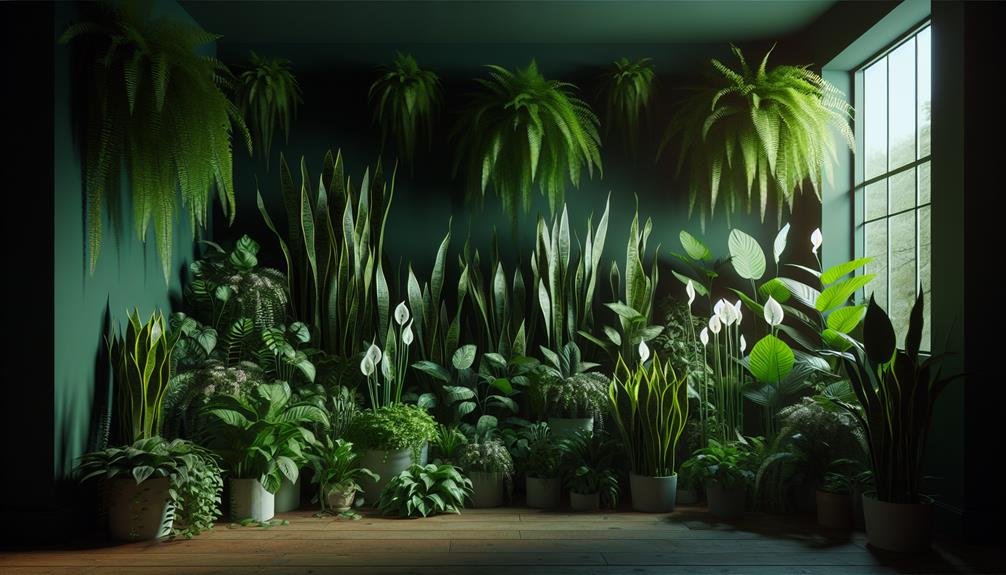
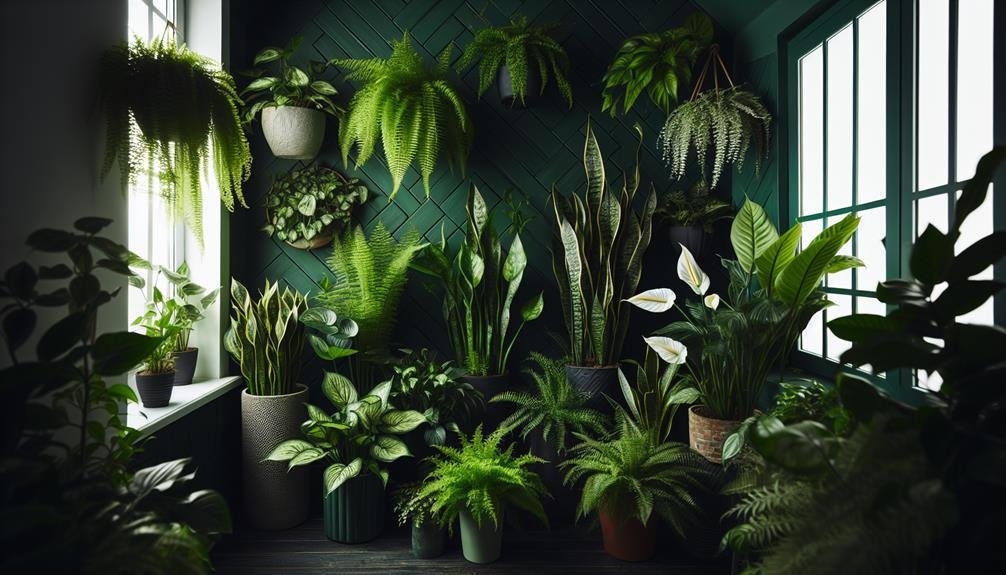
Coincidentally, you've found yourself with dimly lit corners in need of some greenery.
What if we told you there are easy-care plants that thrive in such spaces? Imagine adding a touch of nature to those shadowy nooks without the hassle of constant maintenance.
These plants not only survive but can actually thrive in low light conditions, bringing life to those forgotten areas.
Stay tuned to discover which green companions can brighten up your dim spots effortlessly.
Snake Plant
If you're looking for an effortless plant that thrives in low light, consider the Snake Plant. Also known as Sansevieria or Mother-in-law's Tongue, this hardy plant is perfect for beginners or anyone with a busy schedule. Snake Plants are incredibly low maintenance, requiring minimal water and care. Their striking long, upright leaves come in various shades of green, making them a stylish addition to any indoor space.
One of the Snake Plant's most notable features is its ability to purify the air. It removes toxins like formaldehyde and benzene, making it not only a beautiful decor piece but also a health-conscious choice for your home. Another benefit of the Snake Plant is its durability. It can adapt to different light conditions, including low light, and is resistant to pests and diseases.
In addition to its air-purifying qualities and easy care routine, the Snake Plant is also a symbol of resilience and strong energy according to Feng Shui practices. So, if you're looking to add a touch of green to your dimly lit space without the hassle, the Snake Plant is an excellent choice.
Pothos
Pothos, a popular choice for low-light environments, is a versatile and easy-to-care-for plant. With its vibrant green leaves and trailing vines, it can thrive in various lighting conditions, making it ideal for dimly lit spaces. One of the key benefits of Pothos is its ability to purify the air by removing toxins, creating a healthier environment in your home or office.
To care for your Pothos, make sure to place it in indirect sunlight and water it when the top inch of soil feels dry. This plant is forgiving when it comes to watering, so you don't need to worry about overdoing it. Regular pruning will help maintain its lush appearance and encourage new growth.
Pothos is known for its resilience and adaptability, making it perfect for beginners or those with busy schedules. Whether you choose to hang it in a basket or let it trail down a shelf, this low-maintenance plant will bring a touch of nature to any dimly lit space.

Spider Plant
The Spider Plant, a resilient and visually appealing choice, thrives in low-light environments and is a great addition to any indoor space. This plant is perfect for those dimly lit corners where other plants struggle to survive. With its long, arching leaves that can add a touch of elegance to your space, the Spider Plant is a popular choice for both homes and offices.
One of the best features of the Spider Plant is its low maintenance requirements. It doesn't need frequent watering; in fact, overwatering can harm it. Simply water it when the soil is dry to the touch, and your Spider Plant will be happy. Additionally, this plant is known for its air-purifying qualities, making it a healthy choice for your indoor environment.
Propagation is also a breeze with the Spider Plant. It produces baby spider plants, known as spiderettes, which can be easily rooted in water or soil to grow new plants. With its adaptability and ease of care, the Spider Plant is a fantastic option for anyone looking to add a touch of greenery to their low-light space.
Peace Lily
Thriving in low-light conditions, the Peace Lily is a popular choice for indoor spaces seeking a touch of elegance and easy care. This plant, with its glossy dark green leaves and delicate white flowers, adds a refreshing charm to any room. Peace Lilies aren't only aesthetically pleasing but also act as natural air purifiers, removing toxins like formaldehyde and benzene from the air, making your living space healthier.
Caring for a Peace Lily is a breeze. They prefer indirect light and only need watering when their soil is dry. Overwatering can harm these plants, so it's best to let the soil partially dry out between waterings. If you notice the plant drooping, a good drink of water will quickly revive it. Fertilizing occasionally during the growing season will help promote blooming.
With minimal effort, you can enjoy the beauty and benefits of a Peace Lily in your home, even in dimly lit spaces.
ZZ Plant
If you're looking for a low-maintenance plant that thrives in dimly lit spaces, consider the ZZ Plant. The ZZ Plant, scientifically known as Zamioculcas zamiifolia, is a popular choice for those seeking a touch of greenery in low-light environments. This plant features glossy, dark green leaves that add a pop of color to any room without requiring much attention.
One of the key advantages of the ZZ Plant is its ability to tolerate low light conditions, making it ideal for offices, bathrooms, or any area with minimal natural light. Additionally, this plant is incredibly resilient and can go for long periods without water, perfect for busy individuals or forgetful plant owners.
To care for your ZZ Plant, place it in indirect light and allow the soil to dry out between waterings to prevent overwatering. With its modern appearance and easy care requirements, the ZZ Plant is a fantastic choice for anyone looking to add a stylish and low-maintenance plant to their indoor space.
Frequently Asked Questions
Can These Plants Survive in a Completely Dark Room With No Natural Light at All?
In a completely dark room with no natural light at all, most plants struggle to survive due to the lack of photosynthesis. While certain plants may tolerate low light conditions, total darkness is a challenge they can't overcome. Without any light source, plants can't generate energy, leading to their eventual demise.
For optimal growth and health, it's crucial to provide plants with some form of light, even if it's minimal.
Do These Plants Require a Specific Temperature Range to Thrive in Dimly Lit Spaces?
In dimly lit spaces, plants usually don't require a specific temperature range to thrive. However, some plants may prefer slightly warmer or cooler conditions. It's essential to consider the specific needs of each plant species when it comes to temperature.
Just make sure to keep an eye on the thermometer and adjust if needed to ensure your plants are comfortable and healthy in their environment.
How Often Should I Water These Plants if They Are Placed in a Dimly Lit Room?
Water your plants in dimly lit rooms sparingly. Overwatering can lead to root rot. Check the soil moisture level by inserting a finger into the soil. If it feels dry, then it's time to water.
Generally, watering once every 1-2 weeks should be sufficient for most low-light plants. Adjust based on the specific needs of your plant species. Remember, it's better to underwater than overwater in low-light conditions.
Are There Any Common Pests That These Plants Are Susceptible to in Low Light Conditions?
In low light conditions, common pests can still bother your plants. Keep an eye out for spider mites, mealybugs, and fungus gnats.
Spider mites thrive in dry environments, while mealybugs can hide in plant crevices. Fungus gnats are attracted to damp soil.
Regularly inspect your plants for any signs of these pests and take action promptly to keep your plants healthy and pest-free.
Can These Plants Be Placed in a Bathroom With Low Light and High Humidity Levels?
In a bathroom with low light and high humidity levels, some easy-care plants for dimly lit spaces can thrive. Make sure the chosen plants can handle the specific conditions of your bathroom.
Consider options like snake plants, pothos, or ZZ plants. These plants can tolerate low light and higher humidity, making them suitable choices for your bathroom oasis.
Just remember to adjust watering schedules accordingly to prevent overwatering in the humid environment.
Conclusion
Overall, incorporating easy care plants like Snake Plants, Pothos, Spider Plants, Peace Lilies, and ZZ Plants into your dimly lit spaces can bring life and greenery into your home without requiring too much maintenance.
These plants thrive in low light conditions and are perfect for those who may not have a green thumb. With minimal effort, you can enjoy the beauty and benefits of indoor plants in even the darkest corners of your home.