
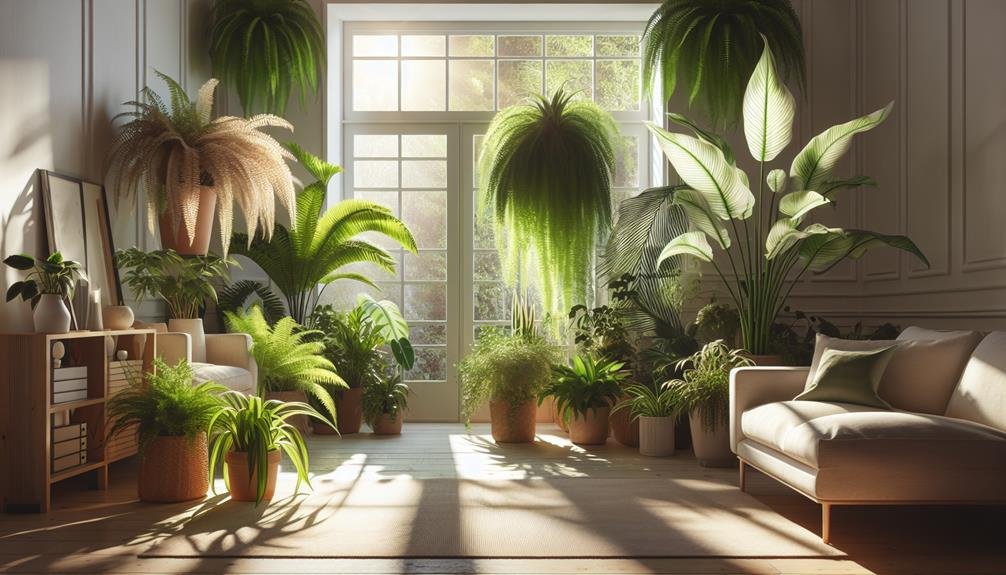
Have you ever wondered if houseplants truly have the ability to improve the air quality in your home?
The answer might surprise you. By strategically selecting the right houseplants and placing them in key locations within your living space, you can significantly enhance the air you breathe every day.
But how exactly do these green companions achieve this feat?
Stay tuned as we explore three essential tips that can help you optimize the air-purifying benefits of houseplants.
Selecting the Right Houseplants
When choosing houseplants for air quality, consider factors such as light requirements and air-purifying abilities. Different plants thrive under varying light conditions, so it's crucial to match the plant's needs with the light available in your home. For example, snake plants and spider plants can tolerate low light, making them great choices for dimly lit spaces. On the other hand, plants like aloe vera and succulents prefer bright, indirect light and are perfect for sunny windowsills.
Beyond light requirements, selecting plants known for their air-purifying qualities can significantly enhance your indoor air quality. Plants such as peace lilies, pothos, and rubber trees are excellent at filtering out common pollutants like formaldehyde, benzene, and trichloroethylene. By strategically placing these plants throughout your home, you can create a healthier living environment while adding a touch of natural beauty.
Proper Placement for Optimal Air Filtration
To maximize air filtration efficiency, strategically position air-purifying plants throughout your living space. Start by placing plants in rooms where you spend the most time, such as the living room, bedroom, or home office. Consider placing larger plants like peace lilies or snake plants near areas with high levels of pollutants, such as near windows or in the kitchen. These plants are known for their ability to filter out toxins effectively.
Additionally, consider grouping plants together to create mini indoor gardens. This not only enhances the aesthetic appeal of your space but also increases the overall air-purifying capabilities. Cluster plants with similar care requirements to ensure they thrive in their new arrangement.
Don't forget about utilizing plants in less conventional spaces, such as bathrooms or laundry rooms. These areas can benefit greatly from plants like spider plants or bamboo palms, which thrive in high humidity environments. By strategically placing air-purifying plants throughout your home, you can create a healthier and more enjoyable living environment.
Maintenance Tips for Healthy Plants
For healthy plants, regular watering and proper sunlight exposure are essential. Water your plants when the top inch of soil feels dry to the touch. Overwatering can lead to root rot, so make sure the pots have drainage holes to prevent water from pooling at the bottom. When watering, aim to moisten the entire root ball evenly.

In addition to watering, ensure your plants receive adequate sunlight. Most houseplants thrive in bright, indirect light, but some species may require more or less sunlight. Monitor their growth and adjust their placement accordingly. Dust the leaves regularly to help them absorb light more efficiently.
Inspect your plants frequently for any signs of pests or diseases. If you notice any issues, isolate the affected plant to prevent the problem from spreading. Consider using natural remedies or insecticidal soaps to treat common pests like spider mites or aphids. Regular maintenance and care will keep your houseplants healthy and vibrant, enhancing both air quality and aesthetic appeal in your home.
Frequently Asked Questions
Can Houseplants Actually Remove Harmful Chemicals Like Formaldehyde and Benzene From the Air?
Yes, houseplants can indeed remove harmful chemicals like formaldehyde and benzene from the air. They do this by absorbing these toxins through their leaves and roots.
Having houseplants in your home can help improve indoor air quality and create a healthier environment for you to breathe in.
How Many Houseplants Do I Need to Effectively Improve Air Quality in a Room?
To effectively improve air quality in a room, you'll want to aim for about one houseplant per 100 square feet of space. This ratio helps ensure that the plants can efficiently filter the air and remove harmful chemicals.
Having a few plants strategically placed throughout the room can make a noticeable difference in the air quality. Remember to choose plants that are known for their air-purifying qualities to get the best results.
Are There Certain Types of Houseplants That Are Better Suited for Improving Air Quality in Specific Rooms (E.G. Bedroom, Living Room, Kitchen)?
When considering which houseplants to place in different rooms of your home for better air quality, it's essential to match the plant's specific air-purifying abilities with the room's needs.
Some plants like spider plants or peace lilies are great for bedrooms due to their ability to remove toxins and promote relaxation.
In the kitchen, plants like aloe vera or herbs can help combat cooking odors and purify the air effectively.
Do Houseplants Need to Be Pruned or Trimmed Regularly to Maintain Their Air Purifying Capabilities?
Regular pruning and trimming of houseplants are essential to maintain their air purifying capabilities. By removing dead leaves and branches, you help the plant focus its energy on new growth and air filtration.
Neglecting this maintenance can hinder the plant's ability to purify the air effectively. So, make sure to include pruning as part of your plant care routine for optimal air quality benefits in your home.
Can Overwatering Houseplants Actually Decrease Their Ability to Filter Toxins From the Air?
Overwatering your houseplants can actually decrease their ability to filter toxins from the air. Too much water can lead to root rot, which can weaken the plant and hinder its air-purifying capabilities.
Make sure to water your plants only when necessary and allow the soil to dry out between waterings. This will help maintain the health of your plants and ensure they continue to purify the air effectively.
Conclusion
Overall, incorporating houseplants into your living space is a simple and effective way to enhance air quality.
By choosing the right plants, placing them strategically, and maintaining them properly, you can enjoy cleaner, fresher air in your home.
So go ahead and bring some greenery indoors to not only beautify your space but also improve the air you breathe. Your health and well-being will thank you!



