If you've been looking for a simple yet effective way to boost your plant's health, humidity trays may just be the solution you need. By incorporating these trays into your plant care routine, you can provide your plants with an environment that promotes growth and vitality.
But how exactly do humidity trays work, and what benefits do they offer your plants? Let's explore the science behind humidity trays and how they can make a significant difference in the well-being of your beloved greenery.
Benefits of Using Humidity Trays
By using humidity trays, you can effectively improve plant health by controlling moisture levels in the surrounding environment. These trays act as a simple yet powerful tool to create a humid microclimate around your plants, mimicking their natural habitat and promoting growth. The increased humidity helps plants absorb nutrients more efficiently, leading to healthier and lusher foliage. Additionally, humidity trays can prevent issues like wilting, browning of leaf tips, and pest infestations caused by dry air.
Furthermore, humidity trays are easy to use and maintain. Simply fill the tray with water and place your plant on top, ensuring that the bottom of the pot doesn't touch the water directly. Refill the tray as needed to keep a consistent level of moisture in the air. This hands-on approach to plant care allows you to actively monitor and adjust the humidity levels based on your plant's specific needs.
Choosing the Right Tray Size
To ensure optimal plant health with humidity trays, selecting the right tray size is key for effectively maintaining the desired moisture levels around your plants. Choosing a tray that matches the dimensions of your plant container is crucial. The tray should be slightly larger than the pot to allow for proper water collection without the risk of overflow. If the tray is too small, it may not hold an adequate amount of water, leading to insufficient humidity levels for your plant. Conversely, a tray that's excessively large may collect excess water, potentially causing root rot or other moisture-related issues.
Consider the space where your plant is located when selecting a tray size. If your plant is in a confined area, opt for a compact tray that fits neatly underneath. For plants in larger spaces, you have the flexibility to choose a larger tray size. By matching the tray size to your plant's needs and the space available, you can effectively enhance the health and growth of your plants through proper humidity regulation.
Setting Up Your Humidity Tray
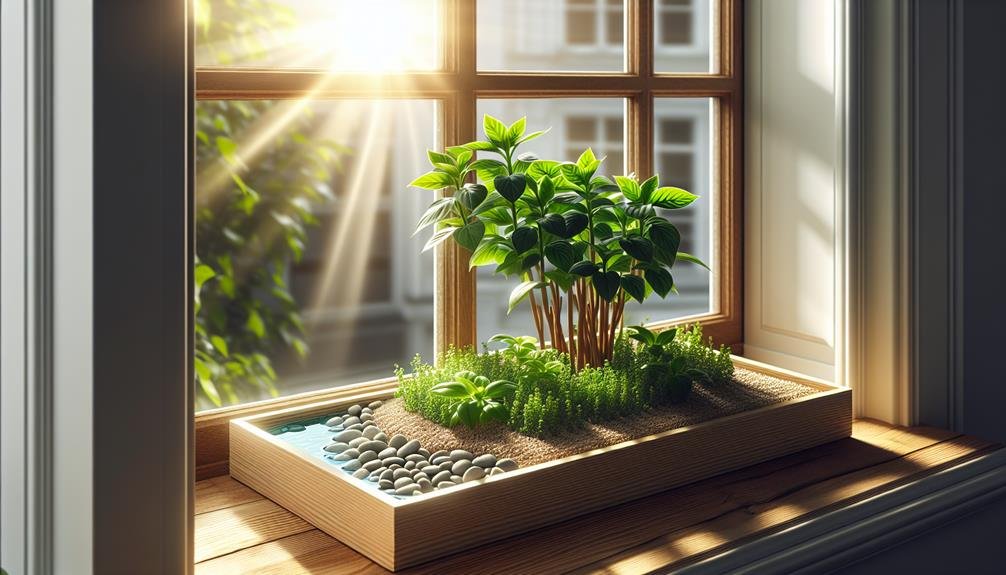
Setting up your humidity tray correctly ensures that your plants receive the proper moisture levels for optimal health and growth. Begin by selecting a tray that's slightly larger than the base of your plant pot. Fill the tray with pebbles or marbles, ensuring they cover the bottom evenly.
Add water to the tray, making sure the water level stays below the top of the pebbles. Placing the plant pot on top of the pebbles allows for water evaporation to create humidity around the plant. Be cautious not to let the plant's roots sit in the water, as this can lead to root rot.
Position the tray in an area with indirect sunlight to prevent algae growth. Refill the tray with water as needed to maintain consistent humidity levels. By setting up your humidity tray correctly, you provide a conducive environment for your plants to thrive.
Monitoring and Adjusting Humidity Levels
To effectively maintain healthy humidity levels for your plants, regularly monitor and adjust the moisture content in the tray. Monitoring humidity levels is crucial for ensuring your plants thrive. Use a hygrometer to measure the humidity in the air around your plants. Aim for levels between 50-60% for most houseplants. If the humidity is too low, consider adding water to the tray or increasing the surface area of the tray by using a larger one. On the other hand, if the humidity is too high, reduce the amount of water in the tray or increase ventilation around the plants.

Adjusting the humidity levels in your tray may require some trial and error. Start by making small changes and observing how your plants respond. Remember that different plants have varying humidity preferences, so it's essential to research the specific needs of each plant in your care. By actively monitoring and adjusting the humidity levels in your tray, you can create an optimal environment for your plants to flourish.
Maintenance Tips for Long-Term Success
For long-term success in maintaining plant health with humidity trays, consistency in monitoring and adjusting humidity levels is key. To ensure your plants thrive, make it a habit to check the water level in the tray regularly. Refill the tray with water when it evaporates to maintain the desired humidity.
Keep an eye on the moisture level in the soil as well. If the soil feels dry, consider misting the plant or adding water to the tray. Regularly clean the tray to prevent the buildup of algae or mold, which can harm your plants. Additionally, inspect the tray for any mineral deposits that may accumulate over time; if present, gently scrub them away.
Rotate your plants occasionally to ensure even growth and exposure to humidity. Remember, consistency is crucial for the long-term health of your plants. By following these maintenance tips diligently, you can create an optimal environment for your plants to flourish with the help of humidity trays.
Frequently Asked Questions
Can I Use Tap Water in My Humidity Tray, or Is Distilled Water Better for My Plants?
You can use tap water in your humidity tray, but distilled water is better for your plants. Tap water may contain minerals that could build up in the tray over time and potentially harm your plants.
Distilled water is free of these minerals, providing a purer source of hydration for your plants. Opting for distilled water can help maintain the health and longevity of your plants in the long run.
How Often Should I Clean My Humidity Tray to Prevent Mold and Bacteria Growth?
To prevent mold and bacteria growth in your humidity tray, clean it regularly. Wipe it down with mild soap and water every 1-2 weeks. Make sure to rinse it thoroughly to remove any residue.
Keeping your tray clean helps maintain a healthy environment for your plants. Regular maintenance is key to ensuring optimal plant health and preventing any potential issues caused by mold or bacteria buildup.
Are There Any Types of Plants That Should Not Be Placed on Humidity Trays Due to Their Specific Watering Needs?
When considering which plants to place on humidity trays, it's essential to factor in their specific watering requirements. Some plants, like succulents or cacti, prefer drier conditions and may not benefit from the extra moisture provided by humidity trays.
These plants thrive in well-draining soil and don't require the added humidity that trays offer. Be mindful of your plant's individual needs to ensure they receive the appropriate care for optimal growth.
Can I Use a Humidity Tray in Conjunction With a Plant Humidifier for Even Better Results?
You can definitely use a humidity tray alongside a plant humidifier for improved results. By combining both methods, you can create a more consistent and elevated humidity level around your plants.
This dual approach can be especially beneficial for plants that require higher moisture levels to thrive. Make sure to monitor the moisture levels closely to ensure you're providing the right environment for your plants to flourish.
Are There Any Additional Benefits to Using a Humidity Tray Besides Just Increasing Humidity Levels for My Plants?
Using a humidity tray for your plants offers more benefits than just increasing humidity levels. It helps prevent root rot by providing a stable moisture source, improves air circulation around the plant's base, and enhances overall plant health by creating a microclimate.
Additionally, humidity trays can also act as a decorative element for your indoor garden, adding aesthetic appeal while serving a functional purpose.
Conclusion
Overall, using humidity trays is a simple and effective way to enhance the health of your plants.
By providing the right amount of moisture and humidity, you can create an optimal environment for your plants to thrive.
With proper setup, monitoring, and maintenance, you can enjoy beautiful and healthy plants for years to come.
Give your plants the care they deserve with humidity trays.