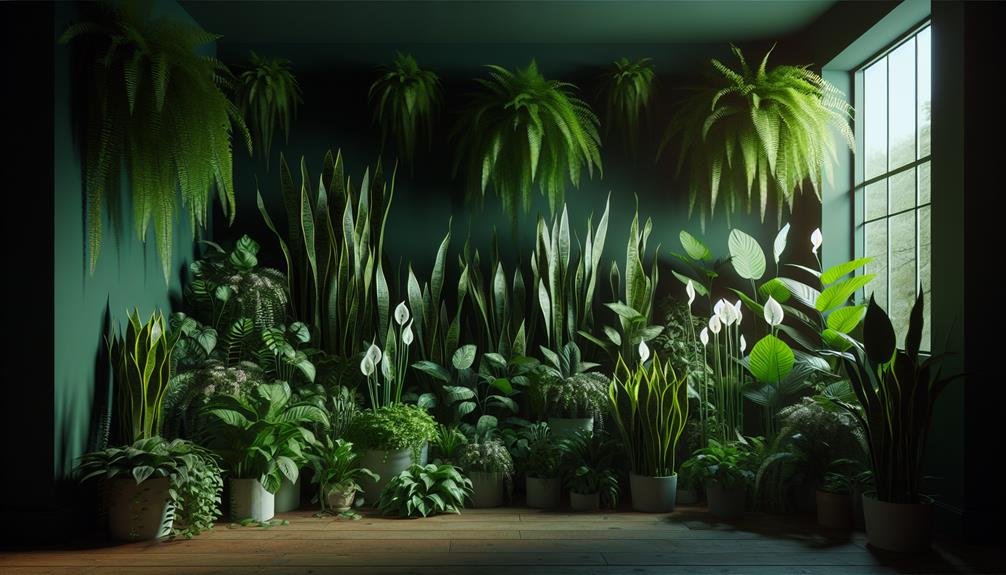
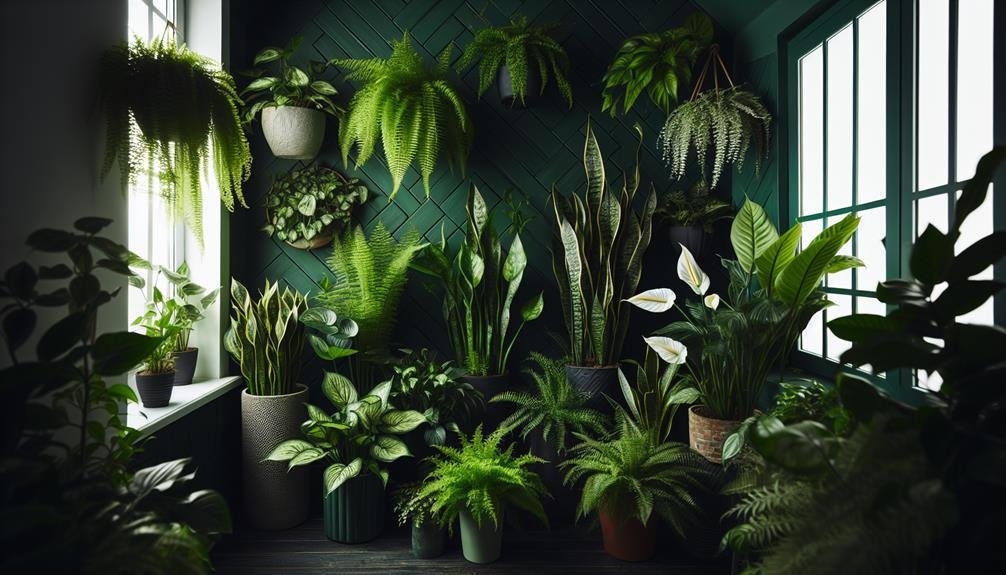
Imagine stepping into a dimly lit room where beams of sunlight playfully dance through the leaves of a peace lily, casting intricate patterns on the walls. This scene, akin to a botanical ballet, hints at the fascinating journey of shade-tolerant indoor plants.
From ancient civilizations harnessing the power of low-light greens to the modern obsession with lush, shadow-loving species, the evolution of these botanical beauties is a tale worth exploring. As you begin to uncover the historical roots of these resilient plants, you'll soon realize the untold stories and secrets they hold within their verdant leaves.
Origins of Shade-tolerant Indoor Plants
Shade-tolerant indoor plants have adapted to low light conditions in their natural habitats, making them ideal for indoor spaces with limited sunlight. These plants, such as the peace lily and spider plant, originate from the forest floors of tropical regions where they've evolved to thrive beneath the canopy of larger trees. In these dense environments, only small amounts of sunlight filter through, prompting these plants to develop mechanisms to efficiently capture and utilize available light.
Their ability to survive in low light conditions is attributed to various adaptations. For instance, shade-tolerant plants often have larger leaves to maximize light absorption, and some even have specialized cells that can efficiently convert light into energy. Additionally, these plants have developed the capacity to photosynthesize with minimal light, allowing them to carry out essential processes even in dimly lit areas.
Understanding the origins of shade-tolerant indoor plants sheds light on why they're well-suited for indoor environments with limited sunlight. By harnessing their natural abilities, you can successfully cultivate a thriving indoor garden even in the shadiest corners of your home.
Evolution of Indoor Shade Plants
The evolutionary journey of indoor shade plants reveals fascinating adaptations to low light environments that have enabled their survival and proliferation. Over time, these plants have developed unique characteristics to thrive in the dimmer conditions typically found indoors. One key adaptation is their ability to efficiently capture and utilize available light. Indoor shade plants have evolved to have larger surface areas on their leaves, allowing them to maximize light absorption. Additionally, they've developed mechanisms to convert light energy into chemical energy more efficiently, ensuring their growth and development.
Another crucial evolution seen in indoor shade plants is their heightened sensitivity to light. These plants can quickly adjust their physiological processes in response to changes in light intensity, ensuring they can make the most of even minimal light exposure. Furthermore, many indoor shade plants have developed mechanisms to protect themselves from potential damage caused by excessive light, such as specialized pigments that help dissipate excess energy harmlessly. These evolutionary adaptations highlight the resilience and ingenuity of indoor shade plants in adapting to low light environments.
Popular Varieties of Low-light Plants
While low-light conditions can pose a challenge for many plants, there are several popular varieties known for thriving in such environments. One of the most well-known low-light plants is the Snake Plant, also called Mother-in-Law's Tongue, recognized for its ability to survive with minimal sunlight.
Another favorite is the Peace Lily, appreciated not only for its elegant white blooms but also for its adaptability to low-light situations. The Spider Plant is a resilient choice that can thrive in various light conditions, making it perfect for dimly lit spaces.
For a touch of greenery in darker corners, consider the Chinese Evergreen, which boasts attractive foliage and is low-maintenance. The Cast Iron Plant, as its name suggests, is extremely hardy and can endure low-light settings with ease.

Lastly, the Parlor Palm is a charming option that adds a tropical feel to indoor spaces while being tolerant of low-light conditions. These popular low-light plants offer a range of options to brighten up your home without requiring abundant sunlight.
Historical Use of Shade-tolerant Plants
As you explore the historical use of plants that thrive in low-light conditions, you'll uncover fascinating insights into their roles in different cultures and time periods. Throughout history, shade-tolerant plants have played essential roles in various civilizations. In ancient Egypt, plants like peace lilies were grown indoors to symbolize rebirth and the afterlife. The Chinese culture embraced the beauty of shade-loving plants such as snake plants, using them in traditional medicine and feng shui practices to promote harmony and prosperity.
During the Victorian era, shade-tolerant plants like ferns became popular in ornamental gardens, enhancing the romantic and lush aesthetic of the period. In Japan, the art of bonsai cultivation utilized shade-loving species like the Japanese maple, showcasing meticulous care and patience in shaping these miniature trees.
Understanding the historical significance of shade-tolerant plants provides a deeper appreciation for their enduring popularity and cultural relevance in indoor gardening practices today.
Modern Trends in Shade-loving Houseplants
Embracing contemporary interior design trends, shade-tolerant houseplants are increasingly sought after for their adaptability to low-light environments. Modern homeowners are drawn to these plants for their ability to thrive in spaces with limited natural light, making them perfect for apartments, offices, or any room that lacks direct sunlight. One prominent trend is the use of large, lush foliage plants like the peace lily, snake plant, or zz plant, which not only add a touch of greenery but also help purify the air. These plants aren't only functional but also serve as stylish decor elements, adding a sense of tranquility and nature to indoor spaces.
Another popular trend in shade-loving houseplants is the rise of unique and exotic varieties that aren't commonly seen. People are increasingly looking for plants like the calathea medallion, bird's nest fern, or Chinese evergreen to add a distinctive flair to their homes. These plants not only thrive in low-light conditions but also bring a sense of sophistication and individuality to interior design schemes. With the growing emphasis on wellness and biophilic design, shade-tolerant houseplants have become essential elements in creating inviting and harmonious indoor environments.
Frequently Asked Questions
What Are Some Common Pests and Diseases That Shade-Tolerant Indoor Plants Are Susceptible To?
Common pests and diseases that shade-tolerant indoor plants are susceptible to include spider mites, aphids, and powdery mildew. These pesky critters can wreak havoc on your green companions if not addressed promptly. Keep an eye out for any signs of infestation, such as webbing, tiny bugs, or white powdery spots on the leaves.
Regularly inspecting your plants and taking preventive measures can help keep them healthy and thriving.
Can Shade-Tolerant Indoor Plants Be Grown Hydroponically or Aeroponically?
Yes, shade-tolerant indoor plants can be grown hydroponically or aeroponically. These methods provide a controlled environment for your plants to thrive without relying on traditional soil.
Hydroponics and aeroponics offer efficient ways to deliver nutrients and water directly to the roots, promoting healthy growth.
With the right setup and care, you can successfully cultivate shade-tolerant indoor plants using these modern cultivation techniques.
Are There Any Traditional Medicinal Uses for Shade-Tolerant Indoor Plants?
Yes, shade-tolerant indoor plants have been used in traditional medicine for various purposes. People have utilized these plants for their healing properties, such as soothing skin irritations, reducing inflammation, or aiding in relaxation.
Incorporating these plants into your indoor space not only adds greenery but also offers potential health benefits. Researching specific plants and their traditional medicinal uses can help you create a nurturing environment in your home.
How Do Shade-Tolerant Indoor Plants Contribute to Air Purification and Indoor Air Quality?
Shade-tolerant indoor plants are great for air purification and improving indoor air quality. They work by absorbing carbon dioxide and releasing oxygen through photosynthesis. Additionally, they can remove harmful toxins like formaldehyde and benzene from the air, making your indoor environment healthier.
Are There Any Cultural or Spiritual Significance Associated With Certain Shade-Tolerant Indoor Plants?
Certain shade-tolerant indoor plants hold cultural and spiritual significance. They're often used in rituals or ceremonies to symbolize various meanings or beliefs.
For example, in some cultures, certain plants may represent luck, prosperity, or protection.
Incorporating these plants into your indoor space can't only enhance the aesthetic appeal but also bring a sense of tradition and spirituality to your environment.
Conclusion
Overall, shade-tolerant indoor plants have a rich history that dates back to ancient times. From their origins in dark forests to their evolution as popular houseplants, these low-light varieties have played a significant role in human culture and design.
Today, the trend towards incorporating more shade-loving plants into indoor spaces continues to grow, offering a diverse array of options for those looking to add greenery to their homes without direct sunlight.