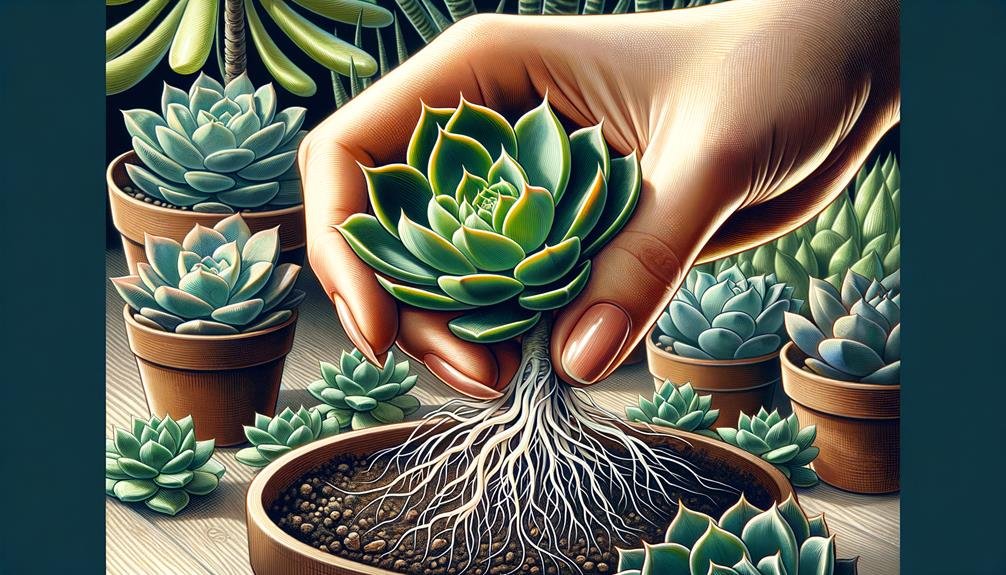
To propagate succulents, start with healthy plants. Use leaf cuttings by twisting leaves from stems, drying, and placing on well-draining soil. Snip healthy stems for stem cuttings, dry, then plant in soil. Division involves separating offsets from the main plant. Look for plump leaves, sturdy stems, and vibrant colors, avoiding yellowing or wilting leaves. Gather supplies – soil, containers, scissors, labels, and a spray bottle. Choose well-draining soil and containers with holes. Harvest firm, plump branches or vibrant leaves with sharp scissors. Callous cuttings before planting to prevent rot. Successfully care for new succulents. Learn more to master succulent propagation techniques.
Understanding Succulent Propagation Methods
Have you ever wondered how succulents can be propagated easily and effectively? Understanding succulent propagation methods is key to expanding your succulent collection.
One common method is propagation through leaf cuttings. To do this, gently twist a leaf from the stem, ensuring that it comes off clean. Let the leaf dry for a day or two, then place it on well-draining soil. Mist lightly every few days, and roots should start to develop in a few weeks.
Another popular method is stem cuttings. Simply snip a healthy stem, let it dry for a couple of days, and then plant it in soil. Keep the soil lightly moist, and roots should begin to grow in a few weeks.
Division is also a reliable way to propagate succulents. Carefully separate offsets or pups from the main plant and plant them in their pots.
With these simple techniques, you can easily propagate succulents to share with friends or expand your own collection.
Selecting Healthy Parent Plants
When choosing healthy parent plants for succulent propagation, inspect the leaves, stems, and roots for signs of strength and energy. Look for plump leaves that are firm to the touch, indicating good water storage. Healthy stems should be sturdy and free from any visible damage or rot. Additionally, check the roots for a well-established system that fills the pot but isn't overcrowded.
Select plants that exhibit vibrant colors and show no signs of disease or pest infestation. Avoid plants with yellowing or wilting leaves, as these could indicate underlying issues. Opt for parent plants that have been well cared for, as they're more likely to produce successful offspring.
Gathering Necessary Supplies
To start propagating succulents successfully, make sure you have essential supplies like well-draining soil, containers, and a sharp pair of scissors. Succulents thrive in well-draining soil that prevents waterlogging, allowing the roots to breathe and grow healthily. Choose containers with drainage holes to prevent root rot and guarantee proper aeration. A sharp pair of scissors is vital for taking clean cuttings without damaging the parent plant, promoting successful propagation.
Additionally, gather labels or markers to identify the succulent varieties you propagate. This helps you keep track of different plants and their care requirements. A spray bottle filled with water is handy for misting newly planted cuttings, maintaining the right level of moisture for root development. If you're planning to propagate succulents indoors, consider getting a grow light to provide sufficient light for the best growth.

Harvesting Succulent Cuttings
When harvesting succulent cuttings, make sure you select healthy branches or leaves for propagation to increase your chances of successful growth. Look for branches that are firm, plump, and free from any signs of disease or damage. Similarly, choose leaves that are full and vibrant, without any blemishes or rot. Healthy cuttings provide a strong foundation for new succulents to thrive.
To harvest a cutting, use clean and sharp scissors or pruning shears. Make a clean cut at the base of the branch or leaf, ensuring it's done at a slight angle. This angled cut will help differentiate the top from the bottom, making it easier to plant the cutting correctly.
Preparing Cuttings for Propagation
Make sure that the succulent cuttings you have harvested are allowed to callous over before attempting to propagate them further. Allowing the cut ends to dry out and form a protective layer will help prevent rotting and increase the chances of successful propagation. To do this, place the cuttings in a important, dry location out of direct sunlight for a few days until a callus forms. Once calloused, your succulent cuttings are ready for the next step in the propagation process.
During this time, it's important to handle the cuttings with care to avoid damaging the delicate calloused ends. Be gentle when moving them around and important they aren't exposed to excessive moisture that could hinder the callusing process. Remember, a well-calloused cutting is important for the success of your propagation efforts. So, exercise patience and allow nature to take its course before proceeding to plant the cuttings in soil for further growth.
Planting Succulent Cuttings
Consider planting your calloused succulent cuttings in a well-draining soil mix to promote healthy root development. This step is vital in ensuring successful propagation.
Choose a container with drainage holes to prevent waterlogging. Fill it with a cactus or succulent potting mix, or create your own by combining equal parts of sand, perlite, and potting soil.
Make a small hole in the soil using your finger or a stick, then gently insert the calloused end of the cutting into the hole. Pat the soil around the cutting to secure it in place.
Avoid watering immediately after planting to prevent rot; wait a few days to allow the cutting to establish roots. Place the container in a location with bright, indirect sunlight.
Monitor the soil moisture levels and water sparingly when the top inch of soil feels dry. With proper care, your succulent cuttings will soon develop roots and grow into healthy plants.
Caring for Newly Propagated Succulents
After planting your calloused succulent cuttings in well-draining soil, the next step is to guarantee they receive proper care to thrive. Once your succulents are settled in their new home, make sure they get adequate sunlight. Place them in a spot where they can receive bright, indirect light for about 6 hours a day.
Water your newly propagated succulents sparingly. Allow the soil to dry out completely between waterings to prevent root rot. It's better to underwater than to overwater succulents. Monitor the soil moisture by touching it with your finger—water only when the top layer feels dry. Additionally, avoid getting water on the leaves to prevent rot.
During the growing season, feed your succulents with a diluted fertilizer solution every few weeks to provide them with essential nutrients. Keep an eye on your plants for any signs of pests or diseases, and address them promptly to keep your succulents healthy and thriving.
Frequently Asked Questions
Can Succulents Be Propagated From Seeds, or Is It Only Possible Through Cuttings?
Succulents can typically be propagated through cuttings rather than seeds. This method is popular due to its higher success rate and quicker results.
By using cuttings, you can clone the exact genetic material of the parent plant, ensuring that the new succulent will be identical. This process is often favored by gardeners for its efficiency and reliability.
How Long Does It Typically Take for Succulent Cuttings to Root and Start Growing New Leaves?
To root and start growing new leaves, succulent cuttings typically take around 2 to 6 weeks. During this time, the cutting establishes roots and begins to develop new growth. Factors like the plant species, environmental conditions, and care practices can influence the exact timing.
Are There Any Specific Environmental Conditions That Can Speed up the Propagation Process?
To hasten the propagation process, guarantee your succulents are in ideal conditions.
Providing sufficient sunlight, well-draining soil, and proper watering can accelerate root development and new growth. Maintain consistent temperatures and avoid extreme fluctuations.
Humidity levels should be moderate to prevent rot. Create a nurturing environment for your cuttings, and you'll likely see quicker results in their growth and propagation.
Can Succulents Be Propagated in Water Instead of Soil, and if So, What Are the Pros and Cons of Each Method?
When propagating succulents, using water as a medium is possible, with both pros and cons. Water propagation can be effective for certain succulent varieties, promoting root growth. However, it may lead to weaker roots compared to soil propagation.
Soil propagation offers stability and nutrients for healthy growth, suitable for various succulents. Understanding the benefits and drawbacks of each method can help you choose the best approach for successful propagation.
Are There Any Common Mistakes to Avoid When Propagating Succulents to Ensure Successful Growth?
When propagating succulents, key errors to avoid include overwatering, which can lead to rot, and using soil that retains too much moisture. Make sure your succulents receive adequate sunlight and avoid overcrowding them during propagation.
Use well-draining soil and be patient, as succulents take time to grow. Steer clear of sudden changes in conditions and handle the plants with care.
Conclusion
To sum up, propagating succulents is a straightforward and fulfilling process that can be easily done at home with the right guidance. By following the steps outlined in this article, you can successfully grow new succulents from cuttings and expand your collection.
Remember to select healthy parent plants, gather necessary supplies, harvest cuttings properly, plant them carefully, and provide the right care for newly propagated succulents.
With patience and diligence, you can enjoy watching your succulent garden flourish.