When it comes to nurturing your indoor garden, starting from scratch can be a rewarding journey. However, diving into the world of indoor houseplant propagation can sometimes feel like navigating a maze without a map.
As you venture into this realm, each leaf you propagate holds the potential for growth and new life, but the path to success may seem shrouded in mystery. Fear not, for by mastering the essential tips for propagation, you can unlock the secrets to cultivating a thriving indoor oasis that is uniquely yours.
Choosing the Right Plant Species
When selecting the ideal plant species for propagation, consider the environment in which you plan to grow them. Different plants have varying needs when it comes to light, temperature, and humidity. Take into account the conditions of the space where you intend to propagate your plants. For example, if you have a sunny windowsill, you might opt for sun-loving plants like succulents or herbs. On the other hand, if your space is shadier, consider plants that thrive in low light such as pothos or peace lilies.
Furthermore, think about the level of maintenance you're willing to provide. Some plants require more attention and care than others. If you have a busy schedule, you might want to choose plants that are easy to care for and resilient to fluctuations in watering schedules. Spider plants, snake plants, and Chinese evergreens are excellent choices for beginners or those with limited time for plant care. By selecting plant species that match your environment and maintenance abilities, you set yourself up for successful propagation and healthy plant growth.
Selecting Propagation Methods
Consider the various propagation methods available to determine the most suitable approach for expanding your houseplant collection. When choosing a method, take into account factors such as the type of plant, your experience level, and the resources you have available.
One common method is stem cutting, where you snip a portion of the plant's stem and encourage it to develop roots in water or soil. This method works well for plants like pothos and philodendrons.
Another popular technique is leaf cutting, ideal for plants like African violets and snake plants, where you cut a leaf and place it in a growing medium to sprout roots.
Division involves separating a plant into smaller sections, suitable for plants like peace lilies and spider plants.
Layering is another method where you encourage a stem to grow roots while still attached to the parent plant, great for plants like rubber plants.
Each method has its own requirements, so choose the one that best suits your plant and circumstances.

Providing Optimal Growing Conditions
To ensure successful houseplant propagation, it's essential to provide optimal growing conditions that support root development and overall plant growth. Start by choosing a suitable location with adequate sunlight. Most houseplants thrive in bright, indirect light, but be mindful of any specific light requirements for the plant species you're propagating. Optimal temperature and humidity levels are crucial factors. Aim for a consistent temperature between 65-75°F (18-24°C) and consider using a humidifier or pebble tray to maintain humidity levels around 50-60%.
When it comes to watering, be attentive but avoid overwatering as it can lead to root rot. Ensure the soil is well-draining to prevent waterlogging. Using a balanced liquid fertilizer at half strength can provide essential nutrients for healthy growth. Regularly inspect for pests and diseases, addressing any issues promptly.
Lastly, consider providing gentle air circulation to strengthen the plant's stems. By creating these ideal conditions, you'll promote successful propagation and the development of strong, thriving houseplants.
Monitoring Progress and Care
Ensure you closely monitor the progress and provide proper care to your propagated houseplants to ensure their continued health and growth. Regularly check the moisture level of the soil by inserting your finger about an inch deep; water when the topsoil feels dry.
Keep an eye out for any signs of stress such as wilting leaves or browning tips, which could indicate issues with watering, light, or humidity levels. Rotate your plants occasionally to promote even growth, as they tend to lean towards the light source.
Dust the leaves gently to ensure optimal light absorption and prevent pests from taking hold. Additionally, consider fertilizing your propagated plants with a diluted, balanced fertilizer every few weeks during the growing season to provide essential nutrients for healthy development.
Remember to adjust your care routine based on the specific needs of each plant species to support their propagation journey successfully.
Troubleshooting Common Issues
If you encounter problems with your propagated houseplants, start by identifying the common issues they may be facing.
One common problem is overwatering, which can lead to root rot. Ensure your plant is in well-draining soil and adjust your watering schedule accordingly.
On the other hand, underwatering can cause wilting and stunted growth. Check the soil moisture regularly and establish a consistent watering routine.
Incorrect lighting is another issue to watch out for. Make sure your plant is getting the right amount of light according to its species' requirements.
Pests like aphids and spider mites can also infest propagated plants. Keep an eye out for any unusual spots or webs on the leaves and treat them promptly.
Lastly, temperature fluctuations can stress your houseplants. Try to maintain a stable temperature around your propagated plants to prevent any adverse effects.
Frequently Asked Questions
Can I Propagate Indoor Houseplants Using Water Propagation Methods?
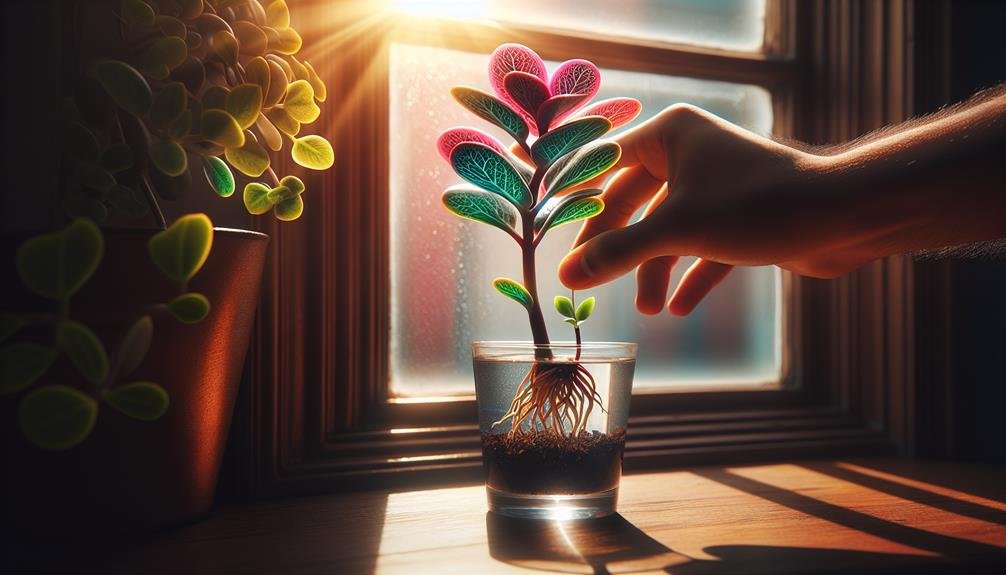
Yes, you can propagate indoor houseplants using water propagation methods. It's a simple and effective way to grow new plants from cuttings.
Just place the cut stem in water, ensuring the node is submerged. Change the water regularly to prevent rot. Once roots develop, you can transfer the cutting to soil.
Water propagation is a popular method for many indoor plants and can lead to successful propagation with proper care.
How Long Does It Typically Take for a Propagated Cutting to Root and Grow Into a Full Plant?
Typically, it takes a few weeks to several months for a propagated cutting to root and grow into a full plant. The exact timing can vary depending on the type of plant, environmental conditions, and care provided.
Be patient and keep an eye on the cutting for signs of root development. With consistent care and attention, you'll soon see your cutting transform into a thriving new plant.
Are There Any Specific Tools or Equipment Needed for Successful Indoor Houseplant Propagation?
You don't need fancy equipment for indoor houseplant propagation. Basic tools like sharp scissors or pruners, a clean container with drainage holes, and a suitable growing medium like perlite or peat moss will do the trick.
Don't forget about water and some indirect light. With these simple items, you'll be all set to propagate your houseplants successfully. Keep it simple and enjoy watching your plants grow!
Can I Propagate Indoor Houseplants Using Non-Traditional Methods Such as Air Layering or Division?
Yes, you can propagate indoor plants using non-traditional methods like air layering or division.
These techniques offer alternative ways to expand your plant collection and can be successful with the right knowledge and care.
Air layering involves encouraging roots to grow on a branch while still attached to the parent plant, while division is separating a plant into multiple parts.
Both methods can be effective for indoor houseplant propagation.
Are There Any Special Considerations to Keep in Mind When Propagating Rare or Hard-To-Find Plant Species Indoors?
When propagating rare or hard-to-find plant species indoors, it's crucial to research their specific needs. Ensure you understand the plant's requirements for light, water, temperature, and humidity levels.
Use sterile tools to prevent disease transmission, and be patient as some rare plants may take longer to propagate successfully.
Consider seeking advice from experienced plant enthusiasts or botanical gardens for tailored guidance on the unique needs of these special plants.
Conclusion
Congratulations on successfully propagating your indoor houseplants!
Remember to choose the right plant species, select the best propagation methods, provide optimal growing conditions, and monitor progress closely.
If any issues arise, troubleshoot with care.
With these essential tips for success, your indoor plants will thrive and bring beauty to your home for years to come.
Keep up the great work and enjoy watching your plants grow!