
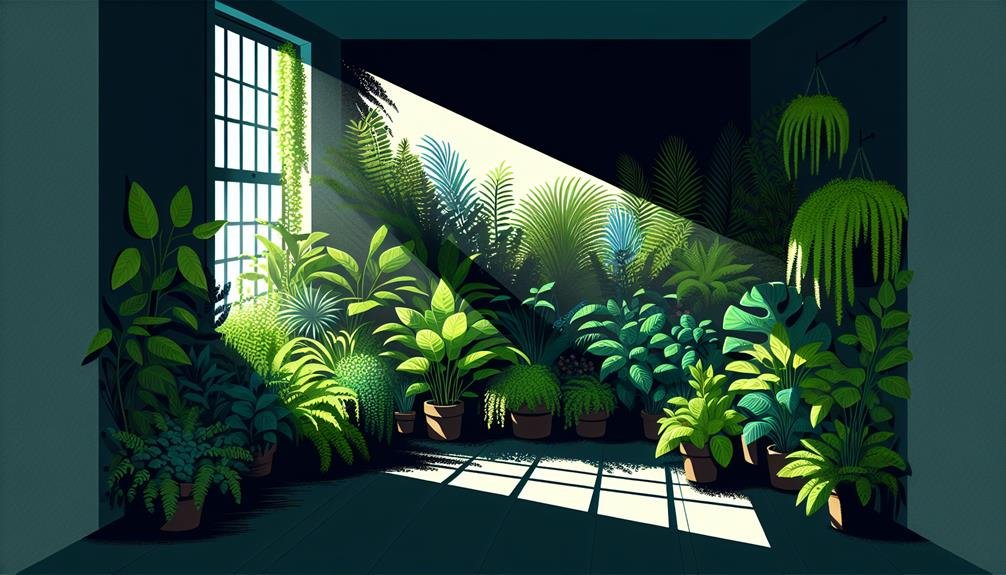
Step into the world of lush greenery, where even the dimmest corners can come alive with vibrant foliage. Picture a space transformed by the presence of thriving plants, adding not just beauty but also a sense of serenity to your environment.
But how do you choose the best plants for such low-light conditions, and what are the secrets to keeping them flourishing? Discover the answers and more as we explore the fascinating realm of greenery in dimly lit spaces.
Best Plants for Low Light Environments
When looking for plants that thrive in low light environments, consider species like pothos and snake plants. These green companions are perfect for brightening up those dim corners in your home or office. Pothos, with their heart-shaped leaves and trailing vines, aren't only easy to care for but also excellent at purifying the air. Snake plants, known for their striking vertical leaves, are resilient and can survive in low light with infrequent watering. These plants are great choices for adding a touch of nature to spaces that lack natural light.
Another plant to consider is the peace lily, which features elegant white blooms and glossy green leaves. Peace lilies can tolerate low light conditions and help in reducing toxins in the air. If you prefer a plant with vibrant foliage, try the ZZ plant. Its waxy, dark green leaves can thrive in low light and only require occasional watering. These plants are excellent options for bringing life to areas with minimal natural light.
Tips for Thriving Greenery
To ensure your green companions thrive in low light environments, focus on providing proper care and attention. Start by choosing the right plants that are well-suited for dimly lit spaces, such as snake plants, pothos, or peace lilies. These plants are more likely to thrive with minimal sunlight.
When it comes to watering, be mindful not to overwater your plants as they may be more sensitive to excess moisture in low light conditions. Ensure the soil has proper drainage to prevent root rot.
Regularly dust off your plant's leaves to allow for better light absorption. Since light is limited in these spaces, consider supplementing with artificial lights designed for plant growth. Rotate your plants occasionally to promote even growth on all sides.
If you notice signs of stress like yellowing leaves or stunted growth, adjust the care routine accordingly. Lastly, be patient and observant – each plant is unique and may require different levels of care to thrive in dimly lit environments.
Ideal Placement in Dim Spaces
For optimal growth in dimly lit spaces, consider placing your plants near windows or sources of indirect sunlight. While some plants can tolerate low light conditions, most still require some form of light to thrive. Positioning your greenery near windows allows them to benefit from whatever natural light filters in, even if it's not direct sunlight. If windows aren't an option, you can also place your plants under artificial grow lights designed for indoor gardening.
Additionally, consider the layout of your space when deciding where to put your plants. Try to avoid placing them in dark corners or areas that are obstructed from light sources. Instead, opt for spots where they can receive some degree of brightness throughout the day. If you have multiple plants, arrange them strategically so that each one has access to light without overshadowing the others. By being mindful of placement, you can help your green companions thrive in even the dimmest of spaces.

Watering and Maintenance Guide
Wondering how to properly care for your greenery in dimly lit spaces? When it comes to watering and maintenance, it's crucial to strike a balance. While low-light plants may require less water than those in brighter environments, they still need attention. Overwatering can lead to root rot, so ensure the soil has proper drainage. Stick a finger in the soil; if it feels dry about an inch down, it's time to water. Use room-temperature water and water thoroughly until it drains out of the bottom of the pot. Remember, it's better to water deeply but infrequently than to lightly water frequently.
Regular maintenance is key. Wipe down leaves to remove dust, as it can inhibit photosynthesis. Prune away any yellowing or dead leaves to encourage new growth. Rotate your plants occasionally to ensure all sides receive adequate light. Lastly, keep an eye out for pests like spider mites or mealybugs, as they thrive in dimly lit areas. By following these simple watering and maintenance tips, your greenery will thrive in its dimly lit home.
Troubleshooting Common Issues
When facing common issues with your greenery in dimly lit spaces, proper troubleshooting techniques can help maintain their health and appearance.
One prevalent problem is overwatering, which can lead to root rot and yellowing leaves. Ensure your plants have proper drainage and allow the soil to dry out between waterings.
On the other hand, underwatering can cause wilting and browning of the foliage. Check the moisture levels regularly and adjust your watering schedule accordingly.
Additionally, pests like spider mites and mealybugs can infest indoor plants. Keep an eye out for any signs of infestation, such as webbing or sticky residue, and treat the plants promptly with insecticidal soap.
Lack of nutrients may also manifest in stunted growth or yellow leaves. Consider using a balanced fertilizer specifically formulated for indoor plants to provide them with essential nutrients.
Frequently Asked Questions
Can Plants Survive in Dimly Lit Spaces Without Any Natural Light at All?
Plants can survive in dimly lit spaces without any natural light at all, but they may not thrive. In low light conditions, some plants like pothos, snake plants, and peace lilies can adapt and grow, although at a slower rate.
To support their growth, consider using artificial grow lights to supplement their light needs. Remember to monitor the plants closely for any signs of stress or lack of light.
Are There Any Plants That Can Thrive in Low Light Environments but Also Require Minimal Maintenance?
For those seeking plants that thrive in low light and need minimal upkeep, consider options like snake plants, pothos, or peace lilies. These varieties can adapt well to dim environments and won't demand constant attention.
With proper care, they can add a touch of greenery to your space without requiring too much effort on your part. Just remember to water them as needed and they should flourish in your low light setting.
How Can I Prevent Overwatering or Underwatering My Plants in a Dimly Lit Space?
To prevent overwatering or underwatering in a dimly lit space, use pots with drainage holes. Check the soil moisture by sticking your finger in the soil. Water only when the top inch feels dry. Ensure proper drainage to prevent root rot.
Adjust watering frequency based on plant needs, not a set schedule. Consider using a moisture meter for accurate readings. Remember, less is often more when it comes to watering in low light environments.
Can Artificial Lighting Be Used to Supplement Natural Light for Plants in Dim Spaces?
Yes, artificial lighting can supplement natural light for plants in dim spaces. It's essential to choose the right type of artificial light, such as LED grow lights, to provide the necessary spectrum for plant growth.
Place the lights strategically to ensure all parts of the plant receive adequate light. Monitor the lighting schedule to mimic a natural day-night cycle, promoting healthy growth even in dimly lit areas.
Are There Any Specific Air Quality Considerations to Keep in Mind When Choosing Plants for a Dimly Lit Room?
When selecting plants for a dimly lit room, consider air quality needs. Some plants, like snake plants and pothos, can thrive in low light and help purify the air by removing toxins. These air-purifying plants are beneficial for your indoor environment.
Keep in mind the specific air quality requirements of different plant species to ensure a healthy atmosphere in your dimly lit space. Selecting the right plants can enhance air quality while adding greenery to your room.
Conclusion
So there you have it – with the right plants, placement, and care, you can bring lush greenery into even the dimmest of spaces.
Remember to choose low light loving plants like pothos and peace lilies, place them near windows or under artificial lighting, and water them regularly.
With these tips in mind, you can enjoy a thriving indoor garden no matter how dim the room may be.
Happy gardening!



