If dealing with aphids on your indoor plants feels like trying to navigate through a maze, rest assured, there are effective organic solutions within reach.
Imagine a world where your plants thrive, free from these tiny pests. What if you could tackle the aphid invasion naturally, without harsh chemicals?
Stay tuned to discover practical, eco-friendly methods to combat aphids and restore your indoor garden to its former glory.
Identifying Aphids on Indoor Plants
To easily spot aphids on your indoor plants, regularly inspect the leaves and stems for tiny, soft-bodied insects that come in various colors such as green, black, or even pink. These pesky bugs tend to cluster together, especially on new growth points. Look out for sticky honeydew residue on leaves, a sign of aphid infestation. If you notice distorted or yellowing leaves, this could also indicate their presence. Another clue is the presence of ants, as they're attracted to the honeydew aphids produce.
When examining your plants, pay close attention to the undersides of leaves and along the stems, as aphids like to hide in these sheltered areas. Use a magnifying glass if needed to get a better view of these small insects. If you see any suspicious bugs, gently shake the plant over a white sheet of paper to confirm the presence of aphids. Early detection is key to preventing these pests from causing significant damage to your indoor plants.
Homemade Aphid Repellent Sprays
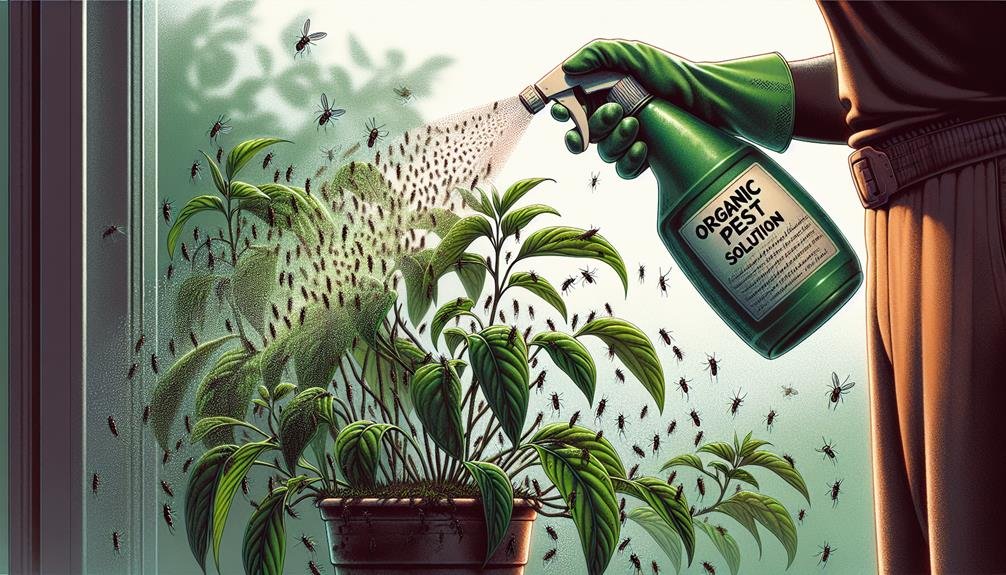
When addressing aphids on your indoor plants, one effective approach is creating homemade aphid repellent sprays. These DIY sprays are easy to make and can help you control aphid infestations naturally.
One popular recipe involves mixing a few drops of dish soap with water in a spray bottle. The soap helps suffocate the aphids on contact. Another option is a garlic spray made by blending garlic cloves with water and straining the mixture into a spray bottle. Aphids dislike the scent of garlic, making it an effective repellent.
Additionally, a neem oil spray can be created by mixing a small amount of neem oil with water and a few drops of dish soap. Neem oil disrupts the aphids' hormonal balance, hindering their growth and reproduction.
Remember to test these sprays on a small area of your plant before full application to ensure they don't cause any damage. Homemade aphid repellent sprays offer a safe and environmentally friendly solution to combat aphid infestations on your indoor plants.
Beneficial Insects for Aphid Control
Consider introducing ladybugs, lacewings, or parasitic wasps to your indoor garden as beneficial insects for controlling aphids. These insects are natural predators of aphids and can help keep the infestation in check without the use of harmful chemicals.

Ladybugs, also known as lady beetles, are voracious eaters of aphids and can consume a large number of them in a short period.
Lacewings, with their delicate appearance, are fierce predators in their larval stage, feeding on aphids with great efficiency.
Parasitic wasps, on the other hand, lay their eggs inside aphids, eventually killing them and preventing further infestations.
Neem Oil as a Natural Treatment
Introducing neem oil as a natural treatment can provide an effective alternative for controlling aphids on your indoor plants. Neem oil, derived from the seeds of the neem tree, is a powerful organic solution that disrupts the life cycle of aphids. Its active ingredients act as a natural insecticide, repelling and deterring aphids from infesting your plants.
To use neem oil effectively, mix a few drops with water in a spray bottle and thoroughly coat the affected plants, making sure to cover both the tops and bottoms of the leaves. Repeat this process every 7-14 days, or as needed, to maintain control over the aphid population. Neem oil not only targets aphids but also has fungicidal properties, helping to prevent fungal diseases that can arise from aphid infestations.
When using neem oil, ensure that you apply it in the early morning or late evening to prevent leaf burn due to the sun's intensity. Additionally, always test a small area of the plant before full application to check for any adverse reactions. By incorporating neem oil into your indoor plant care routine, you can effectively manage aphid infestations while maintaining a healthy and thriving indoor garden.
Companion Planting to Deter Aphids
To naturally deter aphids from infesting your indoor plants, try incorporating companion planting strategies. Companion planting involves growing certain plants together to benefit each other in various ways, such as repelling pests like aphids.
Some plants that can help deter aphids when grown alongside your indoor plants include marigolds, chives, mint, and lavender. Marigolds emit a scent that repels aphids, while chives and mint can act as natural deterrents due to their strong odors. Lavender not only adds a pleasant fragrance but also works as a natural insect repellent.
Frequently Asked Questions
Can Aphids Spread Diseases to Humans Through Indoor Plants?
Aphids can't spread diseases to humans through indoor plants. These pests primarily harm plants by sucking out their sap and causing damage. Though annoying to your greenery, aphids don't pose a direct health risk to you.
To protect your plants, try organic solutions like neem oil or insecticidal soap. Regularly inspecting your plants and removing aphids manually can also help keep these tiny troublemakers at bay.
Are There Any Specific Indoor Plants That Are More Susceptible to Aphid Infestations?
Certain indoor plants like roses, hibiscus, and lilies are more susceptible to aphid infestations due to their tender leaves and attractive sap. Regularly inspecting and caring for these plants can help prevent infestations.
Remember to keep a watchful eye on these particular plants to catch any aphid issues early on. Taking proactive measures can help maintain the health and beauty of your indoor greenery.
How Often Should I Apply Neem Oil to Effectively Treat Aphids on Indoor Plants?
To effectively treat aphids on indoor plants, apply neem oil every 7-14 days. This frequency helps ensure you're targeting the aphids at various stages of their life cycle, reducing their population over time.
Be sure to thoroughly cover the affected plant with neem oil, focusing on the undersides of leaves where aphids typically hide. Consistent application will help manage the infestation and protect your indoor plants.
Can Companion Planting Attract Beneficial Insects for Aphid Control Indoors?
Companion planting indoors can indeed attract beneficial insects for aphid control. By strategically placing plants that attract beneficial bugs near your affected indoor plants, you can create a natural ecosystem that helps keep aphids in check.
Consider herbs like mint, dill, or fennel to invite ladybugs and lacewings, which prey on aphids. Remember, a little planning and some green companions can go a long way in combating pesky aphids indoors.
Are There Any Natural Predators of Aphids That Can Be Introduced Indoors to Control Infestations?
Introducing natural predators indoors can help control aphid infestations. Ladybugs, lacewings, and parasitic wasps are beneficial insects that prey on aphids.
You can purchase these predators from garden centers or online stores. Remember to provide a suitable environment with food sources like nectar plants to encourage them to stay and continue feeding on the aphids.
Regular monitoring and proper care will help maintain a balanced ecosystem in your indoor plants.
Conclusion
Overall, there are many organic solutions available to help control aphids on indoor plants. From homemade repellent sprays to beneficial insects and natural treatments like neem oil, there are plenty of options to choose from.
Additionally, companion planting can also be a great way to deter aphids from infesting your plants. By utilizing these organic methods, you can effectively manage aphid infestations while keeping your indoor plants healthy and thriving.