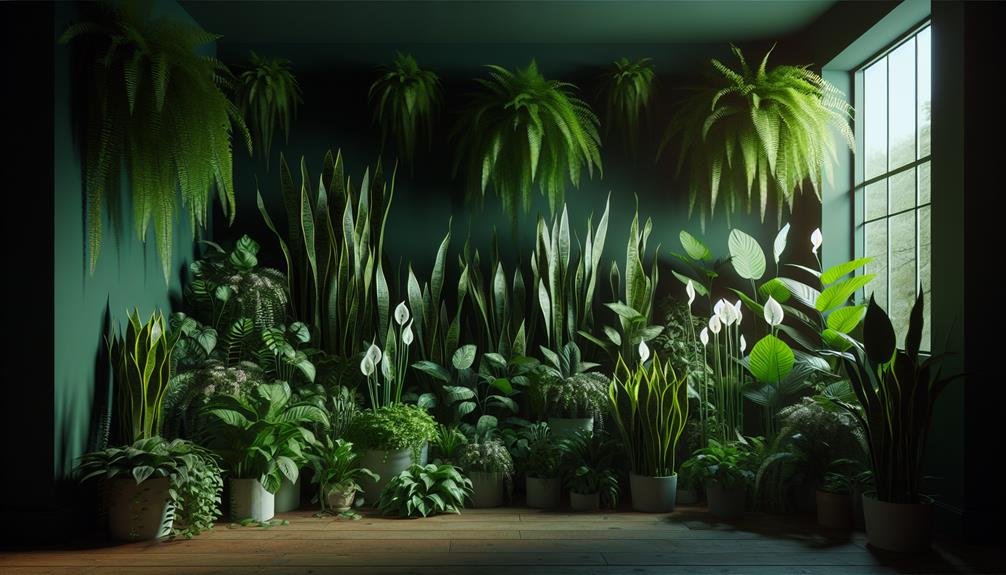
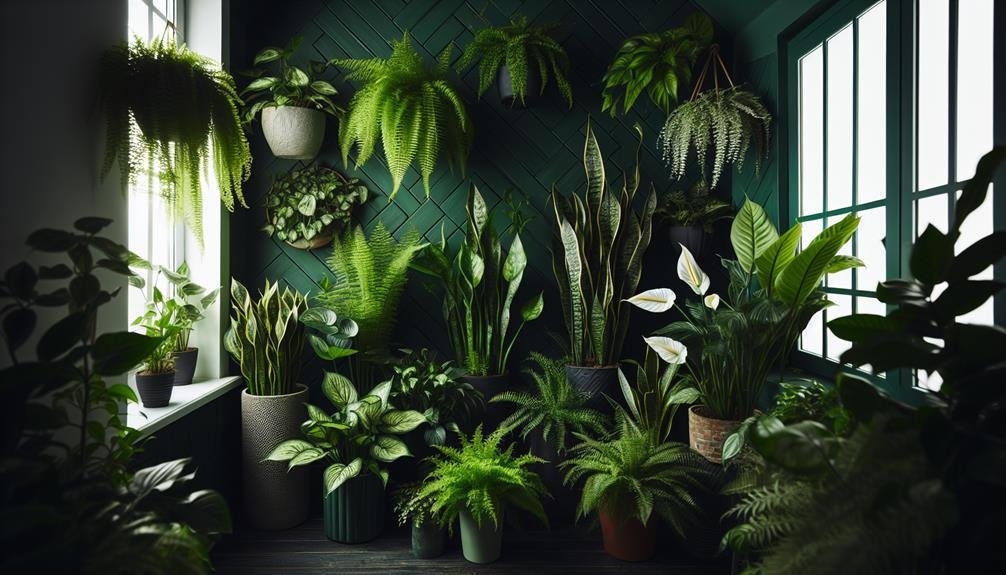
Imagine coming home to a cozy apartment with limited natural light, where you've placed a lush peace lily in a dim corner that needed a touch of green. The soft glow of its leaves adds a calming presence to the space, making it feel more alive.
But what other plants thrive in such low light conditions? Discover how you can transform your dimly lit spaces into vibrant oases with the right selection of plant species and care techniques tailored to their unique needs.
Benefits of Plants in Low Light
In low light conditions, plants thrive by adapting to reduced sunlight through unique mechanisms that support their growth. Despite the challenges of limited light, plants have evolved various strategies to make the most of the available resources. One key benefit of having plants in dimly lit spaces is their ability to purify the air. Through the process of photosynthesis, plants absorb carbon dioxide and release oxygen, improving air quality and creating a healthier environment for you.
Additionally, plants in low light conditions can serve as mood boosters. Studies have shown that being around plants can reduce stress levels and increase feelings of well-being. Their presence can create a calming atmosphere, making your space more inviting and relaxing.
Furthermore, having plants in low light areas can enhance the aesthetic appeal of your surroundings. With their diverse shapes, sizes, and colors, plants can add a touch of nature and beauty to any space, brightening up even the darkest corners.
Top 5 Low Light Plant Species
For low light spaces, consider these top 5 plant species that thrive in dimly lit environments.
1) Snake Plant (Sansevieria): Known for its adaptability, this plant can survive in low light conditions and only requires occasional watering.
2) ZZ Plant (Zamioculcas Zamiifolia): Perfect for beginners, this plant is resilient and can thrive in low light with infrequent watering.
3) Pothos (Epipremnum Aureum): A versatile plant that can grow in various light conditions, including low light. It has beautiful trailing vines.
4) Peace Lily (Spathiphyllum): Known for its air-purifying qualities, this plant can bloom even in low light, adding a touch of elegance to your space.

5) Parlor Palm (Chamaedorea Elegans): A classic choice for low light areas, this plant adds a tropical feel with its lush, green fronds.
These top 5 low light plant species aren't only easy to care for but also bring life and vibrancy to your dimly lit spaces.
Care Tips for Dimly Lit Plants
Consider these care tips to ensure your dimly lit plants thrive and remain healthy in their low light environment.
Firstly, water your plants appropriately by checking the soil moisture levels regularly. Overwatering can be detrimental, so allow the soil to dry out slightly between waterings.
Secondly, dust the leaves of your plants regularly with a soft, damp cloth to ensure they can efficiently absorb what little light is available to them.
Thirdly, consider rotating your plants occasionally to promote even growth on all sides. This will prevent them from leaning towards the light source.
Additionally, avoid placing your plants near drafts or direct heat sources as they can stress the plant.
Lastly, consider using a liquid fertilizer specifically formulated for low light conditions to provide your plants with essential nutrients they may not be getting from their environment.
Creative Plant Display Ideas
Get inspired to showcase your plants in unique and eye-catching ways with these creative plant display ideas. Consider hanging planters at varying heights to add depth and visual interest to your space.
Mix and match different plant sizes and textures for a dynamic display. Utilize wall-mounted shelves or DIY vertical plant hangers to maximize space and create a living wall effect.
Repurpose vintage containers or quirky vessels like teacups, mason jars, or old tin cans to add a touch of whimsy to your plant display. Group plants with similar care needs together to simplify maintenance and create cohesive arrangements.
Incorporate decorative rocks, pebbles, or moss to add a natural element and enhance the overall aesthetic. Experiment with terrariums or glass cloches for a mini greenhouse effect.
Get creative with plant stands or ladder shelves to elevate your plants and draw the eye upward. By incorporating these inventive display ideas, you can transform your dimly lit space into a vibrant and stylish indoor garden.
Troubleshooting Common Issues
Identify and address common issues that may arise when caring for your plants in dimly lit spaces. One prevalent problem is overwatering. In low light conditions, plants absorb water at a slower rate, so it's essential not to drown them with excess moisture. Ensure the soil dries out slightly between waterings to prevent root rot.
Another issue is leggy growth, where plants stretch out in search of light. To combat this, consider moving your plants to a brighter spot or supplementing with grow lights.
Yellowing leaves can indicate both overwatering and nutrient deficiencies. Adjust your watering schedule and consider using a balanced fertilizer to address this.
Pests like spider mites and mealybugs thrive in dimly lit areas. Regularly inspect your plants for any signs of infestation and treat them promptly with insecticidal soap.
Frequently Asked Questions
Can Low Light Plants Survive in Completely Dark Rooms?
Low light plants may struggle to survive in completely dark rooms since they still need some light to photosynthesize. Without any light, their growth will be stunted, and they may eventually die.
It's essential to provide at least some minimal light for these plants to thrive. Consider placing them near a window or using artificial grow lights to mimic natural sunlight and ensure their survival and health.
Are There Any Low Light Plants That Are Pet-Friendly?
For pet-friendly low light plants, look into options like spider plants, parlor palms, or Boston ferns. These plants not only thrive in low light conditions but are also safe for your furry friends.
Remember to keep an eye out for any toxic plants that could harm your pets.
With these options, you can create a cozy and green environment in your home that both you and your pets will enjoy.
How Often Should I Fertilize My Low Light Plants?
You should fertilize your low light plants every 4 to 6 weeks during their growing season. Make sure to use a balanced, water-soluble fertilizer to provide essential nutrients.
Over-fertilizing can harm your plants, so always follow the instructions on the product label. Remember to water your plants before fertilizing to prevent root burn.
Regular fertilization will help your plants thrive and stay healthy in their low light environment.
Can Low Light Plants Help Improve Air Quality in a Dimly Lit Space?
Low light plants can indeed help improve air quality in dimly lit spaces. They're able to photosynthesize and absorb toxins like formaldehyde and benzene, releasing oxygen in return.
This natural process can enhance the air quality in your environment. Consider placing these plants strategically to enjoy their benefits while adding a touch of greenery to your space.
Just remember to choose low light plants that are suitable for the specific light conditions of your room.
Are There Any Low Light Plants That Are Suitable for Bathrooms With No Natural Light?
In a bathroom with no natural light, you might wonder if any low light plants can thrive there. Some low light plants, like snake plants or pothos, can survive in such conditions. These plants are hardy and don't require direct sunlight to grow.
Just make sure to occasionally rotate them to ensure even growth. With proper care, these low light plants can add a touch of greenery to your dimly lit bathroom.
Conclusion
Overall, adding plants to dimly lit spaces can bring life and color to any room while also providing numerous health benefits.
By choosing the right low light plant species and following proper care tips, you can easily maintain a thriving indoor garden.
Get creative with your plant displays and troubleshoot any issues that may arise to ensure your plants stay happy and healthy in their cozy, dimly lit environment.
Enjoy your new green companions!