
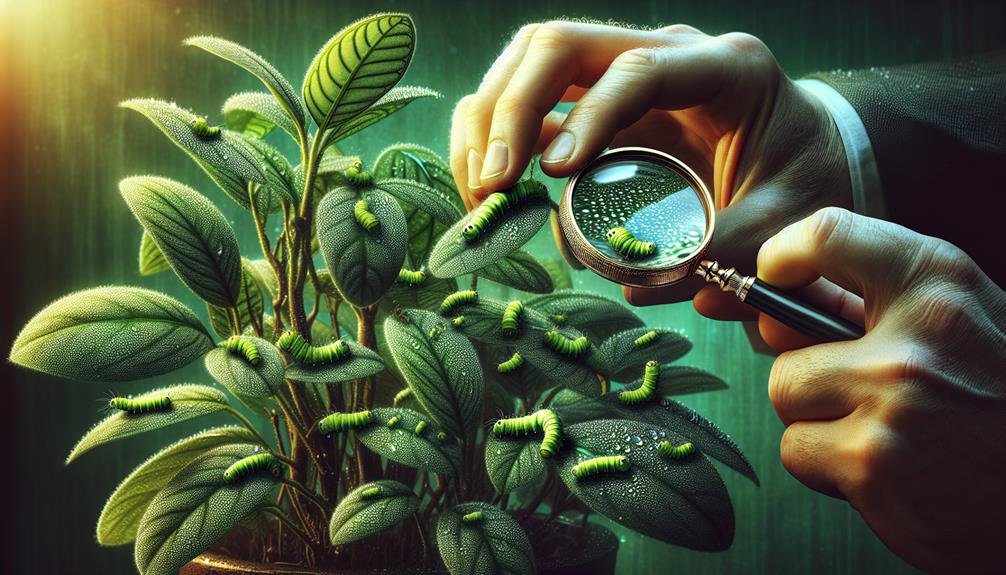
So, you've noticed some uninvited caterpillar guests munching on your beloved indoor plants. It's not exactly a charming situation, is it?
But fret not, there are effective strategies to tackle these voracious leaf-munchers. By understanding their behaviors and preferences, you can develop a plan to safeguard your green friends.
Stay tuned to discover the secrets to maintaining a caterpillar-free sanctuary for your indoor botanical beauties.
Identifying Caterpillar Infestations
To identify caterpillar infestations on your indoor plants, carefully inspect the leaves and stems for any signs of chewed or damaged areas. Caterpillars are voracious eaters and will leave distinct patterns of damage on the foliage. Look for irregular holes, missing sections of leaves, or entire leaves that have been consumed. Additionally, check for small black or green droppings, known as frass, which are a telltale sign of caterpillar presence.
Another way to spot caterpillar infestations is by looking for the pests themselves. Caterpillars come in various shapes, sizes, and colors, so be thorough in your examination. They may blend in with the plant or disguise themselves as part of the leaf, so a keen eye is necessary.
Remember to inspect both the upper and lower surfaces of the leaves, as caterpillars can hide on the undersides. Early detection of caterpillar infestations is crucial for effective control and prevention measures.
Implementing Preventive Measures
Inspecting your indoor plants regularly and implementing preventive measures is key to controlling caterpillar infestations effectively. Start by examining your plants for any signs of caterpillars or damage they may have caused. Look for chewed leaves, droppings, or actual caterpillars hiding in crevices. To prevent caterpillars from infesting your plants, consider placing physical barriers like mesh screens over windows or using sticky traps near plants to catch adult moths before they lay eggs.
Another preventive measure is to maintain good plant hygiene. Remove any dead leaves or plant debris regularly, as these can attract caterpillars looking for a place to hide and feed. Additionally, avoid overfertilizing your plants, as this can make them more attractive to pests like caterpillars.
Lastly, consider introducing natural predators like ladybugs or lacewings into your indoor garden. These beneficial insects can help keep caterpillar populations in check. By being proactive and implementing these preventive measures, you can effectively control caterpillar infestations on your indoor plants.
Natural Remedies for Control
Regularly applying natural remedies can be an effective way to control caterpillar infestations on your indoor plants. One popular natural remedy is neem oil, which acts as a natural insecticide and disrupts the growth and development of caterpillars. To use neem oil, dilute it according to the instructions on the product and spray it on the affected plants.

Another effective natural remedy is a mixture of water and dish soap. This solution helps suffocate caterpillars by coating their bodies and blocking their breathing pores. Simply mix a few drops of dish soap in water, shake well, and spray it on the plants.
Additionally, introducing beneficial insects like ladybugs or lacewings to your indoor garden can help control caterpillar populations naturally. These insects feed on caterpillars and their eggs, providing a sustainable and eco-friendly pest control solution. You can purchase these beneficial insects from gardening stores or online suppliers.
Physical Removal Techniques
Consider using a pair of tweezers or gloves to physically remove caterpillars from your indoor plants. This hands-on approach can be an effective way to quickly reduce caterpillar numbers and prevent further damage to your plants. Carefully inspect the leaves, stems, and undersides of the leaves for any signs of caterpillars. Once you locate a caterpillar, gently grasp it with the tweezers or gloves and carefully remove it from the plant. Be cautious not to squeeze the caterpillar too hard, as this can cause it to release irritating substances or even harm the plant.
When physically removing caterpillars, it's essential to dispose of them properly to prevent reinfestation. You can either place them in a sealed bag and throw them away, or if you prefer a more eco-friendly approach, release them into an outdoor area away from your indoor plants. Regularly monitor your plants for any new caterpillars and repeat the physical removal process as needed to keep them in check.
Monitoring and Maintenance Tips
To effectively manage caterpillar infestations on your indoor plants, stay vigilant with consistent monitoring and proactive maintenance practices.
Regularly inspect both the upper and lower surfaces of leaves for signs of caterpillars, such as chewed foliage or droppings. Check the stems, buds, and flowers as well since caterpillars can hide in these areas.
If you notice any caterpillars or eggs, remove them immediately by handpicking or using a soft brush to dislodge them. To prevent future infestations, encourage natural predators like ladybugs or lacewings, or use barriers like mesh screens to keep caterpillars away from your plants.
Additionally, maintain plant health by providing adequate sunlight, water, and nutrients to reduce stress and make plants less susceptible to attacks. Regularly prune and remove any dead or damaged plant parts to eliminate potential hiding spots for caterpillars.
Frequently Asked Questions
Can Caterpillar Infestations on Indoor Plants Attract Other Pests or Insects?
Caterpillar infestations on indoor plants can indeed attract other pests or insects. The presence of caterpillars can draw in predators that feed on them, as well as opportunistic pests looking for an easy meal.
It's important to address caterpillar infestations promptly to prevent further pest issues in your indoor garden. Keep a close eye on your plants and take action as soon as you notice any signs of infestation.
Are There Any Specific Types of Indoor Plants That Are More Susceptible to Caterpillar Infestations?
Certain indoor plants, like herbs and vegetables, may be more prone to caterpillar infestations due to their lush foliage and tender leaves. Keeping an eye out for signs of caterpillars, such as chewed leaves or frass, can help you identify and address the issue promptly.
Regularly inspecting your plants and taking preventive measures, like using natural repellents or introducing beneficial insects, can help protect your indoor garden from these pests.
How Long Does It Typically Take for a Caterpillar Infestation to Completely Destroy an Indoor Plant?
When caterpillars infest indoor plants, the time it takes for them to completely destroy a plant can vary. Factors like the plant's size, health, and the number of caterpillars present play a role.
In general, a severe infestation can lead to rapid damage, potentially causing irreparable harm in a matter of weeks. Regular monitoring and prompt intervention are key to preventing extensive destruction.
Can Caterpillars on Indoor Plants Pose Any Health Risks to Humans or Pets?
Caterpillars on indoor plants can pose health risks to humans or pets. Some caterpillars have toxic hairs or spines that can cause skin irritation, allergic reactions, or even respiratory issues if touched or inhaled.
It's important to identify and address caterpillar infestations promptly to prevent any potential harm to you or your pets. Keep a close eye on your indoor plants and take action if you notice any caterpillars to keep everyone safe.
Are There Any Long-Term Effects on Indoor Plants After Successfully Controlling a Caterpillar Infestation?
After successfully controlling a caterpillar infestation on indoor plants, you may still see some long-term effects. Plants may have stunted growth or exhibit signs of stress, like yellowing leaves.
It's important to continue monitoring and caring for your plants to help them recover fully. Providing proper nutrients, water, and sunlight can aid in restoring the health of your indoor plants after dealing with a caterpillar infestation.
Conclusion
Overall, by staying vigilant and taking proactive steps such as implementing preventive measures, utilizing natural remedies, and regularly monitoring your indoor plants, you can effectively prevent and control caterpillar infestations.
Remember to always be on the lookout for signs of caterpillars and take swift action to address any issues that may arise.
With these tips and techniques in mind, you can keep your indoor plants healthy and caterpillar-free.



