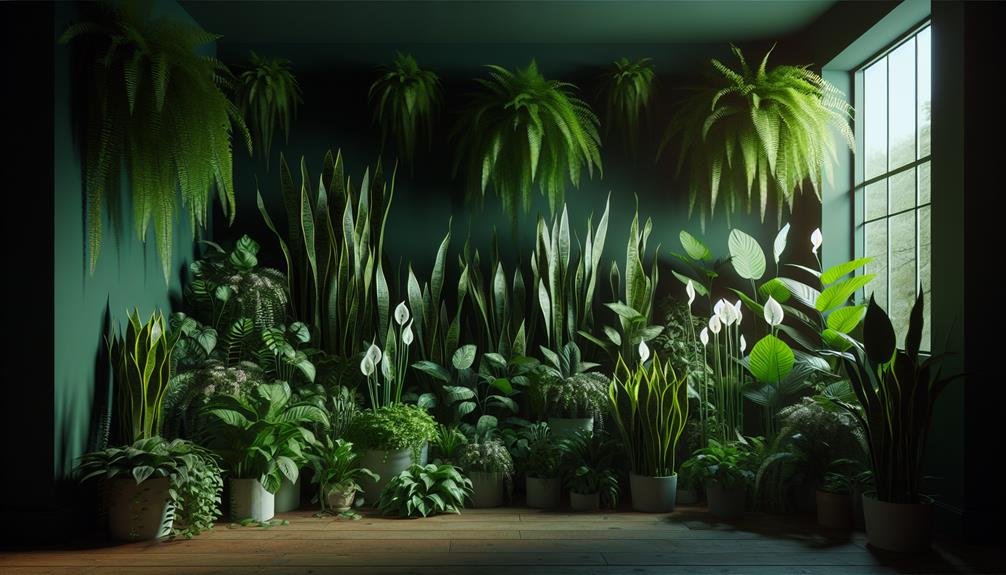
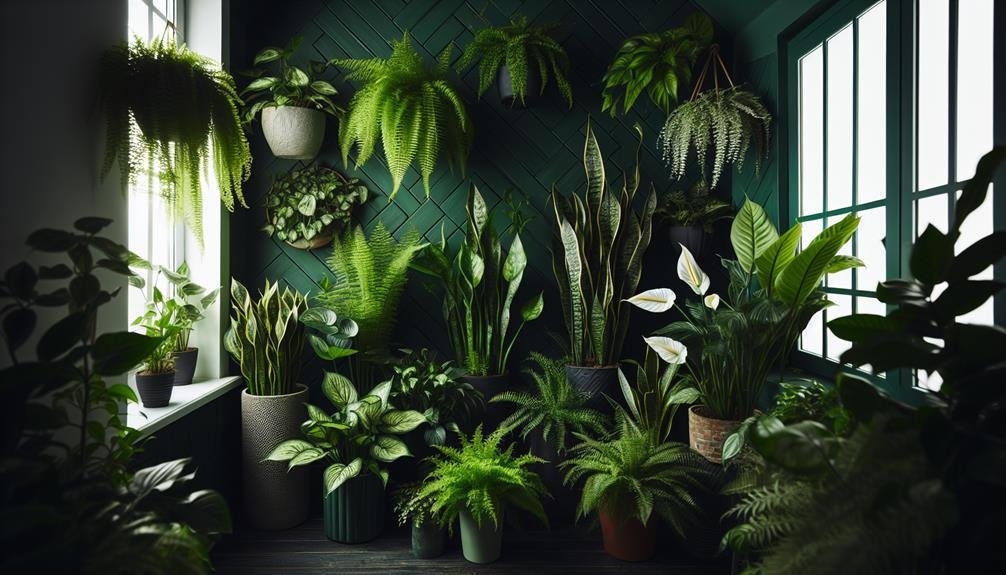
If you've ever struggled to find the perfect plant to brighten up a dim corner of your living space, imagine coming home to a lush, green Peace Lily that thrives in low light conditions.
But what if we told you there are nine more shade-loving houseplants that can elevate the ambiance of your home with minimal sunlight requirements?
Stay tuned to discover a variety of beautiful options that not only survive but truly flourish in the shadows, transforming your indoor environment into a tranquil oasis of greenery.
Peace Lily
If you're looking for a low-maintenance houseplant that thrives in low light conditions, consider the Peace Lily. This beautiful plant not only adds a touch of elegance to your space with its dark green leaves and striking white flowers but also helps purify the air. Peace Lilies are known for their air-purifying qualities, making them a great addition to any room in your home.
One of the best features of the Peace Lily is its ability to thrive in low light environments, making it perfect for those areas in your home that don't receive a lot of sunlight. This plant requires minimal care, only needing to be watered about once a week. Just make sure not to overwater it, as Peace Lilies are sensitive to too much moisture.
Another benefit of the Peace Lily is its resilience to different conditions, making it an excellent choice for beginners or those with busy schedules. With proper care, this plant can bloom multiple times a year, bringing beauty and freshness to your home.
Snake Plant
When considering low-light houseplants, the Snake Plant stands out for its hardy nature and air-purifying qualities. This plant, also known as Sansevieria or Mother-in-Law's Tongue, thrives in low light conditions, making it a perfect addition to any room in your home that doesn't receive much sunlight. The Snake Plant is incredibly resilient and can tolerate irregular watering, making it ideal for those who may forget to water their plants regularly. Its striking upright leaves come in various shades of green with unique patterns, adding a touch of elegance to your indoor space.
Not only is the Snake Plant visually appealing, but it also offers air-purifying benefits by removing toxins like formaldehyde and benzene from the air. This makes it a great choice for improving indoor air quality, especially in rooms with limited ventilation. If you're looking for a low-maintenance plant that thrives in low light and helps clean the air in your home, the Snake Plant is an excellent option to consider.
ZZ Plant
The ZZ Plant, known for its glossy, waxy leaves and low maintenance requirements, is a popular choice for indoor spaces with minimal light. This plant thrives in shade, making it perfect for rooms that don't receive direct sunlight. Its vibrant green foliage adds a touch of nature to your home while requiring little attention.
One of the key features of the ZZ Plant is its ability to survive in low-light conditions, making it an excellent option for offices or rooms with small windows. Its ability to tolerate neglect and drought makes it an ideal plant for busy individuals or those new to plant care. With minimal watering needs, the ZZ Plant is forgiving if you occasionally forget to water it.

In addition to its attractive appearance and easy care requirements, the ZZ Plant is also known for its air-purifying qualities. It can help improve indoor air quality by removing toxins, making it a practical and beautiful addition to your home.
Cast Iron Plant
Moving on from the ZZ Plant, another shade-loving houseplant that thrives in low-light conditions is the Cast Iron Plant. The Cast Iron Plant, scientifically known as Aspidistra elatior, is a tough and resilient plant that can tolerate neglect and low light levels, making it an excellent choice for indoor spaces with minimal natural light. This plant features long, dark green leaves that add a touch of elegance to any room without requiring much maintenance.
The Cast Iron Plant is the perfect option for beginners or those with busy schedules, as it's extremely forgiving and can withstand irregular watering. This plant doesn't require frequent repotting and can adapt to various indoor environments, making it a versatile choice for different spaces in your home. Its ability to thrive in low-light conditions makes it ideal for areas such as hallways, bathrooms, or offices with limited sunlight.
Consider adding a Cast Iron Plant to your indoor plant collection if you're looking for a hassle-free plant that can bring a touch of greenery to your home without demanding too much attention.
Chinese Evergreen
Considered a popular choice for indoor spaces with low light, the Chinese Evergreen is a shade-loving houseplant known for its vibrant foliage and easy maintenance. This plant features striking leaves that come in various shades of green, silver, and even red, adding a touch of color to any room. Its ability to thrive in low-light conditions makes it ideal for areas where other plants might struggle.
Chinese Evergreens are also known for their air-purifying qualities, helping to clean the indoor air by removing toxins and impurities. Maintenance is a breeze with this plant, as it requires minimal watering and can tolerate some neglect. Simply ensure it has well-draining soil, and water when the top inch of soil feels dry.
With its resilience and adaptability to different light conditions, the Chinese Evergreen is a versatile and beautiful addition to any indoor space. Whether you place it in a dimly lit corner or a well-lit room, this plant will thrive and bring a touch of nature into your home.
Parlour Palm
As you explore more shade-loving houseplants beyond the Chinese Evergreen, let's turn our attention to the Parlour Palm. The Parlour Palm, also known as Chamaedorea elegans, is a popular choice for indoor plants due to its elegant appearance and low maintenance requirements. This palm species thrives in shady areas, making it an excellent addition to spaces with limited light.
With its delicate fronds and graceful arching stems, the Parlour Palm adds a touch of tropical elegance to any room. It's relatively compact, making it suitable for smaller spaces like offices, bedrooms, or bathrooms. The Parlour Palm is also known for its air-purifying qualities, helping to improve indoor air quality by removing toxins.
When caring for your Parlour Palm, ensure it receives indirect sunlight and regular watering to keep the soil lightly moist. Avoid overwatering, as this can lead to root rot. With proper care, your Parlour Palm will thrive and bring a refreshing green touch to your home's shaded areas.
Boston Fern
Interested in adding a lush and vibrant plant to your shaded indoor space? Look no further than the Boston Fern. This elegant houseplant, with its arching fronds and feathery leaves, thrives in low light conditions, making it a perfect addition to any dimly lit room in your home.
The Boston Fern isn't only visually appealing but also offers air-purifying qualities, helping to freshen up the air in your living space. With the right care, including regular watering to keep the soil moist and occasional misting to maintain humidity, your Boston Fern will flourish.
Placing your Boston Fern in a hanging basket or on a pedestal stand can showcase its cascading foliage beautifully, adding a touch of greenery and tranquility to your home decor. Remember to keep an eye on its fronds and trim any yellowing leaves to keep your plant looking its best.
Spider Plant
Looking to expand your collection of shade-loving houseplants? Let's now introduce you to the Spider Plant. The Spider Plant, also known as Chlorophytum comosum, is a popular choice for indoor spaces due to its low maintenance and air-purifying qualities. This plant features long, arching leaves that can add a touch of elegance to any room.
One of the Spider Plant's standout features is its ability to produce baby plantlets, also called spiderettes, which dangle down from the mother plant like spiders on a web, hence the name. These spiderettes can be propagated to grow new plants, making the Spider Plant a great option for beginner gardeners looking to expand their plant collection.
Spider Plants thrive in indirect light and can tolerate low light conditions, making them perfect for spaces with minimal sunlight. They prefer well-draining soil and should be watered regularly but not excessively. With its striking appearance and easy care requirements, the Spider Plant is a fantastic addition to any shade-loving plant collection.
Philodendron
The lush foliage of Philodendron brings a touch of natural beauty to shade-filled spaces. This versatile houseplant thrives in low light conditions, making it an ideal choice for rooms with minimal sunlight. With its heart-shaped leaves and trailing vines, Philodendron adds a charming and elegant aesthetic to any indoor environment.
Philodendrons are relatively low-maintenance plants, requiring only occasional watering when the soil feels dry to the touch. These plants are excellent air purifiers, helping to improve the air quality in your home by removing toxins and impurities. Additionally, Philodendrons are known for their resilience and ability to adapt to different environments, making them suitable for both experienced and novice plant owners.
Whether displayed in a hanging basket, on a shelf, or as part of a greenery arrangement, Philodendrons bring a sense of tranquility and serenity to any room. Their vibrant green leaves create a soothing atmosphere, perfect for relaxation and unwinding after a long day. Consider adding a Philodendron to your indoor plant collection to enjoy its beauty and benefits in your home.
Pothos
With its similar easy-care requirements and aesthetic appeal, Pothos is another shade-loving houseplant that complements the beauty of Philodendron in indoor spaces. Pothos, also known as Devil's Ivy, features heart-shaped leaves that come in various shades of green, making it a versatile choice for adding a pop of color to your home. This plant thrives in low light conditions, making it perfect for rooms with minimal natural sunlight.
One of the best features of Pothos is its ability to purify the air by removing toxins like formaldehyde and benzene. This makes it not only a visually pleasing addition to your home but also a beneficial one for your health. Pothos is low-maintenance and forgiving, making it ideal for beginners or those with busy schedules.
To care for your Pothos, ensure the soil is well-drained and water the plant when the top inch of soil feels dry. Regular pruning helps maintain its lush appearance. Consider placing this versatile plant in a hanging basket or on a high shelf to showcase its cascading vines.
Frequently Asked Questions
Can Shade-Loving Houseplants Be Placed Near Windows With Direct Sunlight?
You shouldn't place shade-loving houseplants near windows with direct sunlight. These plants thrive in low-light conditions and can get stressed or burned by too much sun exposure.
It's essential to provide them with the right environment to keep them healthy and vibrant. Consider placing them in spots with indirect light or areas that receive filtered sunlight to ensure they flourish in your home.
Do Shade-Loving Houseplants Require Any Special Types of Soil or Fertilizer?
When caring for shade-loving houseplants, it's essential to use well-draining soil to prevent root rot. Look for a potting mix specifically designed for these plants or add perlite to regular soil for better drainage.
As for fertilizer, choose a balanced formula or one specifically labeled for shade plants. Too much fertilizer can harm them, so follow the instructions on the package and feed sparingly during the growing season.
Are Shade-Loving Houseplants Safe for Pets to Be Around?
Yes, shade-loving houseplants can be safe for pets depending on the specific plant. Some shade-loving plants are toxic to pets if ingested, so it's crucial to research each plant's toxicity level before bringing them into your home.
Keep your furry friends safe by choosing non-toxic options or placing toxic plants out of their reach. Remember to always prioritize your pet's well-being when selecting houseplants.
How Often Should Shade-Loving Houseplants Be Watered?
To keep your shade-loving houseplants healthy, water them regularly but don't overdo it. Check the soil moisture by sticking your finger about an inch down. If it feels dry, it's time to water.
Generally, watering once a week should suffice, but always adjust based on plant needs and your home's humidity levels. Consistent watering habits will help your plants thrive and keep them looking their best.
Can Shade-Loving Houseplants Be Grown Outdoors in a Shaded Garden?
Yes, shade-loving houseplants can thrive outdoors in a shaded garden. They prefer indirect sunlight and do well in areas with filtered light or partial shade.
When planting them outside, ensure the soil is well-draining and rich in organic matter. Monitor moisture levels regularly and adjust watering frequency based on the plant's needs.
With proper care, your shade-loving houseplants can flourish in an outdoor shaded garden setting.
Conclusion
Overall, there are plenty of beautiful shade-loving houseplants to choose from for your home. Whether you prefer the elegant Peace Lily, the hardy Snake Plant, or the vibrant Spider Plant, there's a plant to suit every style and space.
Don't be afraid to experiment with different varieties and find the perfect shade-loving houseplant to bring a touch of nature indoors and brighten up your living space.