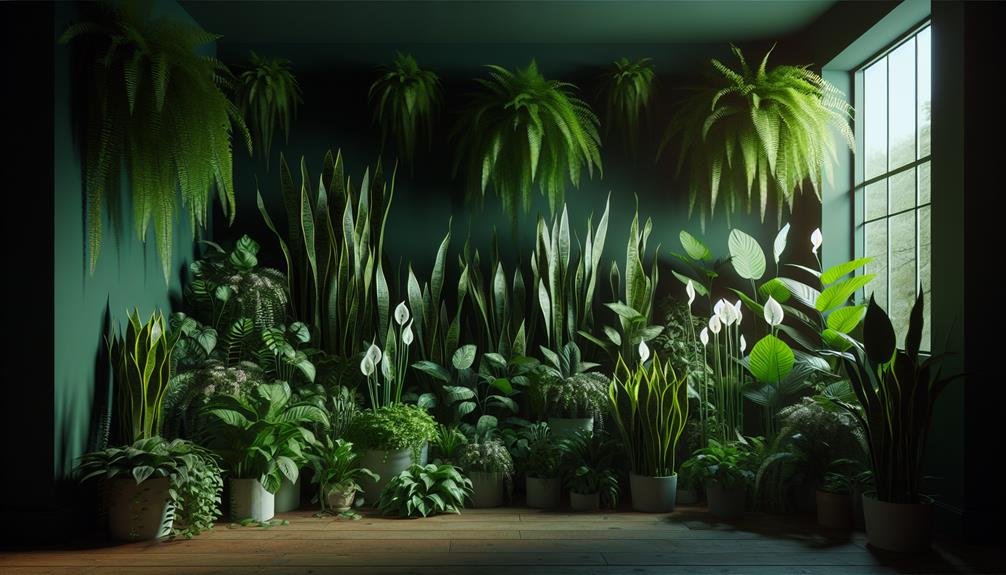
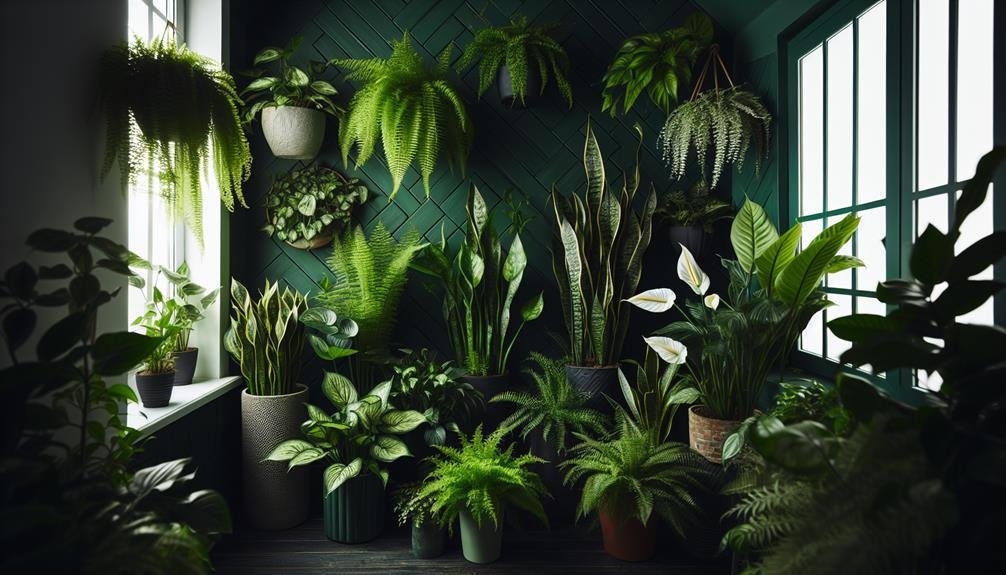
Transform your space into a green haven by following these key steps: First, select plants based on lighting requirements and available space. Next, establish a consistent watering schedule, checking soil moisture regularly. Remember to fertilize during the growing season, following guidelines to avoid overfeeding. Additionally, prune for growth and repot as needed with fresh soil to prevent root issues. Stay tuned to uncover further tips for maintaining your indoor garden.
Choosing the Right Plants
When selecting houseplants, consider your home's lighting conditions to ensure they flourish. Different plants have varying light requirements, so it's important to match them with the right spot in your home. For areas with abundant sunlight, think about plants like succulents, cacti, or herbs that thrive in bright, direct light. In spaces with low light, choose plants such as snake plants, pothos, or peace lilies that can prosper with minimal sunlight.
Moreover, think about the size of the plant and how much space it will need to grow. Larger plants like fiddle leaf figs or monstera deliciosas require more room to spread out, while smaller plants like spider plants or African violets are ideal for compact spaces.
When picking houseplants, also consider your schedule for watering and maintenance. Some plants need frequent watering and care, while others are more resilient and can thrive with minimal attention. By choosing plants that suit your home's lighting conditions and your availability for care, you can ensure a thriving indoor garden that brings life and beauty to your space.
Understanding Light Requirements
To guarantee your houseplants thrive, it's essential to comprehend their specific light requirements. Different plants have varying needs when it comes to light exposure. Some plants flourish in bright, direct sunlight, while others prefer indirect light or shade. Understanding the light preferences of your houseplants is vital for their overall health and growth.
Plants that require high light levels typically need at least six hours of direct sunlight daily. These plants are ideal for windowsills or areas with ample natural light. On the other hand, plants that prefer low light can thrive in shaded corners or rooms with limited sunlight.
It's important to observe how the sunlight moves through your home during the day to determine the best placement for your plants. Rotate your plants occasionally to make sure they receive even light distribution and prevent them from leaning towards the light source.
Establishing a Watering Schedule
Maintain healthy hydration levels for your houseplants by establishing a consistent watering schedule. Different plants have varying water needs, so it's important to understand the requirements of each species in your care. Check the soil moisture levels regularly by sticking your finger about an inch into the soil. If it feels dry, it's time to water. Overwatering can be just as harmful as underwatering, as it may lead to root rot. When watering, make sure that the water drains out of the bottom of the pot to prevent waterlogging.
Consider factors like the type of plant, its size, the pot material, and the environment it's in when setting up your watering routine. Some plants prefer to dry out slightly between waterings, while others like consistently moist soil. During the growing season, plants may need more frequent watering compared to the dormant winter months. Keep an eye on your plants and adjust the schedule as needed to promote healthy growth and prevent water-related issues.
Fertilizing Your House Plants
To guarantee optimal growth for your house plants, consider the importance of providing them with the right nutrients through proper fertilization. Fertilizing your house plants is crucial for their overall health and vitality. When selecting a fertilizer, choose a balanced formula specifically created for indoor plants. Look for fertilizers with equal parts nitrogen, phosphorus, and potassium to support healthy growth.

During the growing season, which typically spans from spring to early fall, you should fertilize your house plants every two to four weeks. However, in the dormant season, reduce the frequency to once a month or even less. Be mindful not to over-fertilize, as this can lead to nutrient build-up and harm your plants.
Before fertilizing, make sure your plants are well-watered to prevent root burn. Follow the instructions on the fertilizer packaging for the correct dosage, and remember that a little goes a long way. Regular fertilization will keep your house plants thriving and looking their best.
Pruning and Repotting Tips
For healthy and well-maintained house plants, mastering the art of pruning and repotting is vital. Pruning involves trimming away dead or overgrown parts of the plant to encourage new growth and maintain its shape. When pruning, make clean cuts just above a leaf node to promote healthy regrowth.
Repotting is necessary when your plant outgrows its current container, leading to root-bound conditions. To repot successfully, gently remove the plant from its current pot, loosen the roots, and place it in a slightly larger container with fresh soil. Remember not to oversize the new pot, as too much extra space can hold excess water, leading to root rot. Regularly check the roots of your plants to determine if they need repotting.
Pruning and repotting are essential aspects of plant care that help your green companions thrive and stay vibrant in your home. Keep an eye on your plants' growth and adjust their care as needed to make sure they remain healthy and flourishing.
Dealing With Common Pests
If you notice small insects or signs of damage on your house plants, prompt action is crucial in effectively managing common pests. Pests like aphids, spider mites, and mealybugs can harm your plants if left unattended.
To combat these bothersome intruders, begin by isolating the affected plant to prevent the infestation from spreading. Gently wash the plant with a mixture of water and mild soap to eliminate the pests. For persistent pests, consider using insecticidal soap or neem oil, which are effective and safe options.
Regularly examine your plants for any indications of pests, such as yellowing leaves, sticky residue, or webbing. Maintaining your plants healthy and well-kept can also help prevent pest infestations.
Remember that prevention is crucial, so maintaining a tidy environment and avoiding overwatering can greatly assist in keeping common pests away. By staying alert and taking proactive measures, you can guarantee your house plants remain healthy and pest-free.
Troubleshooting Plant Problems
When troubleshooting plant problems, it's crucial to identify and address issues promptly to guarantee the health and vitality of your house plants. Start by checking for common problems like yellowing leaves, wilting, or spots on the leaves. Confirm your plant is receiving the appropriate amount of light, water, and humidity.
If you notice any issues, evaluate the soil moisture, drainage, and pot size. Overwatering can lead to root rot, while underwatering can cause wilting. Pests like spider mites or aphids can also harm your plants, so keep an eye out for any unusual critters. Trim dead or yellow leaves to promote new growth and enhance air circulation.
Consider repotting your plant if it's outgrowing its current container. Use a well-draining potting mix and provide adequate fertilization based on your plant's needs. By addressing plant problems promptly and effectively, you can ensure your house plants flourish and enhance your living space.
Frequently Asked Questions
Can I Use Tap Water to Water My House Plants, or Should I Use Filtered or Distilled Water?
You can use tap water to water your house plants, but it's important to contemplate the quality of your tap water. Some tap water contains minerals and chemicals that can harm your plants over time.
If you notice any issues with your plants, such as browning leaves or stunted growth, ponder switching to filtered or distilled water to evade potential problems.
It's always best to guarantee your plants receive the best care possible for ideal growth.
How Often Should I Clean the Leaves of My House Plants, and What Is the Best Method for Doing So?
To maintain the health of your houseplants, it's crucial to clean their leaves regularly. Dust can obstruct sunlight and impede photosynthesis. Wiping the leaves gently with a damp cloth or giving them a gentle shower can help.
Aim to clean them once a month or whenever they appear dirty. This practice not only keeps your plants looking fresh but also enhances their overall well-being.
Are There Any Specific Types of Pots or Containers That Are Better for Promoting Healthy Growth in House Plants?
When selecting pots or containers for your house plants, consider ones with drainage holes to prevent waterlogging. This allows excess water to escape and helps avoid root rot.
Additionally, choose containers that are the appropriate size for your plant's root system to prevent overcrowding. Porous materials like terracotta can help with aeration and prevent soil compaction.
Remember to repot your plants as they grow to make sure they've adequate space for healthy development.
Can I Use Homemade Remedies for Pest Control on My House Plants, or Should I Stick to Store-Bought Products?
You can definitely use homemade remedies for pest control on your house plants. Natural solutions like neem oil, soap spray, or diluted vinegar can be effective against common pests. Just make sure to test any new remedy on a small area of your plant first to confirm it won't cause harm.
If the infestation is severe or persists, consider using store-bought products for stronger intervention. Regular monitoring and early intervention are key to maintaining healthy house plants.
What Are Some Ways to Prevent Overwatering or Underwatering My House Plants, Aside From Following a Watering Schedule?
To prevent overwatering or underwatering your house plants, besides sticking to a watering schedule, consider checking the soil moisture level before watering. Guarantee pots have drainage holes to prevent waterlogging. Use pots with proper sizing to avoid excess water retention. Monitor plant growth and adjust watering accordingly.
Consider factors such as humidity levels and sunlight exposure when determining plant water needs. These steps can help maintain ideal soil moisture levels for healthy plant growth.
Conclusion
To sum up, caring for house plants requires attention to detail and consistency.
By selecting the right plants, understanding their light and water needs, and providing proper care through fertilizing, pruning, and repotting, you can help your plants thrive.
Keep an eye out for common pests and address any problems promptly.
With a little knowledge and effort, you can enjoy a beautiful indoor garden that brightens your home and improves air quality.
Remember, a green thumb is within reach with the right care.