If you've ever admired a friend's lush succulent collection but doubted your own plant-parenting abilities, fear not. Low-maintenance succulents are just the beginning of a world of thriving indoor plants that are perfect for busy beginners.
From air-purifying snake plants to vibrant spider plants, each with its unique charm and benefits, you'll find the ideal green companion for your space.
Stay tuned to discover how these plants can effortlessly enhance your indoor environment without demanding too much of your time and attention.
Low-Maintenance Succulents
If you're new to caring for indoor plants, consider starting with a small collection of low-maintenance succulents. These plants are perfect for beginners as they require minimal attention and are quite forgiving if you forget to water them occasionally. Succulents come in various shapes, sizes, and colors, making them a versatile and attractive addition to any indoor space.
One of the key benefits of succulents is their ability to store water in their leaves, stems, or roots, allowing them to survive in arid conditions. This means you don't have to worry about watering them frequently. Simply ensure they get enough sunlight, as most succulents thrive in bright, indirect light.
When it comes to care, succulents prefer well-draining soil to prevent root rot. Make sure to plant them in pots with drainage holes to avoid waterlogging. Additionally, avoid overwatering, as this is a common mistake that can harm these hardy plants. With just a little attention to their sunlight and watering needs, your succulents will flourish and bring a touch of nature indoors.
Air-Purifying Snake Plants
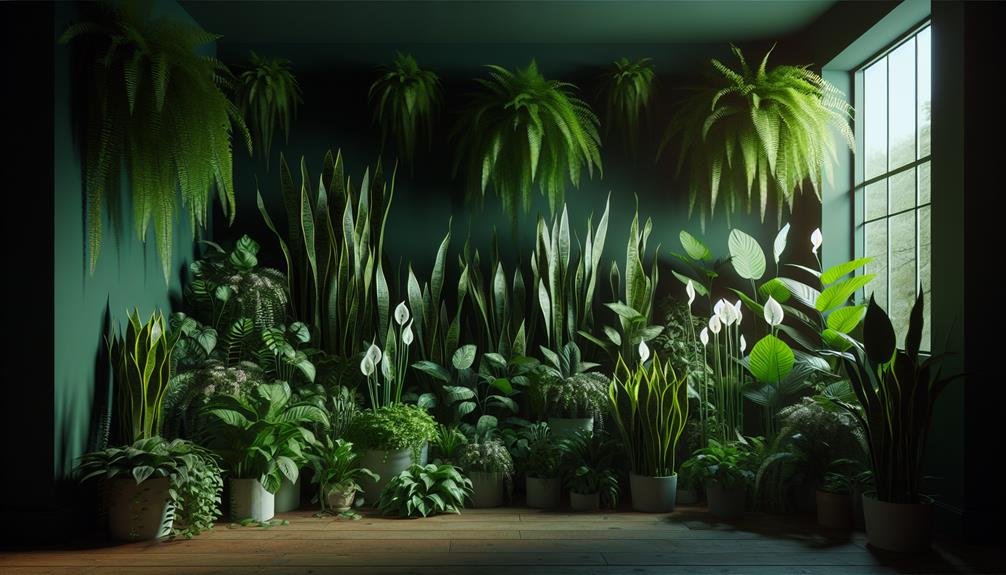
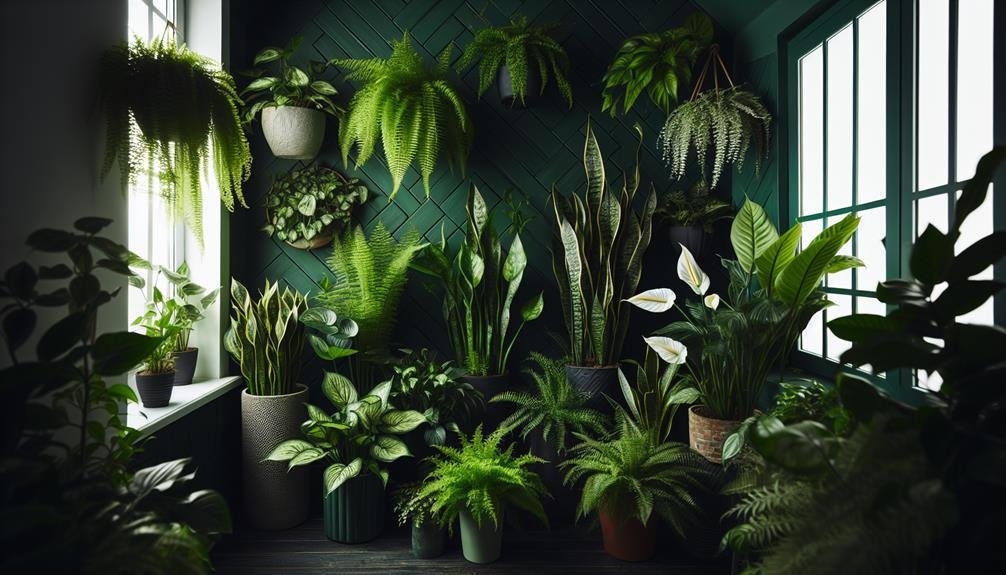
Consider adding air-purifying snake plants to your indoor plant collection for their ability to cleanse the air and their low-maintenance nature. Snake plants, also known as Sansevieria, are excellent air purifiers that can remove toxins like formaldehyde and benzene from your home. These plants are perfect for beginners due to their resilience and ability to thrive in various light conditions, from bright light to low light.
Snake plants have striking long, sword-shaped leaves that come in various shades of green, adding a touch of elegance to any space. They're drought-tolerant plants, meaning you don't have to worry about watering them frequently. In fact, it's better to let the soil dry out between waterings to prevent root rot. Snake plants are also known for their air-purifying capabilities, making them a dual-purpose addition to your indoor garden.
To care for snake plants, place them in well-draining soil, and water sparingly. These plants are forgiving if you forget to water them occasionally, making them an ideal choice for busy individuals looking to enjoy the benefits of indoor gardening without the constant upkeep.
Vibrant Spider Plants
Adding vibrant spider plants to your indoor garden can bring a pop of color and vitality to your living space. These resilient plants are perfect for beginners looking to add a touch of greenery to their homes without the need for constant attention. Spider plants, with their long, arching leaves and delicate white flowers, aren't only visually appealing but also help improve indoor air quality by removing toxins like formaldehyde and carbon monoxide.

One of the best features of spider plants is their ability to thrive in a variety of lighting conditions, making them versatile for any room in your home. They prefer bright, indirect light but can also adapt to low light environments, making them ideal for those with limited natural light. Additionally, spider plants are easy to care for, requiring only occasional watering and regular dusting of their leaves to keep them looking fresh and vibrant.
Incorporating spider plants into your indoor garden is a simple and rewarding way to enhance your living space while enjoying the benefits of having a low-maintenance yet visually striking plant.
Hardy ZZ Plants
When looking for a resilient and low-maintenance indoor plant option, consider the hardy ZZ plant. ZZ plants, scientifically known as Zamioculcas Zamiifolia, are excellent choices for beginners due to their ability to thrive in various conditions. These plants have glossy, dark green leaves that can brighten up any room without requiring much attention. ZZ plants are tolerant of low light and infrequent watering, making them perfect for those with busy schedules.
One of the standout features of ZZ plants is their ability to survive even if you forget to water them for a while. These plants store water in their rhizomes, allowing them to withstand periods of drought. Additionally, ZZ plants are relatively pest-resistant, so you won't have to worry much about insect infestations.
To care for your ZZ plant, place it in indirect light and water it sparingly, allowing the soil to dry out between waterings. With minimal effort, you can enjoy the beauty of a hardy ZZ plant in your home.
Stylish Pothos
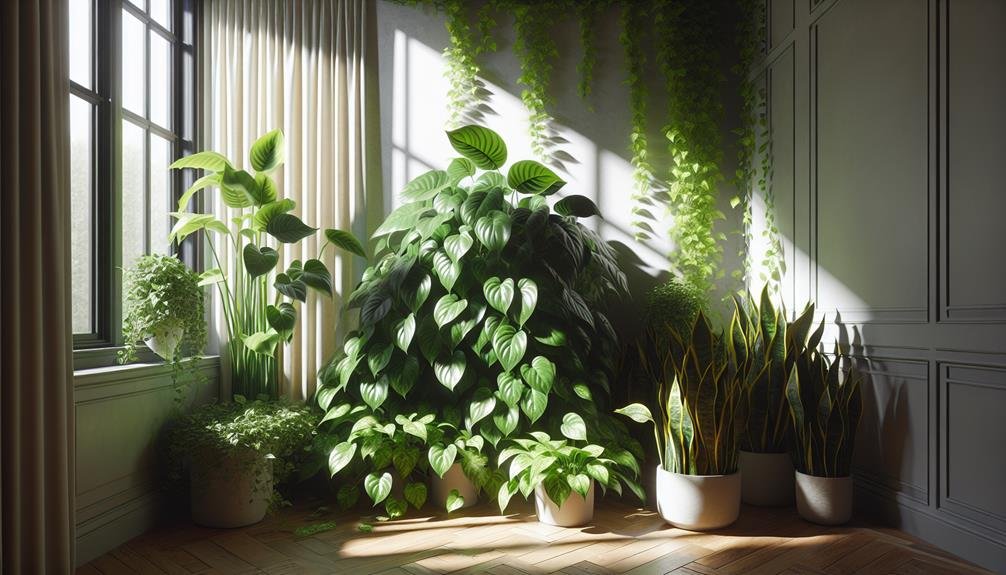
For an effortlessly stylish addition to your indoor plant collection, look no further than the versatile and attractive Pothos plant. Pothos, also known as Devil's Ivy, is an ideal choice for busy beginners due to its low maintenance requirements and ability to thrive in various lighting conditions. This plant features heart-shaped leaves in vibrant shades of green, making it a visually appealing option for any space.
Pothos is a great plant for those just starting to explore indoor gardening because it's resilient and forgiving of occasional neglect. It can tolerate low light environments, although it thrives in bright, indirect light. With its trailing vines, Pothos is perfect for hanging baskets or as a trailing plant on shelves or in plant stands.
To care for your Pothos, ensure the plant is placed in well-draining soil and water it when the top inch of soil feels dry. Regular pruning can help maintain its bushy appearance. With minimal effort, you can enjoy the beauty of Pothos in your home while adding a touch of style to your indoor plant collection.
Frequently Asked Questions
Can Indoor Plants Survive Without Natural Sunlight?
Yes, indoor plants can survive without natural sunlight. They can thrive with artificial light sources like grow lights. These lights provide the necessary spectrum for photosynthesis, ensuring the plants receive the energy they need to grow.
When choosing grow lights, consider their intensity and duration to mimic natural sunlight. With proper light conditions and care, your indoor plants can flourish even without direct exposure to the sun.
How Often Should I Water My Indoor Plants?
Water your indoor plants based on their specific needs. Some plants prefer to dry out between waterings, while others require more frequent moisture.
Check the soil moisture level by sticking your finger in the soil. If it feels dry, it's time to water. Overwatering can be harmful, so it's essential to strike a balance.
What Are the Best Indoor Plants for Small Spaces or Apartments?
When looking for the best indoor plants for small spaces or apartments, opt for plants that thrive in low light conditions like pothos, snake plants, or peace lilies. These plants are easy to care for and don't require frequent watering.
Consider adding air plants or succulents as they're compact and can add a touch of greenery to your space. Remember to place them near windows for some natural light.
Are There Any Indoor Plants That Are Safe for Pets?
Sure thing!
Yes, there are indoor plants that are safe for pets. Some examples include spider plants, Boston ferns, and African violets. These plants are non-toxic to cats and dogs, making them a great addition to your indoor space without worrying about your furry friends getting sick if they decide to take a curious nibble.
Just remember to still keep an eye on your pets around plants to ensure they don't cause any mischief.
How Can I Prevent Common Pests From Infesting My Indoor Plants?
To prevent common pests from infesting your indoor plants, start by regularly inspecting the leaves and stems for any signs of bugs.
Wiping down plant leaves with a damp cloth can help deter pests.
Additionally, consider using natural remedies like neem oil or insecticidal soap to keep bugs at bay.
Remember to isolate any infested plants to prevent the pests from spreading to other plants in your home.
Conclusion
So there you have it! With these thriving indoor plants, even busy beginners can enjoy the beauty and benefits of greenery in their home.
Low-maintenance succulents, air-purifying snake plants, vibrant spider plants, hardy ZZ plants, and stylish pothos are all great options to add some green to your space without requiring a lot of attention.
So grab a plant and watch it thrive with minimal effort on your part!