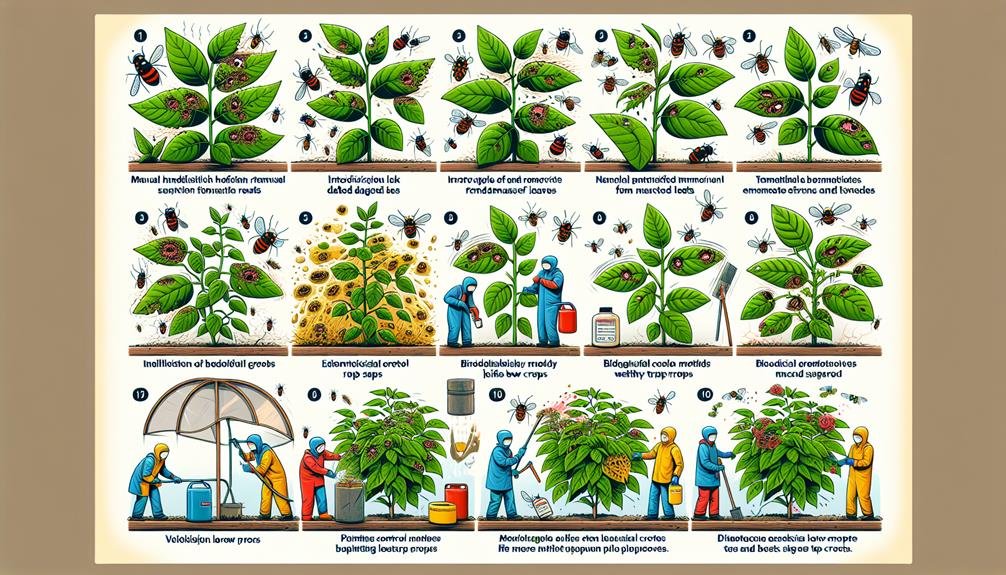
You might think eliminating leaf miners on plants requires harsh chemicals, but there are natural and effective methods available.
Have you tried neem oil spray yet? This organic solution is just one of the top ten ways to combat these pesky pests.
Stay tuned to discover other proven strategies that can help you protect your plants and keep them healthy without harming the environment.
Neem Oil Spray
To effectively combat leaf miners on your plants, consider utilizing a neem oil spray. Neem oil is a natural remedy that can help deter leaf miners and other pests from infesting your plants. The oil works by disrupting the life cycle of the leaf miners, ultimately reducing their population. To apply the neem oil spray, mix the recommended amount with water in a spray bottle and generously coat the leaves of your plants, making sure to cover both the tops and bottoms of the leaves. It's important to reapply the neem oil spray every 7-14 days or after heavy rainfall to maintain its effectiveness.
When using neem oil, ensure you follow the instructions on the product label to avoid any potential harm to your plants. Additionally, it's best to apply the neem oil spray in the early morning or late afternoon to prevent any potential burning of the plant leaves under direct sunlight. By incorporating neem oil spray into your plant care routine, you can effectively combat leaf miners and protect your plants from further damage.
Companion Planting
Consider enhancing your plant's defenses against leaf miners by exploring the benefits of companion planting. Companion planting involves strategically placing certain plants together to help repel pests, attract beneficial insects, and improve overall plant health.
When it comes to leaf miners, there are specific companion plants that can help deter these pesky insects.
For instance, planting aromatic herbs like mint, basil, or lavender near your vulnerable plants can confuse and deter leaf miners due to their strong scents. Marigolds are another excellent companion plant known for their ability to repel leaf miners with their natural insecticidal properties.
Additionally, planting alliums such as chives, onions, or garlic can help keep leaf miners at bay.
Beneficial Insects
Enhance your plant's defense against leaf miners by attracting beneficial insects. These helpful bugs can act as natural predators to leaf miners, keeping their population in check without the need for harmful chemicals. Ladybugs, lacewings, and parasitic wasps are known to feed on leaf miner larvae, effectively reducing their numbers and preventing further damage to your plants.

To attract beneficial insects to your garden, consider planting nectar-rich flowers such as dill, fennel, and marigolds. These plants not only provide a food source for the helpful bugs but also serve as a habitat where they can lay their eggs and thrive. Additionally, avoiding the use of broad-spectrum insecticides can help maintain a healthy population of beneficial insects in your garden.
Introducing beneficial insects to your garden is a sustainable and eco-friendly way to combat leaf miners while promoting a balanced ecosystem. By creating a welcoming environment for these natural predators, you can effectively reduce leaf miner infestations and protect your plants from further damage.
Sticky Traps
Attract leaf miners away from your plants by utilizing sticky traps, a practical method for trapping and monitoring these pests effectively. Sticky traps are easy to set up and can be placed near your plants to catch adult leaf miners. These traps work by attracting the pests with their bright colors and sticky surfaces, trapping them before they can lay eggs on your plants. Make sure to regularly check and replace the traps as needed to maintain their effectiveness.
To use sticky traps efficiently, position them strategically around your garden or affected plants. Hang the traps at plant height for the best results, as this is where leaf miners tend to fly. Keep an eye on the traps to monitor the level of infestation and adjust your control measures accordingly. By using sticky traps consistently, you can reduce the population of leaf miners and protect your plants from further damage.
Pruning Affected Leaves
To effectively manage leaf miners on your plants, consider trimming off affected leaves as a proactive measure against further infestation. Leaf miners lay their eggs inside the leaves of plants, and the larvae then tunnel through the leaf tissue as they feed, leaving distinctive trails and damage behind. By pruning off these affected leaves at the first sign of infestation, you can remove the larvae before they mature and prevent them from spreading to other parts of the plant.
When pruning affected leaves, make sure to dispose of them properly, either by burning them or sealing them in a plastic bag before throwing them away. This step is crucial to prevent any surviving larvae from returning to the plant or spreading to nearby ones. Regularly inspect your plants for signs of leaf miner damage, focusing on the undersides of leaves where the eggs are typically laid. By promptly pruning off affected leaves, you can help control the infestation and protect the overall health of your plants.
Diatomaceous Earth
Consider using diatomaceous earth as a natural and effective way to combat leaf miners on your plants. Diatomaceous earth is a powdery substance made from fossilized aquatic organisms known as diatoms. It works by dehydrating and ultimately killing the leaf miner larvae as they come into contact with it. To apply diatomaceous earth, simply dust a thin layer onto the affected plants, focusing on the upper and lower surfaces of the leaves where the pests are present.
One of the advantages of using diatomaceous earth is that it's safe to use around humans and pets since it's a non-toxic substance. Additionally, it's environmentally friendly and doesn't harm beneficial insects such as pollinators. Remember to reapply the diatomaceous earth after rain or watering, as moisture reduces its effectiveness. Regular application of diatomaceous earth can help control leaf miners and protect your plants from further damage. Be sure to wear a mask when applying to avoid inhaling the fine dust particles.
Horticultural Oil
Using horticultural oil is an effective method to combat leaf miners on plants by suffocating the pests and disrupting their life cycle. When applied correctly, horticultural oil forms a coating over the leaves, preventing adult leaf miners from laying eggs and larvae from feeding. To use horticultural oil, thoroughly spray the affected plants, ensuring complete coverage of both the upper and lower leaf surfaces. It's important to follow the manufacturer's instructions regarding dilution and application frequency to avoid damaging the plants.
One advantage of horticultural oil is its ability to target leaf miners without harming beneficial insects like ladybugs or bees. Additionally, horticultural oil is relatively safe for humans and pets once it dries on the plant. However, it's essential to apply horticultural oil during the appropriate times, typically in the early morning or late afternoon when temperatures are mild to prevent leaf burn. Regular application every 7-14 days can help control leaf miner populations effectively.
Homemade Garlic Spray
One effective method for combating leaf miners on plants is by preparing a homemade garlic spray. This natural remedy is easy to make and can effectively deter leaf miners from infesting your plants.
To create your garlic spray, start by blending together a few cloves of garlic with water in a blender. Once you have a smooth mixture, strain it to remove any solid pieces.
Pour the liquid into a spray bottle and add a small amount of dish soap to help the solution stick to the leaves. Shake well before applying the garlic spray to the affected plants, making sure to cover both the tops and bottoms of the leaves thoroughly.
The strong odor of garlic acts as a repellent to leaf miners, helping to protect your plants from further damage. Remember to reapply the garlic spray every week or after rainfall to maintain its effectiveness in deterring these pests.
Introduce Nematodes
To combat leaf miners on plants effectively, consider introducing nematodes into the soil. Nematodes are microscopic roundworms that can help control leaf miner populations by parasitizing the larvae in the soil. These beneficial organisms can be purchased from garden stores or online suppliers.
Once you have obtained the nematodes, follow the instructions provided for application. Typically, you'll mix the nematodes with water and then apply the solution to the soil around the affected plants. The nematodes will seek out the leaf miner larvae and infect them, ultimately reducing the pest population in your garden.
It's important to note that nematodes are safe to use around plants and don't pose any harm to humans, pets, or beneficial insects. Additionally, nematodes are a sustainable and environmentally friendly option for controlling leaf miners without the use of harmful chemicals.
Remove and Destroy Infested Leaves
Consider inspecting your plants regularly for signs of leaf miner infestations, and promptly remove and destroy any leaves that show evidence of their presence. By doing this, you can effectively control the spread of leaf miners and prevent further damage to your plants. When you notice leaves with squiggly lines, blotches, or discolored spots, carefully prune them off and place them in a sealed bag. Discarding these infested leaves will help eliminate the larvae responsible for the damage, reducing the chances of a recurring infestation.
It is crucial to dispose of the infested leaves properly to prevent the leaf miners from spreading to other plants in your garden. Avoid composting these leaves, as it may not reach a high enough temperature to kill the larvae. Instead, seal the bag and throw it away in the trash. Regularly monitoring your plants and taking action as soon as you spot signs of leaf miners will go a long way in maintaining the health and appearance of your garden.
Frequently Asked Questions
Are Leaf Miners Harmful to Humans or Pets if They Come Into Contact With Them?
Leaf miners aren't harmful to humans or pets if they come into contact with them. These pests primarily target plant leaves by tunneling through them to feed and lay eggs. While they can cause aesthetic damage to plants, they don't pose a direct threat to people or animals.
However, it's still important to take steps to control leaf miners to prevent further damage to your plants and promote healthy growth.
How Long Does It Take to See Results After Using One of the Methods Mentioned in the Article?
After using one of the methods mentioned in the article, you may start seeing results within a few days.
The time it takes to notice a difference can vary depending on the specific method you choose and how severe the leaf miner infestation is.
Keep an eye on your plants for any changes and continue with the chosen treatment as directed to effectively eliminate leaf miners and restore the health of your plants.
Can Leaf Miners Affect All Types of Plants or Are There Specific Plants They Target?
Leaf miners can affect a wide range of plants but tend to target specific ones. They've preferences for certain plant families and species. Understanding which plants they're attracted to can help you identify and prevent infestations.
Keep an eye on susceptible plants and take proactive measures to protect them from these pests. By being vigilant, you can minimize the impact of leaf miners on your garden.
Are There Any Natural Predators of Leaf Miners Besides Beneficial Insects That Can Help Control Their Population?
Yes, besides beneficial insects, there are natural predators of leaf miners that can help control their population. Some examples are parasitic wasps, ladybugs, lacewings, and spiders. These predators feed on leaf miners at different stages of their lifecycle, assisting in reducing their numbers.
Introducing these natural enemies to your garden can be an effective way to manage leaf miner infestations without resorting to chemical pesticides.
Are There Any Specific Times of the Year When Leaf Miners Are More Active and Need to Be Addressed With These Elimination Methods?
During peak activity times, like spring and summer, leaf miners can be more active and need to be tackled promptly with elimination methods.
Monitoring your plants closely during these seasons can help you spot early signs of infestation. By staying vigilant and addressing the issue swiftly, you can prevent leaf miners from causing extensive damage to your plants.
Regularly inspecting your plants will help you stay ahead of these pests.
Conclusion
In conclusion, there are a variety of effective ways to eliminate leaf miners on plants without resorting to harmful chemicals. By using natural methods such as neem oil spray, companion planting, beneficial insects, and other techniques, you can protect your plants and maintain a healthy garden.
Remember to regularly monitor your plants for signs of infestation and take action promptly to prevent further damage. With a little effort and care, you can successfully control leaf miners and keep your plants thriving.