
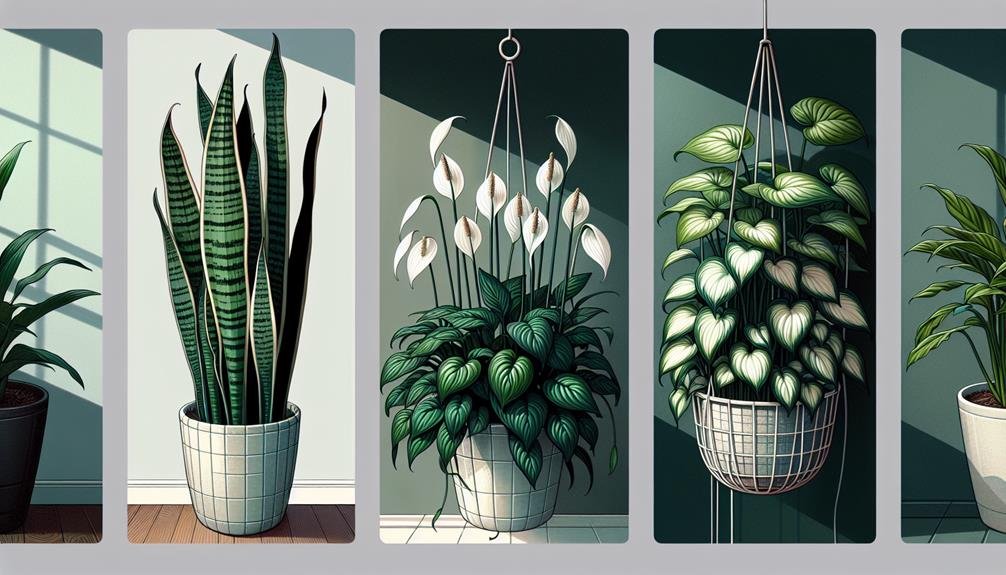
Step into the world of low-light houseplants, where the greenery thrives like shadows dancing in the moonlight.
Have you ever wondered which plants can bring life to the dim corners of your home or garden?
The top 3 low-light champions are waiting to be unveiled, offering not just beauty but also a touch of nature's tranquility to your surroundings.
Stay tuned to discover these resilient companions that can flourish even in the shade.
Snake Plant (Sansevieria)
If you're looking for a hardy low-light houseplant, consider the Snake Plant (Sansevieria). This resilient plant thrives in various lighting conditions, making it a perfect choice for indoor spaces with minimal sunlight. The Snake Plant's distinctive upright leaves come in different varieties, adding a touch of elegance to any room. Its air-purifying qualities make it not only a visually appealing choice but also a beneficial one for indoor air quality.
One of the Snake Plant's key attributes is its ability to survive with infrequent watering, making it ideal for those who may forget to water their plants regularly. This low-maintenance plant is a great option for beginners or individuals with busy schedules. Additionally, the Snake Plant is known for its durability and ability to withstand neglect, making it a reliable choice for any household.
ZZ Plant (Zamioculcas Zamiifolia)
The ZZ Plant (Zamioculcas Zamiifolia) is another excellent low-light houseplant option that boasts both beauty and resilience. This plant features glossy, dark green leaves that add a touch of elegance to any indoor space. One of the best things about the ZZ Plant is its ability to thrive in low light conditions, making it perfect for rooms with minimal natural light. Additionally, the ZZ Plant is known for its durability and ability to withstand neglect, making it a great choice for busy individuals or those new to plant care.
When caring for a ZZ Plant, make sure not to overwater it, as this can lead to root rot. Allow the soil to dry out between waterings to prevent this issue. The ZZ Plant is also sensitive to overwatering, so it's better to err on the side of underwatering than overwatering. With minimal maintenance requirements and its striking appearance, the ZZ Plant is a fantastic option for anyone looking to add a low-light houseplant to their indoor or outdoor space.
Peace Lily (Spathiphyllum)
An ideal choice for low-light environments, the Peace Lily (Spathiphyllum) thrives with minimal sunlight. This elegant plant features glossy, dark green leaves that gracefully arch over, creating a stunning visual appeal in your home. The Peace Lily isn't only beautiful but also practical, as it helps purify the air by removing toxins like formaldehyde and benzene.
One of the key benefits of the Peace Lily is its ability to bloom indoors, producing lovely white flowers that add a touch of serenity to any space. This plant is relatively low maintenance, requiring water only when the soil is dry to the touch. Its tolerance for low light makes it a perfect choice for rooms with limited natural light, such as offices or bathrooms.

Whether you place it in a dimly lit corner indoors or in a shaded spot on your patio, the Peace Lily will continue to thrive and bring a sense of tranquility to your surroundings. With its adaptability and beauty, this plant is an excellent addition to any low-light environment.
Frequently Asked Questions
Can These Low-Light Houseplants Survive in a Windowless Room?
In a windowless room, low-light houseplants may struggle to thrive. While they can survive for a while in artificial light, they generally need some exposure to natural light to stay healthy.
Consider using grow lights or fluorescent bulbs to mimic sunlight if no windows are available. Keep an eye on the plants for any signs of poor growth or discoloration, and adjust their lighting accordingly to give them the best chance of survival.
Are These Plants Safe for Pets if Ingested?
If your pets ingest these plants, it's essential to know if they're safe. Some houseplants can be toxic to animals when eaten. Make sure to research each plant's safety for pets.
It's crucial to keep your furry friends protected and maintain a pet-friendly environment. Be cautious and keep these low-light houseplants out of reach to prevent any harm to your pets.
How Often Should I Water These Low-Light Houseplants?
Water your low-light houseplants only when the top inch of soil feels dry to the touch. Overwatering can lead to root rot, so it's crucial to let the soil dry out between waterings. Typically, this means watering them every 1-2 weeks, but always adjust based on the specific plant's needs and the humidity levels in your home.
Do These Plants Require Any Special Type of Soil for Optimal Growth?
For optimal growth, these plants benefit from well-draining soil that retains moisture without becoming waterlogged.
A good mix could include peat moss or coconut coir for moisture retention, perlite or sand for drainage, and some compost for nutrients.
Make sure the soil isn't compacted, allowing roots to breathe and grow.
Regularly check the soil moisture to ensure it's not too dry or soggy, providing a healthy environment for your plants to thrive.
Can These Plants Be Propagated Easily at Home?
Yes, these plants can be propagated easily at home.
You simply need to take cuttings from the plant, remove lower leaves, dip in rooting hormone, and place in moist soil.
Keep the cuttings in a warm, humid environment and water regularly.
With proper care and attention, your plants will start to develop roots and grow into new plants.
It's a rewarding process that can help expand your collection effortlessly.
Conclusion
Overall, incorporating low-light houseplants into your indoor and outdoor spaces can add a touch of greenery and life to your surroundings.
The Snake Plant, ZZ Plant, and Peace Lily are great options for those looking for low-maintenance plants that thrive in low-light conditions.
Consider adding these plants to your collection to bring a sense of calm and beauty to your home or garden.



