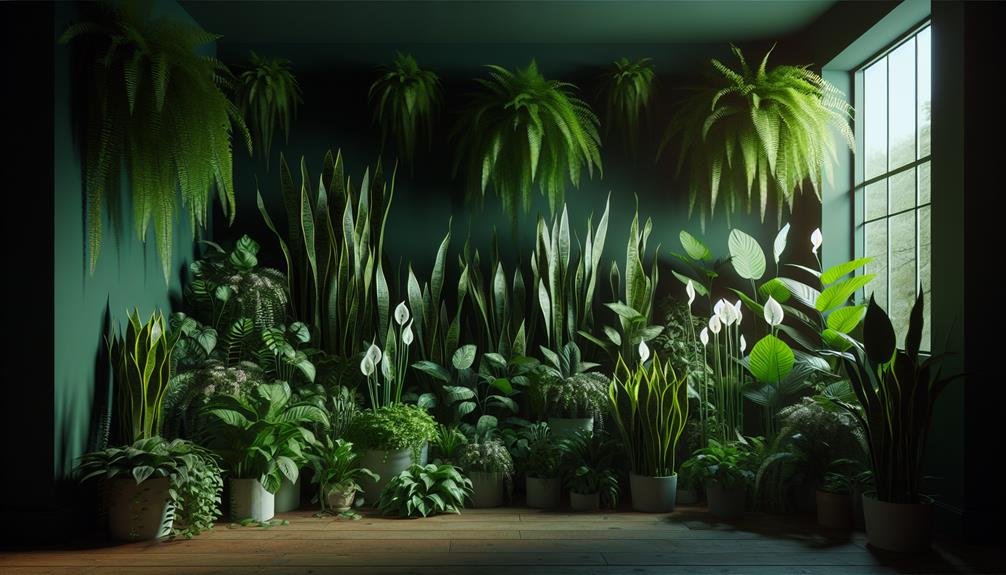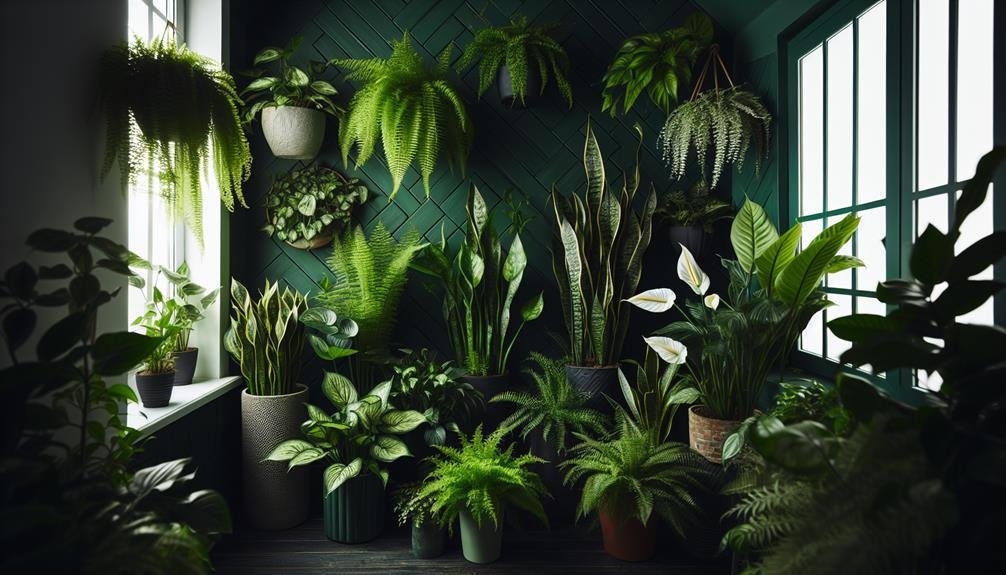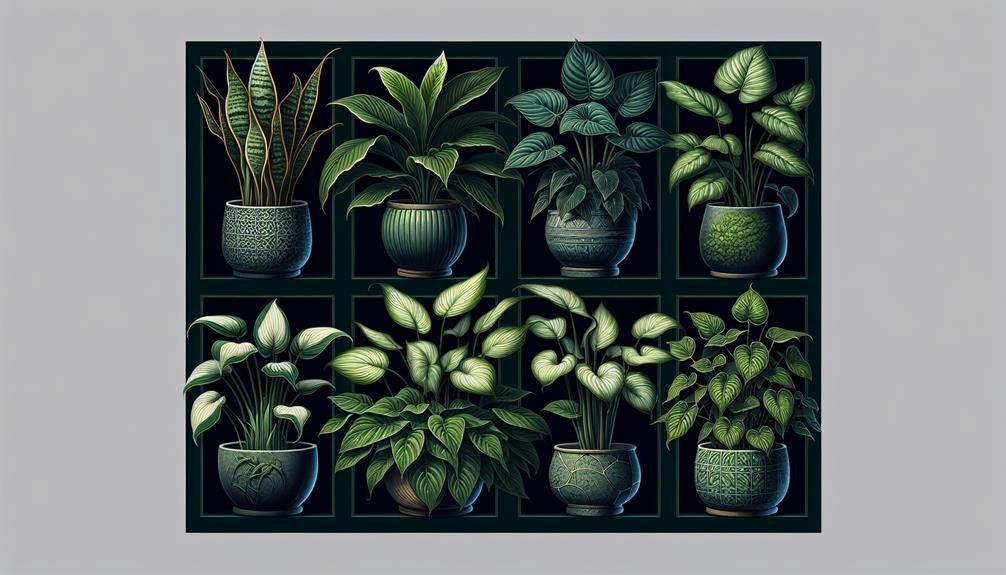
Imagine walking into a dimly lit room and being greeted by the lush green leaves of a Snake Plant, quietly purifying the air around you. This is just the beginning of a journey into the world of low light plants that are not only easy to care for but also bring a touch of nature into your indoor spaces.
Curious to discover the other four low light champions that are universally adored for their resilience and beauty?
Snake Plant
When choosing low light plants, consider the hardy and adaptable Snake Plant. This plant is a fantastic choice for those looking to add some greenery to a dimly lit room. The Snake Plant, also known as Sansevieria or Mother-in-Law's Tongue, thrives in low light conditions, making it the perfect addition to your home or office space. This plant requires minimal care and can tolerate irregular watering, making it ideal for those with busy schedules or who may not have a green thumb.
One of the key benefits of the Snake Plant is its air-purifying qualities. It's known for its ability to remove toxins such as formaldehyde and benzene from the air, promoting a healthier indoor environment for you and your loved ones. Additionally, the Snake Plant comes in a variety of shapes, sizes, and colors, allowing you to choose the perfect option to suit your space and style.
ZZ Plant
Consider adding the ZZ Plant to your collection of low light plants for a touch of greenery that thrives in dimly lit spaces. The ZZ Plant, scientifically known as Zamioculcas zamiifolia, is a popular choice for indoor spaces due to its ability to tolerate low light conditions. This plant features glossy, dark green leaves that add a modern and elegant touch to any room. The ZZ Plant is incredibly low maintenance, requiring minimal watering and thriving in neglect, making it perfect for those with busy schedules or who are new to plant care.
One of the key benefits of the ZZ Plant is its air-purifying properties, helping to improve the air quality in your home or office. In addition to its resilience in low light, this plant is also known for its ability to survive drought conditions, making it a hardy and reliable choice for even the most forgetful plant owners. With its attractive appearance and easy care requirements, the ZZ Plant is a versatile and stylish addition to any indoor space.
Pothos
For another low light plant option that complements the ZZ Plant, look into adding a Pothos to your collection. Pothos, also known as Devil's Ivy, is a popular choice for indoor spaces due to its easy-going nature and beautiful trailing vines. This plant thrives in low light conditions, making it perfect for offices or rooms with minimal natural light. Pothos comes in various shades of green, from the classic golden pothos with its marbled leaves to the striking neon pothos with its vibrant lime-green foliage.
Caring for a Pothos is a breeze; it requires watering only when the top inch of soil is dry and can survive occasional missed waterings. Pothos is also excellent at purifying the air, helping to create a healthier indoor environment. You can easily propagate Pothos by rooting cuttings in water, making it a great plant for sharing with friends and family. With its low maintenance needs and graceful appearance, Pothos is sure to brighten up any space while requiring minimal effort on your part.
Peace Lily
An elegant addition to your low light plant collection is the Peace Lily, known for its graceful white blooms and air-purifying qualities. Peace Lilies are perfect for those dim corners in your home where other plants may struggle to thrive. These plants are relatively low maintenance, requiring just a moderate amount of water and indirect sunlight to flourish.
One of the most appealing features of the Peace Lily is its ability to improve indoor air quality. These plants are excellent at removing toxins like formaldehyde, benzene, and carbon monoxide from the air, making them a healthy choice for your living spaces. The Peace Lily's lush green leaves and delicate flowers also add a touch of elegance to any room.

When caring for your Peace Lily, be sure to keep the soil consistently moist but not waterlogged. Wilted leaves are a good indicator that the plant needs water. With proper care, your Peace Lily will continue to bloom and purify the air, bringing beauty and freshness to your home.
Spider Plant
Moving on to the Spider Plant, another excellent choice for low light environments with its unique trailing foliage. Spider plants, scientifically known as Chlorophytum comosum, are popular for their air-purifying qualities and easy care requirements, making them ideal for beginners or those with busy schedules. These plants thrive in indirect light but can also tolerate low light conditions, making them versatile for various spaces in your home or office.
One of the Spider Plant's most appealing features is its ability to produce baby spider plantlets, also called 'spiderettes,' that dangle from long, arching stems. These plantlets can be easily propagated by placing them in water or soil, allowing you to expand your spider plant collection or share them with friends and family.
Spider plants aren't only aesthetically pleasing with their green and white striped leaves but also beneficial for indoor air quality by removing harmful toxins. With minimal maintenance requirements and the added bonus of being safe for pets, the Spider Plant is a top choice for adding greenery to low light spaces.
Frequently Asked Questions
Are These Low Light Plants Safe for Pets to Be Around?
Low light plants may be safe for pets, but not all are pet-friendly. Some low light plants like spider plants, Boston ferns, and African violets are generally safe around pets.
However, others like lilies, aloe vera, and jade plants can be toxic to cats or dogs if ingested.
It's crucial to research specific plants for potential pet hazards and keep them out of reach to ensure your furry friends stay safe and healthy.
How Often Should These Plants Be Watered in Low Light Conditions?
In low light conditions, water your plants sparingly. Check the soil moisture by inserting your finger about an inch deep – if it's dry, it's time to water.
Generally, aim to water once every 1-2 weeks, but always adjust based on the specific needs of each plant. Overwatering can harm them, so it's better to underwater slightly than to drown them.
Can These Plants Survive in a Windowless Room?
In a windowless room, low light plants might struggle to thrive due to lack of natural light. However, some species like snake plants, pothos, and peace lilies are more adaptable and can survive in such conditions.
Remember to keep them near artificial light sources and monitor their growth closely. With proper care and attention, these plants can still bring a touch of greenery to your windowless space.
Do These Plants Require Any Specific Type of Soil for Optimal Growth in Low Light?
For optimal growth in low light, these plants don't require any specific type of soil. Regular potting mix with good drainage should suffice.
Ensure the soil doesn't stay soggy, as that can lead to root rot. Consider adding some peat moss or perlite for better aeration.
Are There Any Common Pests or Diseases That These Plants Are Susceptible to in Low Light Environments?
In low light environments, common pests like spider mites, mealybugs, and aphids can trouble your plants. These pests thrive in such conditions, so keep an eye out for them.
Diseases like powdery mildew and root rot can also be an issue. Ensure proper air circulation and avoid overwatering to prevent these problems.
Regularly inspect your plants to catch any issues early and keep them healthy.
Conclusion
So there you have it, the top 5 low light plants loved by all! Whether you're a beginner or a seasoned plant enthusiast, these plants are sure to thrive in low light conditions and bring some greenery into your space.
From the easy-to-care-for Snake Plant to the elegant Peace Lily, there's a plant on this list for everyone. So go ahead and bring some life into your home with these beautiful low light plants!