When it comes to adding a touch of greenery to your dimly lit indoor or outdoor areas, you might find yourself pondering which plants would thrive best. Perhaps you've heard of the air-purifying benefits of certain houseplants, or the calming effect lush greenery can bring to a space.
As you explore the world of low-light houseplants, you'll uncover a variety of options that not only survive but also flourish in shaded environments. From the elegant fronds of ferns to the vibrant foliage of spider plants, each plant brings its unique charm and benefits.
Lush Green Ferns
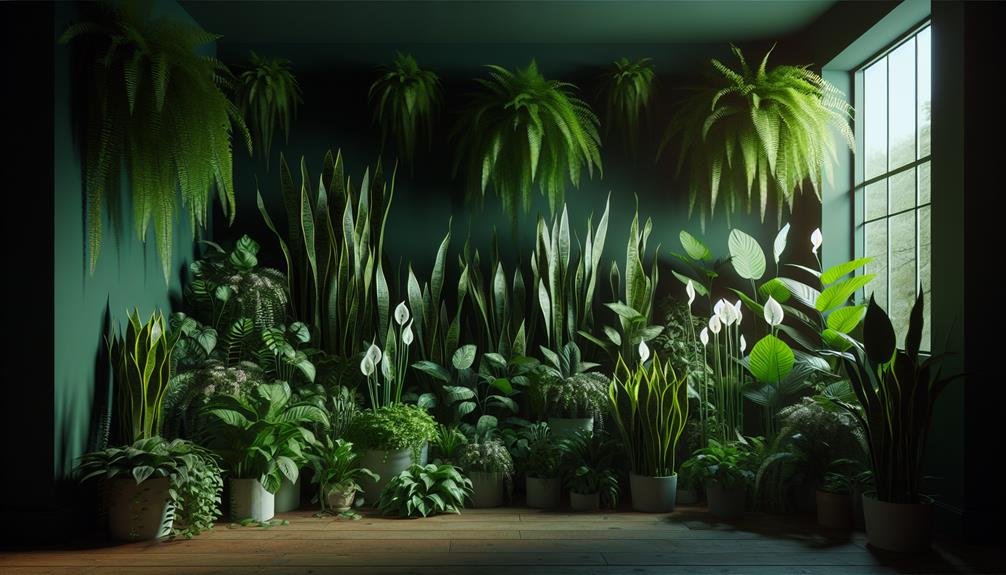
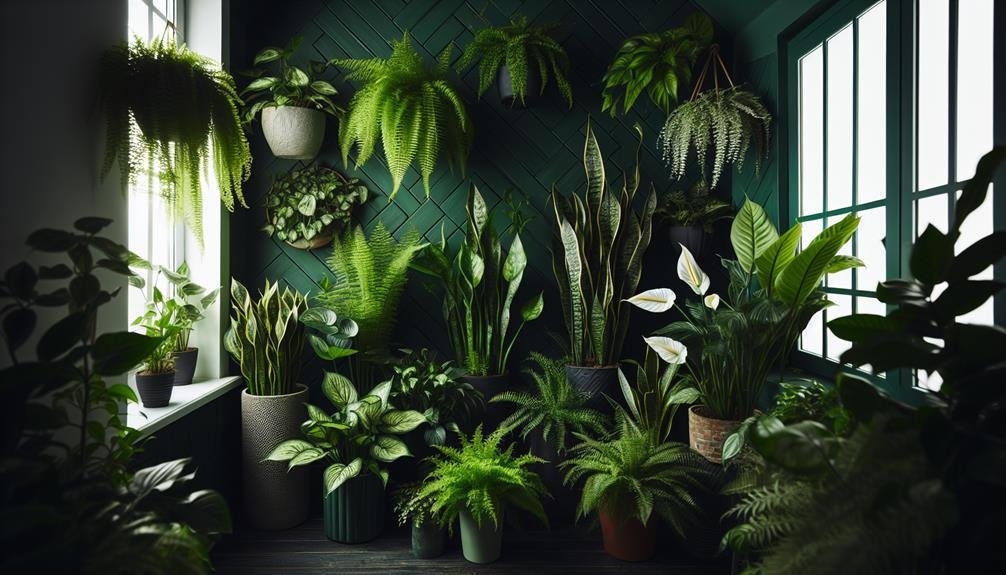
If you're looking to add some vibrant greenery to your low-light space, lush green ferns are a great choice. Ferns are renowned for their elegant, feathery fronds that bring a touch of nature indoors. These plants thrive in indirect light and can tolerate shadier conditions, making them perfect for brightening up those darker corners of your home.
One popular fern variety is the Boston Fern, known for its arching fronds and air-purifying qualities. This fern requires consistent moisture to keep its soil damp but not waterlogged.
Another excellent choice is the Maidenhair Fern, prized for its delicate appearance and lacy foliage. Maidenhair Ferns prefer higher humidity levels, making them ideal for bathrooms or kitchens.
To care for your ferns, ensure they're placed away from direct sunlight and drafts. Keep the soil consistently moist but not soggy, and consider using a humidifier to maintain the ideal moisture levels. With proper care, your lush green ferns will thrive and bring a refreshing touch of green to your low-light space.
Vibrant Spider Plants
Considering your low-light space, Vibrant Spider Plants make an excellent choice for adding a pop of color and liveliness to your indoor environment. These plants feature long, narrow leaves with a beautiful green hue accented by white stripes, creating a striking visual appeal that can brighten up any corner of your home. Spider plants are known for their air-purifying qualities, helping to improve the overall air quality in your space by reducing toxins.
One of the best things about Vibrant Spider Plants is their low maintenance requirements, making them perfect for busy individuals. They thrive in indirect sunlight and only need occasional watering, allowing you to enjoy their beauty without having to constantly fuss over them. Additionally, Spider Plants are non-toxic to pets, so you can safely place them in various areas of your home without worrying about your furry friends. With their vibrant appearance and easy care instructions, Vibrant Spider Plants are a fantastic choice for adding a touch of nature to your low-light indoor spaces.
Resilient Snake Plants
Resilient Snake Plants are an ideal choice for low-light spaces due to their ability to thrive with minimal sunlight and water. These hardy plants are perfect for those looking to add greenery to indoor or outdoor areas that don't receive much natural light. Snake Plants are known for their durability and can withstand periods of neglect, making them a low-maintenance option for busy individuals.
In addition to their adaptability to low-light conditions, Snake Plants are also excellent air purifiers. They're known to remove toxins such as formaldehyde and benzene from the air, promoting a healthier indoor environment. This dual functionality makes them a popular choice for homes, offices, and other spaces where air quality is a concern.

When caring for Snake Plants, it's essential to avoid overwatering, as they're prone to root rot in soggy conditions. Instead, allow the soil to dry out between waterings to prevent issues with moisture. With their resilience and air-purifying qualities, Snake Plants are a versatile and beneficial addition to any low-light setting.
Air-Purifying Peace Lilies
Are you looking for a plant that not only thrives in low-light conditions but also purifies the air in your space? Consider adding an air-purifying Peace Lily to your indoor garden. Peace Lilies, with their elegant white blooms and lush green leaves, aren't only visually appealing but also known for their ability to remove harmful toxins like formaldehyde, benzene, and trichloroethylene from the air.
These hardy plants are relatively low maintenance and can survive in low-light environments, making them perfect for spaces with limited sunlight. Peace Lilies prefer indirect light and should be watered moderately, allowing the soil to dry out slightly between waterings. They're also excellent at increasing humidity, which can benefit both you and your other houseplants.
Hardy ZZ Plants
Looking for a low-maintenance plant that thrives in low-light conditions? Consider the hardy ZZ plant. ZZ plants, scientifically known as Zamioculcas zamiifolia, are excellent choices for indoor spaces with minimal natural light. These plants have glossy, dark green leaves that can brighten up any corner of your home or office, even in areas where other plants struggle to survive.
One of the key advantages of ZZ plants is their ability to tolerate various light conditions, including low light. This makes them perfect for rooms with few windows or areas that receive indirect sunlight. Additionally, ZZ plants are resilient and can withstand occasional neglect, making them ideal for busy individuals or those new to plant care.
To care for your ZZ plant, ensure it's placed in well-draining soil and water it sparingly, allowing the soil to dry out between waterings. These plants prefer to be slightly root-bound, so repotting should only be done when necessary. With minimal effort, your ZZ plant can thrive and bring a touch of greenery to your low-light indoor spaces.
Frequently Asked Questions
Can These Houseplants Be Grown in a Bathroom With Low Light Conditions?
Yes, those houseplants can thrive in a bathroom with low light conditions. They require minimal sunlight and can still grow beautifully without direct exposure.
Just ensure you water them adequately and provide proper drainage to prevent overwatering. Your bathroom could be the perfect spot for them to flourish and add a touch of greenery to the space.
Go ahead and bring those plants in!
How Often Do These Plants Need to Be Watered in Low-Light Environments?
In low-light environments, these plants need to be watered less frequently compared to those in brighter spots. Check the soil moisture before watering to prevent overwatering, which can harm the plants.
Feel the top inch of soil; if it's dry, then it's time to water. Remember, each plant has its own watering needs, so observe how they respond and adjust accordingly for optimal growth.
Are These Houseplants Safe for Pets if Ingested?
If you're worried about your pets munching on these plants, it's essential to know which ones are safe for them. Some houseplants are non-toxic to pets when ingested, but others can cause harm.
Always research each specific plant you have to ensure they're safe around your furry friends. Monitoring your pets' behavior around the houseplants is also a good idea to prevent any accidental ingestion.
Can These Plants Survive in a Humid Environment With Low Light?
In a humid environment with low light, certain houseplants can still thrive. Look for plants like peace lilies, snake plants, or pothos that can handle these conditions well. They require less direct sunlight and can withstand higher humidity levels.
Just be sure to monitor their watering needs and provide proper drainage to prevent overwatering. Creating the right environment will help these plants flourish despite the low-light setting.
What Are Some Common Pests That These Houseplants Are Prone To, and How Can They Be Prevented or Treated?
Pests can be a bother for your houseplants. Common critters like aphids, spider mites, and fungus gnats can plague your green friends.
To prevent infestations, regularly inspect your plants for any signs of bugs or damage. Keep your plants well-watered but not soggy, as excess moisture can attract pests.
If you do spot pests, try wiping leaves with a damp cloth or using natural remedies like neem oil to keep them at bay.
Conclusion
Overall, incorporating low-light houseplants into your indoor and outdoor spaces can bring a touch of nature and beauty to your surroundings.
From lush green ferns to air-purifying peace lilies, there are plenty of options to choose from that thrive in low-light conditions.
So, don't let a lack of natural light deter you from adding some greenery to your home or garden – these plants are sure to brighten up any space!