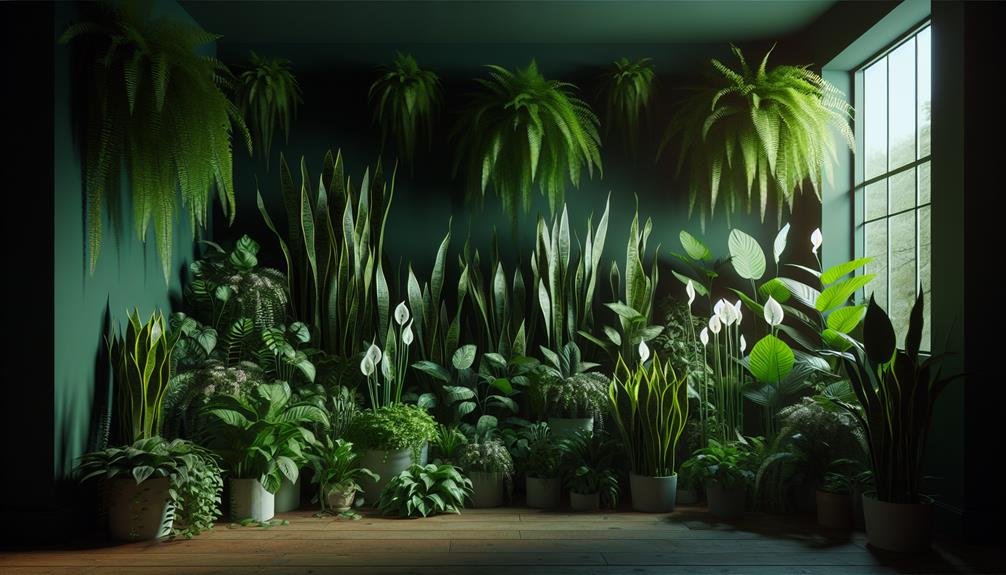
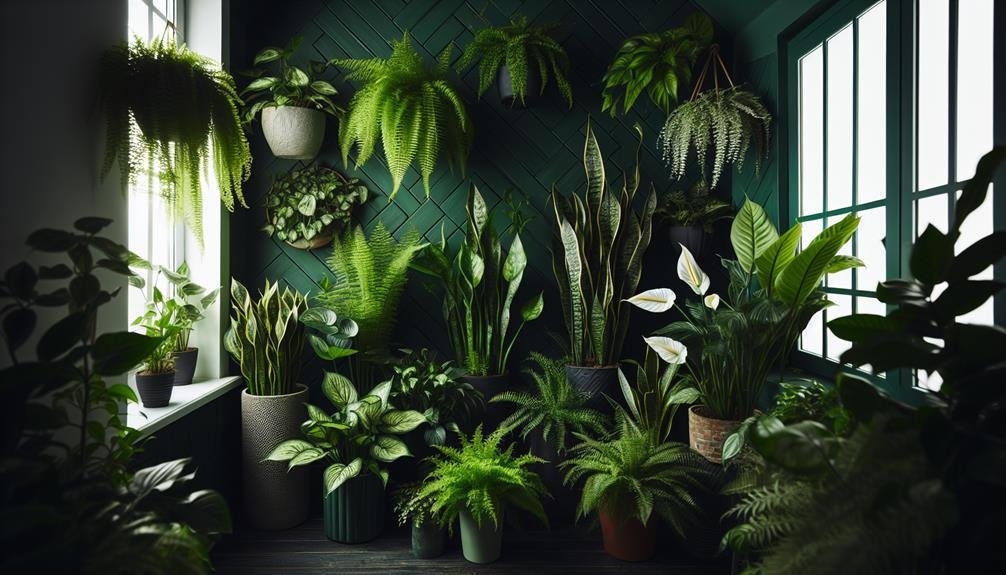
If you're looking to dip your toes into the world of low-light houseplants, consider them as dependable as a trusty umbrella on a rainy day. These green companions can brighten up even the darkest corners of your living space with minimal effort.
But what makes these plants so well-suited for beginners? Let's explore the top choices together and uncover the secrets behind their resilience and beauty.
Snake Plant
If you're new to caring for houseplants, consider starting with the Snake Plant for its low-light tolerance and minimal maintenance requirements. This sturdy plant thrives in various conditions, making it an excellent choice for beginners. With its striking upright leaves that resemble snakeskin, the Snake Plant adds a touch of elegance to any room.
Snake Plants are known for their air-purifying qualities, helping to remove toxins and improve air quality in your home. They're resilient and can survive with infrequent watering, perfect for those who may forget to water their plants regularly. In fact, overwatering is one of the few ways you can harm these hardy plants.
These low-maintenance plants are also adaptable to different light levels, making them versatile for various indoor environments. Whether you place them in a well-lit spot or a dim corner, the Snake Plant will continue to thrive. With minimal effort, you can enjoy the beauty and benefits of this easy-to-care-for houseplant.
Peace Lily
The Peace Lily is a popular choice for beginners due to its elegant appearance and adaptability to low-light conditions. This plant features dark green leaves and striking white flowers that can brighten up any space, even in dimly lit areas. Peace Lilies are relatively low-maintenance and can thrive with minimal care, making them ideal for those new to indoor gardening.
When caring for a Peace Lily, be sure to keep its soil consistently moist but not soggy. Water the plant when the top inch of soil feels dry to the touch, and avoid overwatering, as this can lead to root rot. Additionally, Peace Lilies enjoy higher humidity levels, so misting the leaves or placing a tray of water nearby can help create a more favorable environment for them.
These plants are also known for their air-purifying qualities, making them not only aesthetically pleasing but also beneficial for your indoor air quality. With the right care, your Peace Lily can thrive and bring a touch of elegance to your home with minimal effort.
Spider Plant
Moving on from the Peace Lily, let's now explore the Spider Plant, another excellent choice for beginners seeking low-light houseplants. Spider Plants, scientifically known as Chlorophytum comosum, are popular for their air-purifying qualities and easy care. These plants thrive in indirect light but can also adapt to low-light conditions, making them perfect for spaces with minimal sunlight.
Spider Plants have long, arching leaves that are green with a hint of yellow or white, adding a touch of elegance to any room. They're hardy and resilient, able to withstand a certain degree of neglect, which is ideal for those new to plant care. One of the Spider Plant's most appealing features is its ability to produce baby plantlets, known as 'spiderettes,' that dangle down from the mother plant like spiders on a web.

To care for your Spider Plant, water it moderately, allowing the soil to dry out between waterings to prevent root rot. Regular pruning of yellowing leaves and the spiderettes can help encourage new growth and keep your plant looking vibrant.
Pothos
With their vibrant green leaves and trailing vines, Pothos plants are a popular choice for beginners looking to add a touch of nature to their indoor spaces. These low-maintenance plants are known for their ability to thrive in low-light conditions, making them perfect for those with limited natural light. Pothos plants are excellent air purifiers, helping to remove toxins like formaldehyde and benzene from the air in your home.
One of the reasons Pothos is beloved by many is its resilience to occasional neglect. They can tolerate irregular watering and are forgiving if you forget to water them from time to time. Pothos plants are versatile in terms of placement; they can be hung in baskets, placed on shelves, or even trained to climb a support.
To care for your Pothos, water it when the top inch of soil is dry, and ensure it isn't sitting in water to prevent root rot. Regular pruning will help keep the plant bushy and full. Enjoy the beauty and air-purifying benefits of Pothos with minimal effort.
ZZ Plant
Pothos plants are a great starting point, but now let's explore the easy-care ZZ Plant. ZZ Plants, scientifically known as Zamioculcas zamiifolia, are perfect for beginners due to their ability to thrive in low-light conditions and tolerate occasional neglect. These plants have glossy, dark green leaves that add a touch of elegance to any space, making them a popular choice for indoor decor.
One of the key reasons ZZ Plants are favored is their low maintenance requirements. They've a natural ability to store water in their rhizomes, allowing them to survive long periods without watering. This feature makes them an excellent option for those who may forget to water their plants regularly.
ZZ Plants are also known for their air purifying qualities, helping to improve the air quality in your home by filtering out toxins. With minimal water needs, low light adaptability, and air-purifying benefits, the ZZ Plant is a fantastic addition to any beginner's indoor plant collection.
Frequently Asked Questions
Can These Low-Light Houseplants Survive in a Windowless Room?
In a windowless room, low-light houseplants might struggle to thrive due to the lack of natural light. While some low-light plants can tolerate dim conditions, they typically still need some light to survive.
Consider alternative options like grow lights or artificial lighting to support their growth. Evaluate the specific light requirements of the plants you choose to ensure they've the best chance of surviving in a room without windows.
Do These Plants Require Any Special Fertilizers or Plant Food to Thrive in Low-Light Conditions?
To thrive in low-light conditions, these plants don't require special fertilizers or plant food. Opt for a balanced, water-soluble fertilizer diluted to half strength. Apply it every 4-6 weeks during the growing season.
Are There Any Common Pests or Diseases That These Houseplants Are Particularly Susceptible To?
When caring for low-light houseplants, keep an eye out for common pests and diseases that can harm your green friends. Pests like spider mites and mealybugs might cause trouble, while issues such as root rot can arise if you overwater your plants.
Regularly inspect your plants for any signs of infestations or diseases, and promptly address them to keep your low-light houseplants healthy and thriving.
How Often Should These Plants Be Watered in a Low-Light Environment?
In a low-light environment, you should water these plants less frequently compared to those in brighter spots. Check the soil moisture before watering by sticking your finger about an inch deep into the soil. If it feels dry, it's time to water.
Overwatering can be harmful, so aim for just enough to keep the soil lightly moist. Adjust the watering schedule as needed based on how the plants respond to ensure they thrive.
Are There Any Specific Tips for Helping These Houseplants Flourish in a Low-Light Setting, Such as Artificial Lighting or Plant Placement?
To help your houseplants thrive in a low-light environment, consider using artificial lighting. Position plants near a window but not in direct sunlight. Rotate them occasionally for even growth. Artificial grow lights can supplement natural light.
Monitor the moisture levels closely, as low-light conditions may affect watering needs. Remember to dust the leaves occasionally to ensure proper light absorption.
With these tips, your low-light houseplants will flourish beautifully.
Conclusion
Overall, these top low-light houseplants are great choices for beginners looking to add some greenery to their space.
With their easy care requirements and ability to thrive in low-light conditions, Snake Plants, Peace Lilies, Spider Plants, Pothos, and ZZ Plants are all excellent options for those new to indoor gardening.
So go ahead and pick up one of these plants to bring some life and beauty into your home!