If you think shady spots in your garden limit your plant options, think again. There are numerous plant varieties that thrive in low-light conditions, offering lush greenery and pops of color to brighten up those dim areas.
But have you ever wondered which plants are best suited for such spaces? Well, get ready to discover a diverse selection of vegetation that will not only survive but flourish in the shade, transforming your shady corners into vibrant and lively havens.
Ideal Conditions for Shade-Loving Plants
In shady spaces, shade-loving plants thrive best when they receive filtered sunlight and moist, well-draining soil. Finding the balance between light and shade is crucial for these plants. While they don't enjoy direct sunlight, they still need some light to grow. Filtered sunlight, such as that which passes through tree canopies or lattices, provides the ideal lighting conditions. It's essential to avoid placing shade-loving plants in areas of deep shade, as they may struggle to photosynthesize and grow effectively in such low light levels.
When it comes to soil, shade-loving plants prefer moist, well-draining soil. Excessively wet soil can lead to root rot and other issues, so ensuring proper drainage is key. Adding organic matter like compost or peat moss can help improve soil structure and moisture retention, creating a healthy environment for these plants to thrive. By providing the right amount of filtered sunlight and well-draining soil, you can create an ideal habitat for your shade-loving plants to flourish.
Choosing the Right Plants
Consider the specific light and soil requirements of shade-loving plants when choosing the right ones for your shady space. Different plants have varying needs, so it's essential to select ones that will thrive in the conditions of your shaded area. Some shade-loving plants, like hostas and ferns, prefer moist soil, while others, such as Japanese painted ferns, do well in drier soil. Understanding these preferences will help you make the best choices for your garden.
When selecting plants for shade, pay attention to the amount of light the area receives throughout the day. Some plants, like impatiens and begonias, can tolerate more sunlight than others. If your shaded space gets a bit of dappled sunlight, you may have more options to choose from. However, if the area is deeply shaded with minimal light, focus on plants like coral bells or lungwort that thrive in low-light conditions.
Low-Maintenance Options
When selecting shade-loving plants for your garden, opt for low-maintenance options to simplify care and upkeep. Look for plants like hostas, ferns, and coral bells that thrive in shady areas and require minimal attention. Hostas are known for their beautiful foliage and come in a variety of colors and sizes, making them a versatile choice for your garden. Ferns are excellent low-maintenance plants that add a lush, tropical feel to your shady space. They require little to no pruning and can tolerate different soil conditions. Coral bells, with their attractive foliage and delicate flowers, are another great option for low-maintenance gardening in shady areas.
These plants aren't only easy to care for but also add beauty and texture to your garden without demanding too much of your time. By choosing low-maintenance options, you can enjoy a thriving garden in shady spots with minimal effort. Remember to water them regularly, provide occasional fertilization, and enjoy the natural beauty they bring to your outdoor space.
Indoor Plants for Shady Spaces
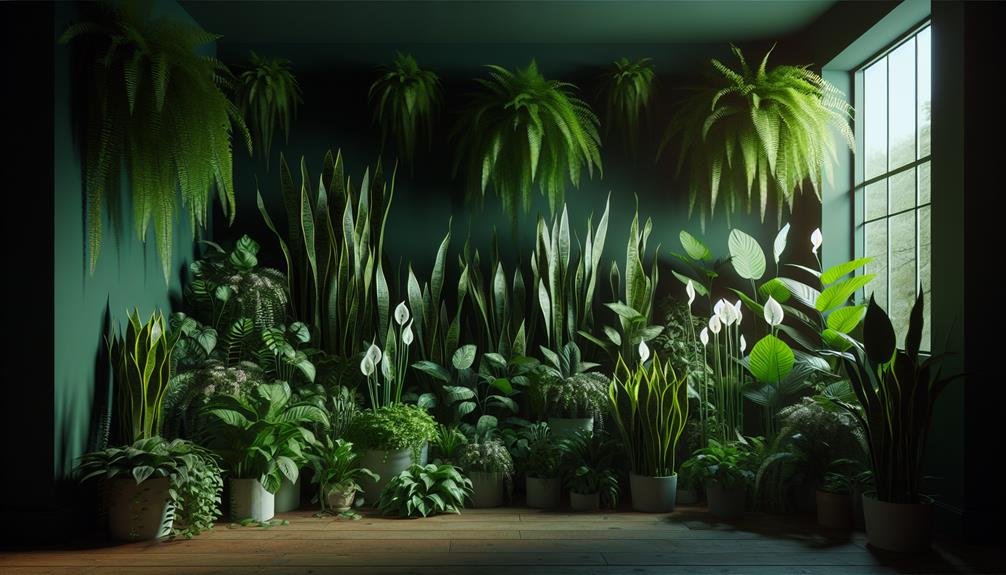
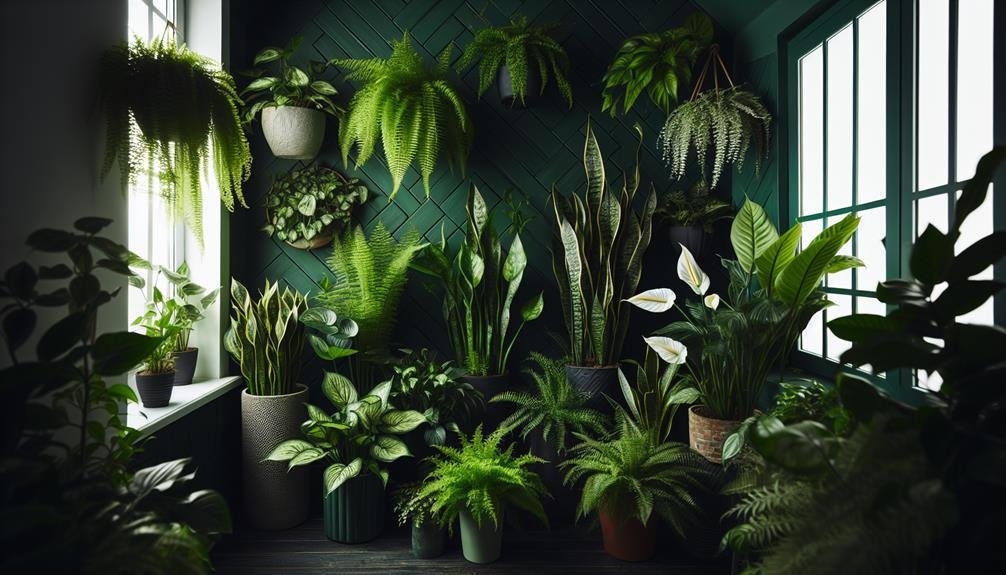
For shady indoor spaces, explore houseplants that thrive with minimal sunlight exposure. When selecting indoor plants for low-light areas, consider options like the snake plant, pothos, and peace lily. These plants are known for their ability to adapt to dim environments and require little maintenance.
Snake plants, also known as mother-in-law's tongue, are excellent choices for indoor spaces with limited light. They've striking upright leaves and can survive with infrequent watering.

Pothos, with their cascading vines, are another great option for shady areas. They're resilient plants that can tolerate various light conditions, making them perfect for indoor environments.
Peace lilies are elegant plants that not only add beauty to your space but also thrive in low-light settings. Their glossy green leaves and white blooms can brighten up any corner without needing direct sunlight. By incorporating these indoor plants into your shady spaces, you can enjoy a touch of nature even in areas with minimal natural light.
Enhancing Shady Areas With Foliage
Enhance the shaded areas of your living space by incorporating a variety of foliage plants that thrive in low-light conditions. Foliage plants not only add a touch of greenery to dim areas but also help purify the air and create a calming atmosphere. Consider plants like peace lilies, snake plants, and pothos, which are well-suited for shady spots and require minimal maintenance.
Peace lilies, with their elegant white blooms, are excellent for adding a pop of color to dark corners. These plants are relatively easy to care for and can thrive in low light.
Snake plants, also known as mother-in-law's tongue, have striking upright leaves that can complement any indoor setting. They're incredibly resilient and can survive in various light conditions, including low light.
Pothos plants, with their cascading vines, are perfect for hanging baskets or as trailing plants on shelves. These plants are adaptable and can thrive in low light while adding a lush, tropical feel to your space. Incorporating these foliage plants will undoubtedly enhance the ambiance of your shady areas.
Frequently Asked Questions
Can Shade-Loving Plants Thrive in Areas With Minimal Natural Light, Such as Basement Apartments or Rooms With Small Windows?
In areas with minimal natural light, like basement apartments or rooms with small windows, shade-loving plants can still thrive. Choosing plants that do well in low-light conditions, such as ferns, peace lilies, or snake plants, can help you create a green oasis in your space.
Make sure to provide occasional artificial light and proper care to keep your plants healthy and flourishing despite the lack of sunlight.
Are There Any Shade-Loving Plants That Are Safe for Pets to Be Around and Won't Cause Harm if Ingested?
When you're looking for shade-loving plants that won't harm your pets if they decide to take a curious nibble, it's important to choose wisely.
Some great options that are safe for your furry friends include spider plants, Boston ferns, and African violets. These plants not only thrive in shady areas but also provide a pet-friendly environment for your home.
Just be sure to place them where your pets can't reach them easily.
How Can I Prevent Pests and Diseases From Affecting My Shade-Loving Plants in Indoor Spaces?
To prevent pests and diseases from harming your shade-loving plants indoors, start by inspecting them regularly for any signs of trouble.
Keep the area clean and well-ventilated to deter pests. Don't overwater, as this can lead to root rot and other issues.
Consider using natural remedies or safe pesticides if needed. Remember, a little prevention goes a long way in keeping your indoor plants healthy and thriving.
Are There Any Shade-Loving Plants That Can Also Help Improve Air Quality Indoors?
If you're looking to boost indoor air quality with shade-loving plants, consider options like peace lilies, spider plants, or pothos. These plants not only thrive in low light conditions but also have air-purifying qualities.
They can help filter out toxins and improve the overall air quality in your home. Incorporating these plants into your indoor spaces can be a simple way to enhance both the aesthetics and health of your environment.
Can Shade-Loving Plants Be Successfully Grown in Containers or Hanging Baskets for Small Spaces or Balconies?
You can definitely grow shade-loving plants in containers or hanging baskets for small spaces or balconies. Choose plants like ferns, peace lilies, or spider plants that thrive in low-light conditions.
Ensure your containers have proper drainage and use a high-quality potting mix. Regularly water and fertilize your plants to keep them healthy.
With a little care, you can create a beautiful green oasis even in shady spots.
Conclusion
Overall, when it comes to creating a beautiful and thriving garden in shady spaces, it's important to choose the right plants that can thrive in low-light conditions.
By selecting shade-loving plants, incorporating low-maintenance options, and adding indoor plants to brighten up dark corners, you can transform any shady area into a lush and vibrant oasis.
Don't be afraid to experiment with different foliage to enhance the beauty of your shady spaces!