You've carefully selected your plant cuttings, set up your propagation station, and eagerly await new growth. However, could you be unknowingly sabotaging your efforts? Avoid these common propagation mistakes that might be hindering your success.
Overwatering, improper lighting, using the wrong soil – these missteps could be holding back your propagation journey.
But wait, there's more to uncover about ensuring your plant babies flourish.
Overwatering
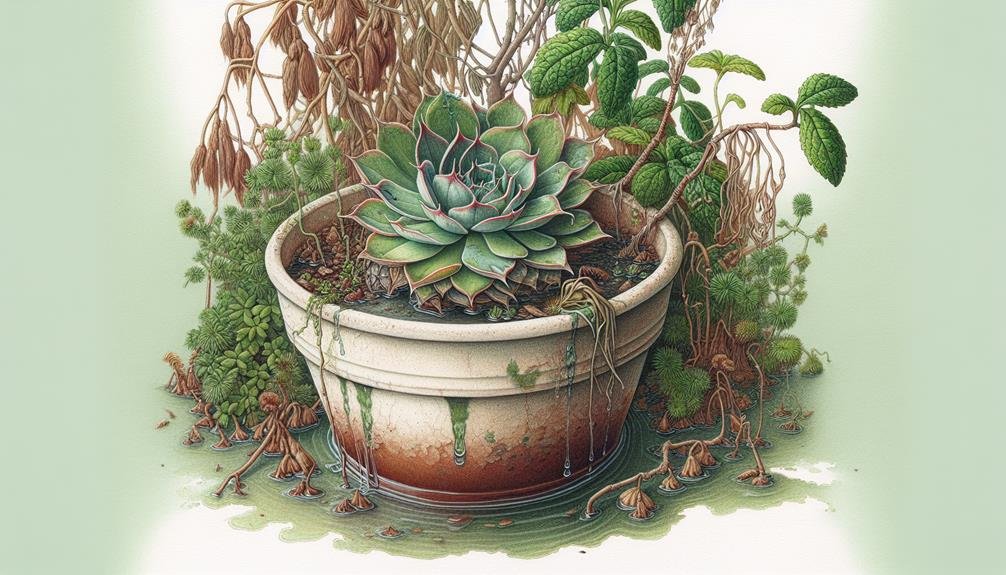
Avoid drowning your plants by ensuring that you water them sparingly and only when necessary. Overwatering is a common mistake that can be detrimental to the health of your plants. When you water too frequently, the roots of the plant can become waterlogged, leading to root rot and ultimately killing the plant.
To prevent overwatering, make sure to check the soil moisture before watering. Stick your finger into the soil up to your first knuckle – if it feels dry, then it's time to water.
Another sign of overwatering is yellowing or wilting leaves. If you notice these symptoms, hold off on watering and allow the soil to dry out. Succulents and cacti are particularly susceptible to overwatering due to their low water requirements.
Improper Lighting
Improper lighting can have negative effects on your plants' growth and overall health. Just like overwatering, providing the wrong amount or type of light can hinder the propagation process. Plants need light to photosynthesize and grow, so insufficient or excessive light can be detrimental.
When propagating plants, it's crucial to place them in an area with adequate light exposure. Insufficient light can lead to leggy, weak stems, pale leaves, and stunted growth. On the other hand, too much direct sunlight can scorch delicate cuttings or young plants. Finding the right balance is key to successful propagation.
To prevent issues related to improper lighting, observe your plants regularly. If you notice signs of light deficiency or excess, consider moving them to a more suitable location. Remember that different plant species have varying light requirements, so it's essential to research individual needs. By providing the correct amount of light, you can ensure healthy propagation and thriving plants.
Using the Wrong Soil
Have you ever considered how the type of soil you use can impact the success of your plant propagation efforts? Using the wrong soil is a common mistake that can hinder the growth of your plants. Different plants require different soil compositions to thrive. For example, succulents need well-draining soil to prevent root rot, while moisture-loving plants like ferns prefer soil that retains more water.

Using a generic potting mix for all your plants mightn't provide the specific conditions needed for successful propagation. Before choosing a soil type, consider the needs of the plant you're propagating. Research the best soil composition for that particular plant to give it the best chance of survival and growth.
Incorporating organic matter like compost or peat moss can improve soil quality and provide essential nutrients for your plants. Remember that the wrong soil can lead to issues like poor drainage, root suffocation, or nutrient deficiencies, ultimately affecting the health and growth of your propagated plants.
Neglecting Humidity Levels
Neglecting humidity levels can significantly impact the success of your plant propagation endeavors. Proper humidity is crucial for the health and growth of your plants. When humidity levels are too low, your plant cuttings can dry out quickly, leading to wilting and potentially death. On the other hand, excessively high humidity can create a breeding ground for mold and mildew, which can also harm your plants.
To avoid these issues, it's essential to monitor and control the humidity levels in your propagation environment. You can increase humidity by using a misting system, humidity trays, or a humidifier. Alternatively, if humidity levels are too high, ensure proper ventilation to allow excess moisture to escape.
Different plants have varying humidity requirements, so it's essential to research the specific needs of the plants you're propagating. By maintaining the right humidity levels, you can create an optimal environment for your plant cuttings to thrive and grow into healthy, robust plants.
Failing to Monitor Temperature
Failing to monitor temperature can have detrimental effects on the success of your plant propagation efforts. Temperature plays a crucial role in the growth and development of plants. If the temperature is too high, it can lead to wilting, heat stress, and even death of your plant cuttings. On the other hand, if the temperature is too low, it can slow down root development and overall growth, hindering the propagation process.
To avoid these issues, it's essential to regularly monitor the temperature in your propagation area. Invest in a reliable thermometer to keep track of the temperature fluctuations. Different plants have varying temperature preferences, so it's crucial to research the ideal temperature range for the specific plants you're propagating.
Maintaining the right temperature can significantly increase the success rate of your plant propagation attempts. By being vigilant and adjusting the temperature as needed, you can create the optimal conditions for your plant cuttings to thrive and grow into healthy plants.
Frequently Asked Questions
How Often Should I Fertilize My Propagated Plants?
You should fertilize your propagated plants sparingly. Too much fertilizer can harm delicate new roots.
Start by fertilizing every 4-6 weeks during the growing season. Choose a balanced liquid fertilizer diluted to half strength.
Monitor your plants for any signs of over-fertilization, such as yellowing leaves or stunted growth. Adjust the frequency based on your plant's specific needs and always follow the instructions on the fertilizer label.
Can I Propagate Plants in Water Instead of Soil?
Yes, you can propagate plants in water instead of soil. This method is known as water propagation and is a popular way to grow new plants from cuttings.
Simply place your cutting in a container of water, making sure to change the water regularly to prevent rot. Many plant species root well in water, but some may prefer soil propagation for better results.
Enjoy watching your new plants grow!
Is It Necessary to Use Rooting Hormone When Propagating Plants?
When propagating plants, using rooting hormone isn't always necessary, but it can boost success rates. Some plants root easily without it, while others may benefit from the extra help.
Experiment with both methods to see what works best for your specific plants. Remember, the key is providing the right conditions for your plant cuttings to thrive and grow into healthy new plants.
What Are Some Signs That Indicate a Plant Cutting Is Not Rooting Properly?
If your plant cutting isn't rooting properly, watch out for signs like wilting leaves, yellowing or browning of the stem, or a lack of new growth.
Check the soil moisture to ensure it's not too dry or waterlogged. Make sure your cutting is getting enough light but not direct sunlight.
Consider adjusting your propagation method or environment to give your plant the best chance to root successfully.
How Long Should I Wait Before Transplanting Propagated Plants Into Larger Pots?
When propagating plants, you should wait until the roots are well-established before transplanting them into larger pots. This helps ensure that the plant can successfully adjust to its new home without experiencing transplant shock.
It's important to give the roots enough time to develop and grow before moving the plant to a bigger container. Be patient and allow the plant to establish itself properly before making the move.
Conclusion
In conclusion, avoid these top propagation mistakes to ensure successful plant growth.
Remember to water your plants appropriately, provide proper lighting, use the right soil, monitor humidity levels, and keep an eye on temperature.
By taking care of these key factors, you can set your plants up for success and enjoy a thriving indoor garden.
Happy propagating!