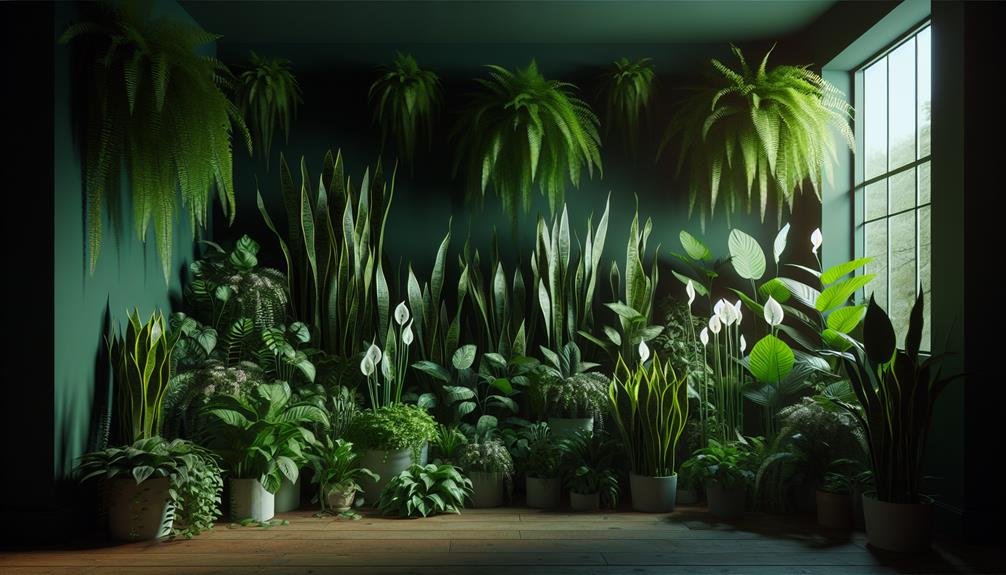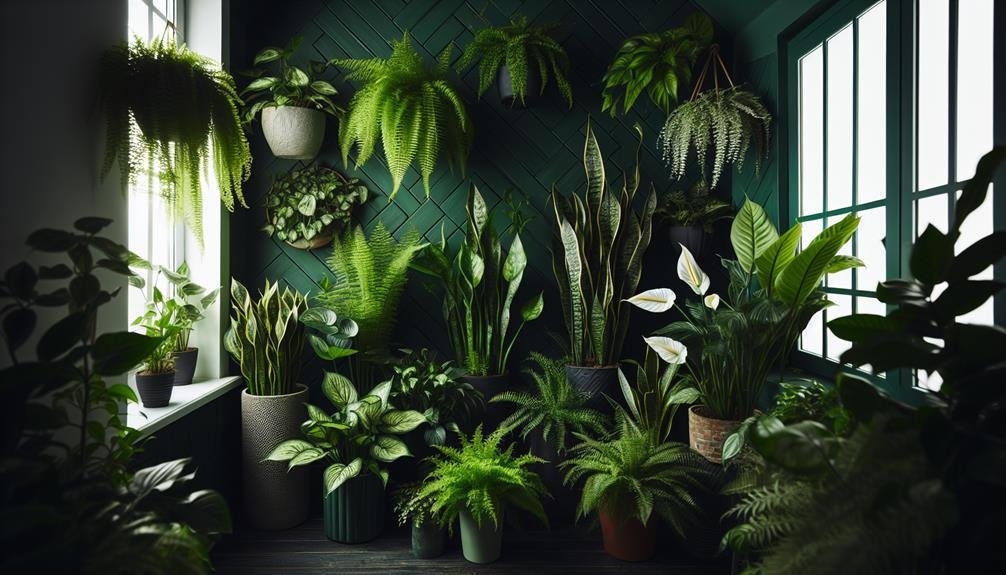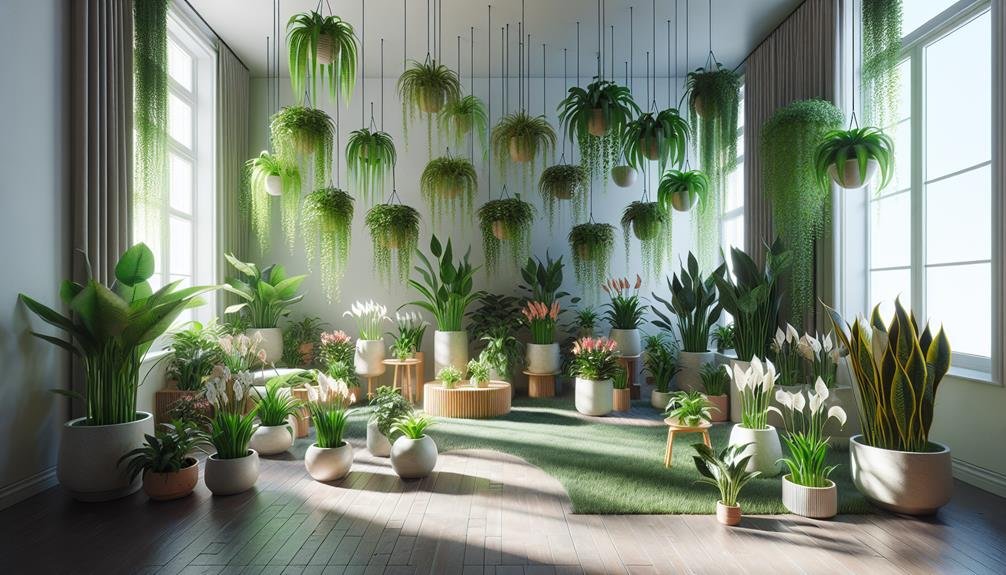
You might think that plants are just pretty decorations, but what if they could do more than just sit there and look green? The world of air-purifying houseplants is vast and intriguing, offering a myriad of options for both indoor and outdoor spaces.
From the classic peace lily to the trendy snake plant, each plant comes with its unique set of benefits that go beyond aesthetics.
So, which plants are the top-rated air purifiers, and how can they transform your living environment?
Benefits of Air-Purifying Houseplants
Air-purifying houseplants enhance indoor air quality by filtering out harmful pollutants and toxins, promoting a healthier living environment. By having these green companions in your home, you can breathe easier knowing that they're working tirelessly to purify the air you and your loved ones breathe.
These plants act as natural air purifiers, removing common toxins like formaldehyde, benzene, and trichloroethylene from the air, which are often found in everyday household items. Not only do air-purifying houseplants improve the quality of the air you breathe, but they also add a touch of nature to your indoor spaces, creating a more relaxed and aesthetically pleasing atmosphere.
Additionally, studies have shown that being around plants can reduce stress levels and boost overall mood and well-being. Embrace the benefits of air-purifying houseplants in your home to enjoy cleaner air and a healthier living environment.
Best Houseplants for Indoor Spaces
Consider incorporating these top five houseplants into your indoor spaces to enhance air quality and bring a touch of nature into your home.
- Spider Plant: Known for its adaptability and easy care, the spider plant effectively removes toxins like formaldehyde and xylene from the air. Its arching leaves make a striking visual statement.
- Peace Lily: With elegant white blooms, the peace lily not only adds beauty but also filters out harmful air pollutants like ammonia, benzene, and formaldehyde. It thrives in low light conditions.
- Snake Plant: Ideal for beginners, the snake plant is a hardy option that releases oxygen at night, making it perfect for bedrooms. It targets formaldehyde, benzene, and xylene.
- Aloe Vera: Beyond its healing properties, aloe vera is a natural air purifier that's easy to maintain. It helps clear formaldehyde and benzene found in cleaning products.
- Pothos: This trailing vine is excellent for hanging baskets or high shelves. Pothos is effective at removing indoor pollutants like formaldehyde and carbon monoxide.
Ideal Plants for Outdoor Environments
Enhance your outdoor spaces with these ideal plants that thrive in natural environments. When looking to improve the air quality and overall ambiance of your outdoor area, consider incorporating plants like Lavender, which not only emits a soothing fragrance but also repels mosquitoes.
The colorful and low-maintenance Geraniums are another excellent choice for outdoor spaces, adding a pop of color while naturally deterring pests. For those seeking a touch of elegance, the graceful Japanese Maple tree can provide shade and beauty to your garden or patio.
If you're looking for a plant that requires minimal care and can withstand various weather conditions, consider the versatile and resilient Succulents. These water-storing plants come in a variety of shapes and sizes, making them perfect for outdoor gardens or even small pots on balconies.

Care Tips for Healthy Plants
When caring for the outdoor plants mentioned earlier, it's important to understand some key tips to ensure they stay healthy and vibrant. First, make sure your plants receive adequate sunlight based on their specific needs. Regularly check the soil moisture levels by feeling the top layer; water when it feels dry about an inch down. Overwatering can lead to root rot, so it's crucial to maintain a proper watering schedule. Additionally, consider using a balanced fertilizer during the growing season to promote healthy growth.
Pruning is essential for outdoor plants to remove dead or damaged foliage, allowing new growth to flourish. Keep an eye out for pests and diseases, addressing any issues promptly to prevent them from spreading. Proper drainage in outdoor containers is vital to prevent waterlogging. Finally, monitor the weather conditions and adjust care routines accordingly. By following these care tips diligently, you can ensure that your outdoor plants thrive and contribute to a cleaner and healthier living environment.
Decorative Plants for Aesthetic Appeal
To add a touch of elegance to your living space, consider incorporating decorative plants that not only enhance the aesthetic appeal but also bring a sense of tranquility and freshness to your surroundings.
Opt for plants like the colorful Bromeliads, known for their striking rosette patterns and vibrant hues, perfect for adding a pop of color to any room.
The delicate Maidenhair Fern, with its lacy foliage, adds a soft and graceful touch to your decor.
For a modern and minimalist look, consider the architectural Snake Plant, with its sleek, upright leaves adding a sculptural element to your space.
The classic Peace Lily, with its elegant white blooms and glossy green leaves, not only looks beautiful but also helps purify the air.
Don't forget about hanging plants like the String of Pearls, cascading down in long strands, adding a dynamic and whimsical element to your interior design.
Frequently Asked Questions
Can Air-Purifying Houseplants Help Reduce Airborne Allergens in the Home?
Air-purifying houseplants can indeed help reduce airborne allergens in your home. These plants work by absorbing harmful pollutants and releasing oxygen, creating a cleaner indoor environment.
Are There Any Houseplants That Are Safe for Pets to Be Around?
When choosing houseplants safe for pets, make sure to select ones that won't harm your furry friends if ingested.
Some pet-friendly options include spider plants, Boston ferns, and African violets. These plants are non-toxic to cats and dogs, providing a safe environment for your pets to be around.
Remember to place these plants out of reach or use deterrents to prevent curious pets from nibbling on them.
How Do I Know if My Houseplants Are Getting Enough Sunlight?
To check if your houseplants are getting enough sunlight, observe their behavior. If they start leaning towards the light source or their leaves become pale or discolored, they may need more sunlight. Consider moving them to a spot where they can receive adequate light.
Do Air-Purifying Houseplants Require Special Soil or Fertilizer?
When caring for air-purifying houseplants, you'll want to use a well-draining potting mix to prevent water logging.
Add a balanced fertilizer every few weeks during the growing season to keep your plants healthy and thriving. Remember to follow the specific instructions on the fertilizer package for the best results.
With the right soil and fertilizer, your air-purifying houseplants will continue to clean the air in your indoor and outdoor spaces effectively.
Can Air-Purifying Houseplants Help Improve Indoor Air Quality in High-Traffic Areas of the Home?
Yes, air-purifying houseplants can significantly improve indoor air quality in high-traffic areas of your home. These plants work by absorbing toxins and releasing oxygen, creating a cleaner and fresher environment.
Consider placing them strategically in busy spots like the living room or kitchen to enjoy their air-cleansing benefits.
With regular care and placement, these houseplants can be a natural and effective way to enhance the air quality in your home.
Conclusion
So there you have it – incorporating air-purifying houseplants into your indoor and outdoor spaces not only adds aesthetic appeal but also provides numerous health benefits.
From reducing toxins in the air to boosting mood and productivity, these plants are a must-have for any home or garden.
With proper care and attention, you can enjoy cleaner, fresher air and a greener environment all year round.
Happy planting!