
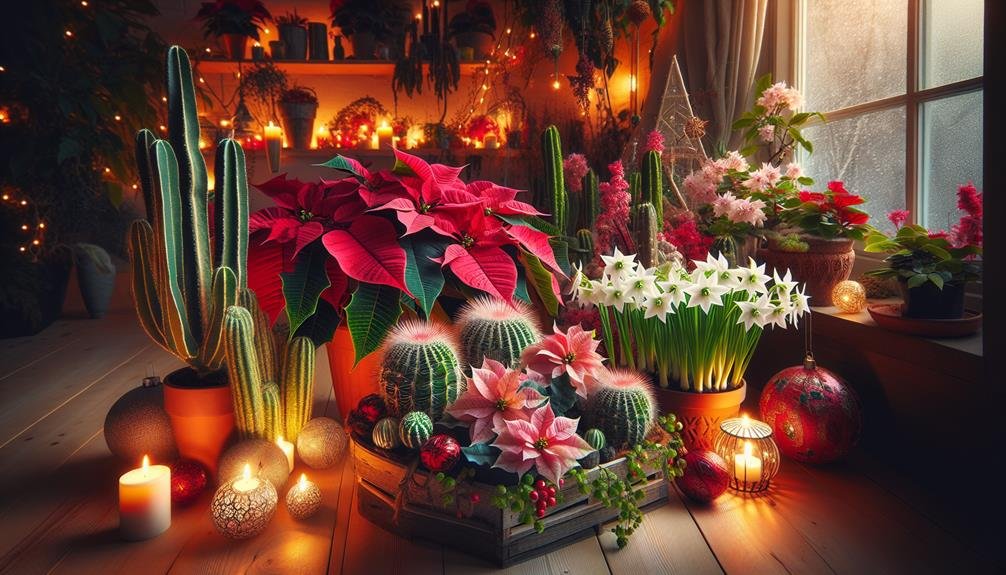
Imagine the stark winter landscape outside your window, contrasted with vibrant blooms adorning your indoor space.
Curious to discover which houseplants can bring a touch of seasonal beauty to your home during the colder months?
Stay tuned to explore a selection of top winter-blooming plants that will not only add color but also uplift your spirits in the midst of winter's chill.
Poinsettia: A Classic Winter Favorite
Poinsettias, with their vibrant red leaves, are a classic favorite during the winter months. These stunning plants add a pop of color and festive cheer to any home. To care for your poinsettia, place it in a spot with bright, indirect light and make sure the soil is kept slightly moist. Avoid overwatering, as this can cause root rot. With proper care, your poinsettia can thrive throughout the holiday season and beyond.
When choosing a poinsettia, look for plants with fully colored bracts and little to no green around the edges. This indicates a healthy, long-lasting plant. Remember that poinsettias are sensitive to drafts and extreme temperatures, so try to keep them away from cold windows or heat sources. If cared for correctly, your poinsettia may even rebloom next winter.
Christmas Cactus: Festive and Colorful
Adding a touch of festive charm to your indoor space, the Christmas Cactus blooms with vibrant colors during the winter season. This popular houseplant, with its flat, segmented stems and drooping flowers, is sure to brighten up your home during the holiday season. The Christmas Cactus comes in shades of pink, red, white, and even purple, creating a stunning display of colors that will enhance the winter ambiance in your living room or kitchen.
Caring for your Christmas Cactus is relatively easy, making it a great option for both experienced and novice plant owners. Place it in a well-lit area with indirect sunlight and water it regularly, allowing the soil to dry out slightly between waterings. With the right conditions, your Christmas Cactus will reward you with an abundance of blooms that can last for several weeks, adding a cheerful and festive touch to your home decor.
Cyclamen: Delicate Blooms for Elegance
Brightening your indoor space with delicate elegance, consider adding Cyclamen to your collection of winter-blooming houseplants. Cyclamen plants are known for their charming, upswept petals that come in shades of pink, white, purple, and red, adding a touch of sophistication to any room. These plants thrive in cool temperatures and bright, indirect light, making them perfect for the winter months when natural light may be limited.
Cyclamen's unique foliage, often variegated with intricate patterns, adds visual interest even when not in bloom. The flowers themselves are dainty and intricately shaped, standing tall on slender stems above the foliage. With proper care, Cyclamen can bloom for several weeks, bringing color and beauty to your home during the colder months.
To care for Cyclamen, ensure the plant is placed in well-draining soil and watered from the bottom to prevent the delicate tubers from rotting. Remove spent flowers to encourage new blooms and place the plant in a cool location away from drafts. With its graceful blooms and elegant foliage, Cyclamen is sure to elevate the ambiance of your winter indoor garden.

Winter Jasmine: Fragrant and Cheerful
Consider enhancing your indoor space with the delightful fragrance and cheerful blooms of Winter Jasmine. This houseplant, scientifically known as Jasminum nudiflorum, is a vibrant addition to your winter collection. Winter Jasmine features bright yellow flowers that bloom profusely during the colder months, bringing a pop of color and a refreshing scent to your home. This plant is relatively easy to care for, requiring moderate watering and bright, indirect light to thrive.
One of the most attractive features of Winter Jasmine is its ability to bloom in the midst of winter, adding warmth and life to your living space when outdoor gardens are dormant. The plant's cascading branches can be trained to climb or left to trail, making it a versatile choice for various interior design preferences. Whether placed in a hanging basket to showcase its elegant draping vines or in a decorative pot on a shelf, Winter Jasmine is sure to bring a touch of cheerfulness to your home during the colder months.
Peace Lily: Graceful Greenery With Blooms
Enhance your indoor space with the graceful greenery and elegant blooms of the Peace Lily, a refreshing addition to your winter plant collection. The Peace Lily, known for its lush, deep green leaves and striking white flowers, thrives in indoor environments, making it a perfect choice for bringing beauty into your home during the winter months. This plant not only adds a touch of elegance with its arching leaves but also purifies the air by removing toxins like formaldehyde and benzene.
One of the reasons the Peace Lily is a popular houseplant is its ability to bloom multiple times a year, even in the winter. The white flowers, resembling delicate lilies, bring a sense of tranquility and sophistication to any room. Caring for a Peace Lily is relatively easy, requiring moderate watering and indirect light. With minimal effort, you can enjoy the beauty of this plant and its blooms throughout the winter season, bringing a touch of nature's grace indoors.
Frequently Asked Questions
Are These Winter-Blooming Houseplants Safe for Pets to Be Around?
When it comes to winter-blooming houseplants, it's essential to ensure they're safe for your pets to be around. Some plants can be harmful if ingested by animals. Always research each specific plant to confirm its safety for your furry friends.
Keep your pets healthy and happy by choosing pet-friendly winter-blooming houseplants for a beautiful and safe indoor environment during the colder months.
How Often Should These Houseplants Be Watered During the Winter Months?
During winter, water these houseplants when the top inch of soil feels dry. Avoid overwatering as it can harm them. Make sure the pots have drainage holes to prevent root rot.
Adjust watering frequency based on your home's temperature and humidity levels. Remember that consistent moisture is key, but be cautious not to drown the plants. Consider using a moisture meter for accurate readings and maintain a watering schedule to keep your plants healthy.
Do These Houseplants Require Any Special Care to Encourage Blooming?
To encourage blooming, you should provide proper care like ensuring they get enough sunlight and avoiding overwatering.
Trim off any dead or yellowing leaves and use a fertilizer formulated for flowering plants.
Keep an eye on the temperature and humidity levels in your home.
Can These Winter-Blooming Houseplants Be Placed in Direct Sunlight or Do They Prefer Indirect Light?
For winter-blooming houseplants, it's best to opt for indirect sunlight over direct exposure. These plants thrive in bright, filtered light that isn't too harsh.
Direct sunlight might be too intense and could potentially harm the delicate blooms. Find a spot in your home where the plants can get sufficient light without being in the direct path of the sun's rays.
This way, you'll help them flourish and bloom beautifully during the winter season.
Are There Any Common Pests or Diseases That These Houseplants Are Susceptible to During the Winter Season?
During the winter season, common pests like aphids, spider mites, and mealybugs might trouble your winter-blooming houseplants. Keep an eye out for any signs of infestation, such as yellowing leaves or sticky residue.
Regularly inspect your plants and gently wipe them down with a damp cloth to deter pests. Consider using natural remedies or insecticidal soaps to combat these unwanted visitors and keep your plants healthy and thriving.
Conclusion
Overall, incorporating winter-blooming houseplants into your home decor can bring a touch of seasonal beauty and cheer during the colder months.
From the classic poinsettia to the delicate cyclamen, there are a variety of options to choose from.
Whether you prefer festive reds and greens or elegant whites and pinks, these houseplants can brighten up your space and lift your spirits during the winter season.
So why not add a touch of nature's beauty to your home this winter?



