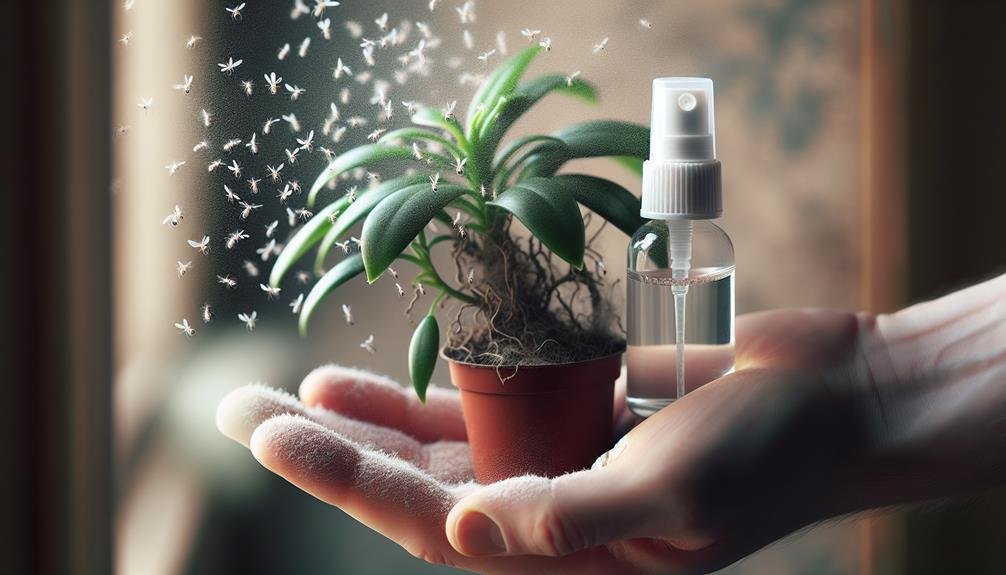
You've likely encountered the frustration of dealing with these pesky whiteflies in your garden or greenhouse.
But have you ever considered a lesser-known, yet highly effective solution that could turn the tables on these persistent pests?
Stay tuned as we unveil a secret weapon that could revolutionize your approach to whitefly control, offering a sustainable and innovative method that might just be the game-changer you've been searching for.
Understanding Whitefly Behavior
To understand whitefly behavior, observe their feeding patterns and reproductive habits closely. Whiteflies are small insects that typically feed on the undersides of leaves by piercing the plant tissue and extracting sap. Their feeding causes plants to become weak and may lead to yellowing or wilting of leaves. Whiteflies also excrete a sticky substance called honeydew, which can attract ants and promote the growth of sooty mold.
When it comes to reproduction, whiteflies lay their eggs on the underside of leaves in a circular pattern. These tiny eggs hatch into nymphs that go through several stages before becoming adults. The entire life cycle of a whitefly can be completed in as little as three weeks under optimal conditions.
Identifying Signs of Infestation
When checking for signs of whitefly infestation, examine the undersides of leaves for small white insects and sticky honeydew residue. Whiteflies are tiny insects that congregate on the underside of leaves, sucking out plant sap and leaving behind a sticky substance called honeydew. This honeydew can attract ants and mold, further damaging the plant.
If you notice a cloud of tiny white insects flying up when the plant is disturbed, this could also indicate a whitefly infestation. Yellowing, wilting, or distorted leaves are common signs of whitefly damage, as these pests weaken the plant by feeding on its juices. Additionally, whitefly nymphs and eggs can be found on the undersides of leaves, appearing as tiny, oval-shaped structures.
Regularly monitoring your plants for these signs can help detect whitefly infestations early, allowing for prompt intervention to protect your garden from further damage.
Natural Predators and Biological Control
You can effectively control whitefly infestations in your garden by introducing natural predators and implementing biological control methods. Ladybugs, lacewings, and parasitic wasps are fantastic allies in the fight against whiteflies. These beneficial insects feed on whitefly eggs and larvae, helping to keep their populations in check. By attracting these predators to your garden through diverse plantings and avoiding the use of broad-spectrum pesticides, you can create a natural balance that keeps whiteflies at bay.
Biological control methods offer another eco-friendly approach to managing whiteflies. One common method involves releasing specific species of parasitic wasps that lay their eggs inside whitefly nymphs, ultimately killing them. This targeted approach helps reduce whitefly numbers without harming beneficial insects or plants. Additionally, using floating row covers can physically block whiteflies from infesting your crops while still allowing sunlight and water to reach your plants.

DIY Whitefly Repellent Recipes
Introducing DIY Whitefly Repellent Recipes can provide an additional layer of defense against these pesky pests in your garden. These homemade solutions aren't only effective but also environmentally friendly. One popular recipe involves creating a mixture of water and dish soap. Simply combine a few drops of dish soap with water in a spray bottle, then shake well and apply it to the affected plants. The soap suffocates the whiteflies upon contact, helping to control their population.
Another DIY repellent recipe utilizes neem oil, a natural insecticide that disrupts the whiteflies' growth and development. To make this solution, mix a few teaspoons of neem oil with water and a small amount of liquid soap to help the mixture stick to the leaves. Neem oil not only repels whiteflies but also acts as a deterrent for other common garden pests.
Implementing Integrated Pest Management
To effectively manage pests in your garden, consider implementing an integrated approach that combines various strategies for long-term control. Integrated Pest Management (IPM) is a sustainable and environmentally friendly way to tackle whiteflies and other garden pests.
Start by regularly monitoring your plants for any signs of whitefly infestations. By catching the problem early, you can prevent it from escalating. Encourage natural predators like ladybugs and lacewings that feed on whiteflies to help keep their populations in check. Additionally, practicing good garden hygiene by removing weeds and debris can eliminate hiding spots for whiteflies.
Utilize physical barriers such as row covers to protect vulnerable plants from whitefly attacks. If the infestation becomes severe, consider using insecticidal soaps or neem oil as a more targeted approach. Remember, the key to successful IPM is to combine different tactics strategically to create a comprehensive pest management plan that minimizes the use of chemicals and promotes a healthy garden ecosystem.
Frequently Asked Questions
Can Whiteflies Transmit Diseases to Humans?
Whiteflies can't transmit diseases to humans. They're mainly a concern for plants as they feed on sap, causing damage to crops and ornamental plants.
While they aren't a direct threat to humans, their infestations can lead to reduced crop yields and plant health.
It's important to control whiteflies in agriculture to protect plants and ensure a successful harvest.
How Do Whiteflies Compare to Other Common Garden Pests in Terms of Damage Potential?
When comparing whiteflies to other common garden pests in terms of damage potential, whiteflies can be particularly destructive due to their ability to quickly reproduce and suck sap from plants, causing wilting, yellowing, and even death.
Unlike some pests that may cause visible damage slowly, whiteflies can rapidly infest and damage a wide variety of plants. It's important to be vigilant and take prompt action to prevent a whitefly infestation from getting out of control.
Are There Any Specific Plants That Are Particularly Attractive to Whiteflies?
When it comes to whiteflies, some plants are more attractive to them than others. They tend to be particularly drawn to plants like tomatoes, cucumbers, and marigolds. These plants emit certain odors that whiteflies find irresistible, making them a magnet for these pesky insects.
Can Whiteflies Develop Resistance to Certain Biological Control Methods?
Yes, whiteflies can develop resistance to certain biological control methods over time. Just like with other pests, they may adapt to the presence of these controls and evolve mechanisms to counteract them.
It's important to employ a variety of control strategies and rotate them regularly to prevent resistance from developing. By staying proactive and observant, you can stay ahead of these sneaky pests and protect your plants effectively.
How Long Does It Typically Take to See Results When Using DIY Whitefly Repellent Recipes?
When using DIY whitefly repellent recipes, you can typically see results within a few weeks.
Consistent application is key for the repellents to effectively deter whiteflies from your plants.
Natural ingredients like neem oil or garlic spray can start showing their effects relatively quickly, but it's important to keep up with the treatment to ensure long-lasting protection against these pesky insects.
Conclusion
Now that you have learned about whitefly behavior, signs of infestation, natural predators, and DIY repellent recipes, you're armed with the knowledge to tackle these pesky pests.
By implementing integrated pest management strategies, you can effectively control whitefly populations in your garden and protect your plants.
Stay vigilant and proactive in your approach to keep your plants healthy and thriving.
You've got this!