Unlocking the mystery behind low-light plants is like peeling back the layers of an intriguing puzzle. Ever wondered how these plants thrive with minimal light?
The secrets lie within their unique adaptations and resilience, offering a fascinating glimpse into the world of botanical survival strategies.
Explore the hidden mechanisms that enable low-light plants to flourish in challenging environments and discover how you can harness this knowledge to nurture your own indoor oasis.
Benefits of Low-Light Plants
Low-light plants offer a simple way to bring greenery into your space without the need for abundant natural light. These plants are excellent for rooms with limited sunlight, such as offices, bathrooms, or bedrooms with small windows. By having low-light plants, you can enjoy the benefits of having live plants in your environment even if you don't have access to direct sunlight.
One of the main advantages of low-light plants is their ability to thrive in conditions that many other plants would struggle in. They're resilient and can adapt to various light levels, making them a great option for beginners or those with busy schedules. Additionally, low-light plants are known for their air-purifying qualities, helping to improve the air quality in your home or workspace.
Having low-light plants can also have a positive impact on your mental well-being. Studies have shown that being around plants can reduce stress, increase productivity, and boost your mood. So, by incorporating low-light plants into your space, you can create a more relaxing and inviting atmosphere while enjoying the numerous benefits they offer.
Best Low-Light Plant Species
When selecting plants for low-light environments, consider the specific species that thrive in such conditions to ensure their successful growth and maintenance.
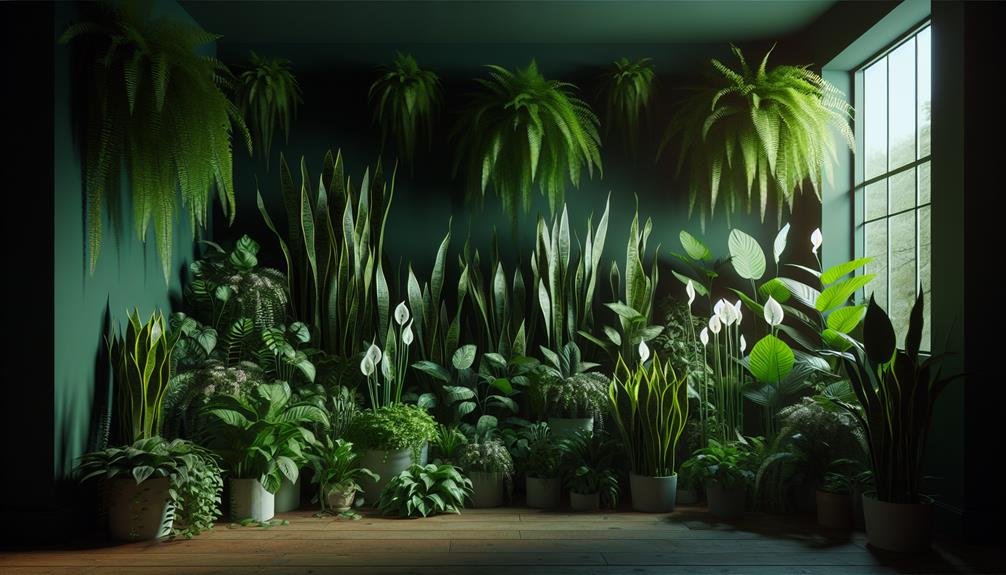
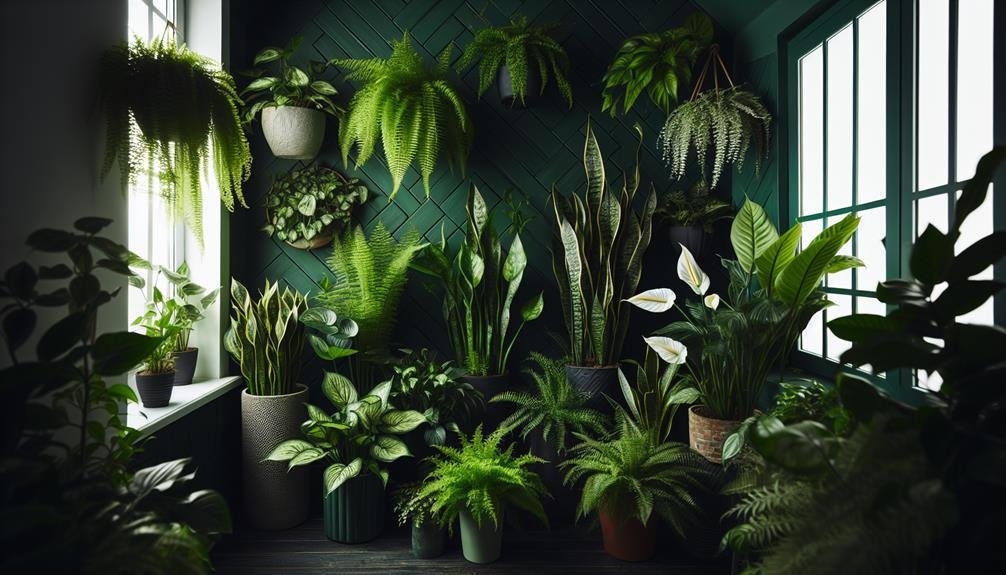
Some of the best low-light plant species include the resilient Snake Plant (Sansevieria), known for its ability to survive with minimal light and water.
The Peace Lily (Spathiphyllum) is another excellent choice, with its elegant white blooms and tolerance for low-light settings.
If you're looking for a trailing plant, consider the Heartleaf Philodendron (Philodendron scandens) or the English Ivy (Hedera helix), both of which can thrive in low-light conditions and add a touch of greenery to any space.

For a pop of color, the Chinese Evergreen (Aglaonema) is a great option, as it can brighten up dim areas with its vibrant foliage.
These low-light plant species aren't only visually appealing but also relatively easy to care for, making them ideal choices for spaces with limited natural light.
Ideal Light Conditions for Low-Light Plants
To ensure the successful growth of low-light plants, it's essential to provide them with ideal light conditions that cater to their specific needs. Low-light plants thrive in indirect sunlight or artificial light sources. They don't require intense or direct sunlight, making them perfect for spaces with limited natural light. Ideal locations for these plants include rooms with north-facing windows or areas shielded from direct sunlight by curtains or furniture. If natural light is scarce, consider using fluorescent or grow lights specifically designed for low-light plants.
When arranging your low-light plants, remember to rotate them occasionally to ensure even light exposure on all sides. This practice helps prevent leggy growth and encourages a balanced appearance. Monitoring the color and growth of your plants can also indicate if they're receiving adequate light. If a plant starts stretching towards the light source or its leaves lose their vibrant color, it may be a sign that the current lighting conditions aren't ideal. By providing the right amount of light, you can help your low-light plants thrive and beautify your indoor space.
Watering Tips for Low-Light Plants
Ensure your low-light plants receive proper care by mastering the art of watering them effectively. When it comes to watering low-light plants, it's crucial to strike the right balance. Overwatering can lead to root rot, while underwatering can cause wilting and stunted growth. The key is to water your plants when the top inch of soil feels dry to the touch. Use a watering can with a spout to ensure water reaches the roots directly without splashing the leaves.
Another tip is to avoid letting your low-light plants sit in water-filled saucers for extended periods. This can lead to waterlogging and suffocate the roots. Instead, make sure to empty out any excess water from the saucers after watering. Additionally, consider using room-temperature water to prevent shocking the plants.
Remember to adjust your watering frequency based on the specific needs of each plant species. By following these watering tips, you can help your low-light plants thrive and grow beautifully.
Common Mistakes to Avoid
One common mistake to avoid with low-light plants is overwatering, which can lead to root rot and harm their health. It's essential to remember that these plants require less frequent watering compared to those in well-lit conditions. Overwatering can suffocate the roots and prevent proper nutrient absorption, ultimately weakening the plant.
Another mistake to steer clear of is using the wrong type of soil. Low-light plants thrive in well-draining soil that prevents water from pooling around the roots. Using regular potting soil that retains too much moisture can be detrimental to these plants.
Additionally, neglecting proper drainage in your pots is a common oversight. Without adequate drainage holes, excess water has nowhere to escape, increasing the risk of overwatering and root rot.
Lastly, placing low-light plants in areas with insufficient airflow can hinder their growth. Proper ventilation helps prevent issues like mold and mildew, ensuring the plants remain healthy in their low-light environment.
Frequently Asked Questions
Can Low-Light Plants Thrive in Windowless Rooms or Areas With Minimal Natural Light?
Yes, low-light plants can thrive in windowless rooms or areas with minimal natural light. They're adaptable and often require less sunlight to grow compared to other plants.
By choosing the right low-light plants and providing artificial light sources like grow lights, you can create a suitable environment for them to flourish even in spaces with limited natural light.
Just make sure to monitor their specific light requirements for optimal growth.
Are There Any Low-Light Plants That Are Safe for Pets to Be Around?
Yes, there are low-light plants that are safe for pets to be around. Some pet-friendly options include spider plants, parlor palms, and Boston ferns. These plants not only thrive in low-light conditions but are also non-toxic to cats and dogs.
How Often Should Low-Light Plants Be Fertilized, and What Type of Fertilizer Is Best for Them?
For low-light plants, fertilize every 4-6 weeks during the growing season. Opt for a balanced, water-soluble fertilizer diluted to half strength. This helps prevent over-fertilization, which can harm your plants.
Ensure the soil is moist before fertilizing to avoid shocking the roots. Remember, a little goes a long way with low-light plants.
Enjoy watching your green friends thrive with the right care routine!
Are There Any Low-Light Plants That Are Particularly Effective at Improving Indoor Air Quality?
When looking to improve indoor air quality, consider low-light plants like spider plants, peace lilies, or snake plants. These plants are effective at purifying the air and can thrive in environments with minimal natural light.
Can Low-Light Plants Be Used to Create a Visually Appealing Indoor Garden or Display?
When it comes to creating a visually appealing indoor garden or display, low-light plants can be a fantastic option. Their lush greenery can brighten up any corner of your home without needing direct sunlight.
You'll find a variety of low-light plants that aren't only beautiful but also easy to care for. With some creative placement and a mix of plant types, you can create a stunning indoor garden that will enhance your living space.
Conclusion
Now that you know the top secret of low-light plants, you can enjoy all the benefits they bring to your home or office.
Remember to choose the best low-light plant species, provide them with ideal light conditions, and water them correctly.
Avoid common mistakes to ensure your low-light plants thrive and bring beauty and greenery to your space.
Happy planting!