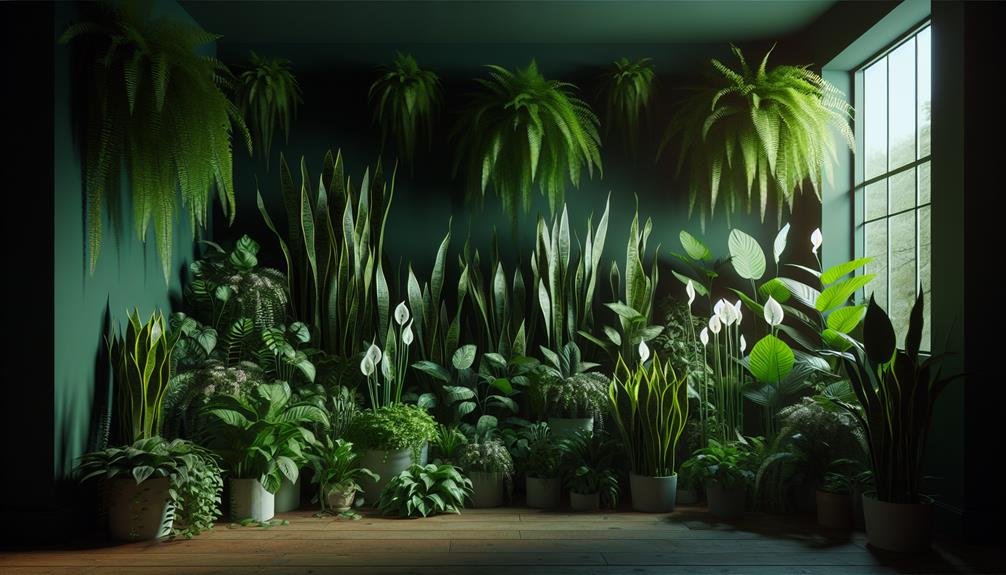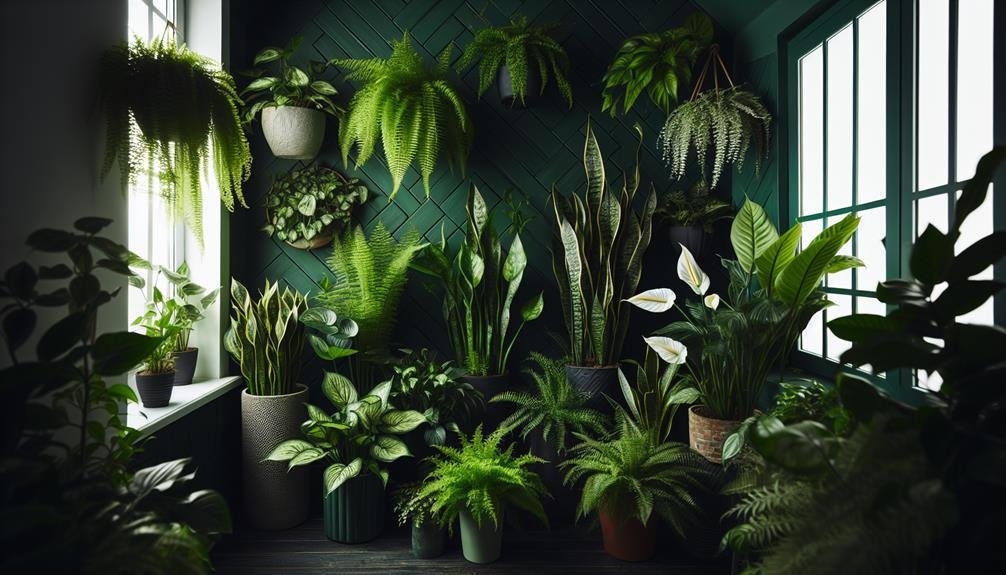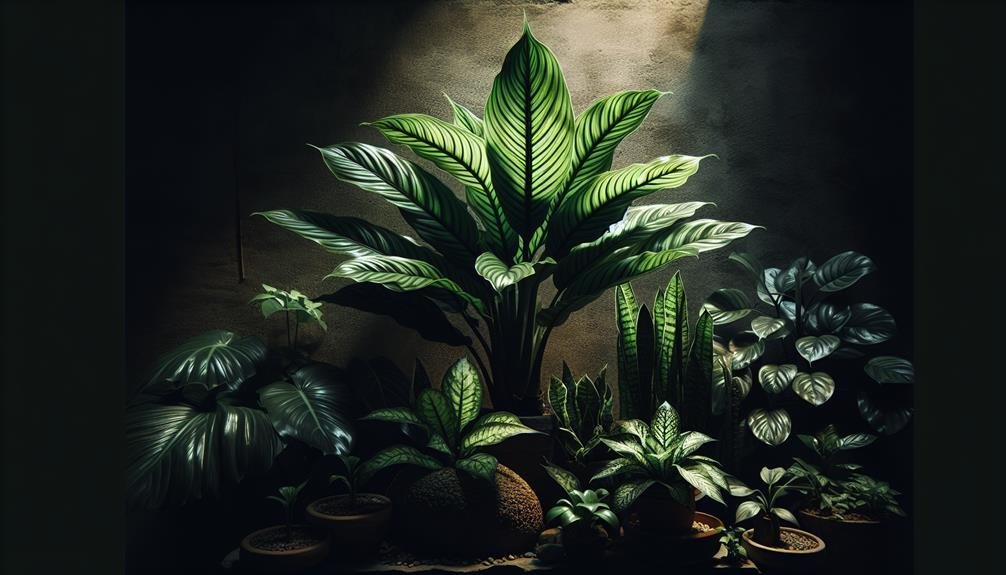
Step into the world of indoor gardening where vibrant plants thrive in the shadows, much like secrets hidden in the dark.
Curious to discover these botanical beauties that flourish without the spotlight?
Stay tuned to uncover a green oasis that thrives in the most unexpected corners of your home, bringing life and color where you least expect it.
Benefits of Dark-Loving Indoor Plants
If you have a dimly lit room, dark-loving indoor plants can thrive and brighten up the space with minimal sunlight. These plants aren't just aesthetically pleasing but also offer several benefits. One key advantage is their ability to purify the air. Plants like the peace lily, spider plant, or snake plant excel in removing toxins and improving indoor air quality, creating a healthier environment for you to breathe in.
Another benefit of dark-loving indoor plants is their low maintenance requirements. These plants are often more resilient and adaptable to different conditions, making them ideal for busy individuals or those new to plant care. With their ability to thrive in low-light conditions, they can survive in areas where other plants might struggle, bringing a touch of greenery to spaces that would otherwise remain bare.
Additionally, dark-loving plants can help reduce stress and improve mental well-being by adding a sense of calm and tranquility to your indoor environment.
Top 5 Low-Light Plant Recommendations
Here are the top 5 low-light plants that thrive indoors with minimal sunlight.
- Snake Plant: Known for its hardy nature, the snake plant requires very little light and water, making it perfect for beginners or those with busy schedules.
- ZZ Plant: This plant is virtually indestructible and can survive in low-light conditions with infrequent watering, making it an excellent choice for forgetful plant owners.
- Pothos: With its trailing vines and heart-shaped leaves, pothos can liven up any space. It thrives in low light and only needs watering when the soil is dry.
- Peace Lily: This elegant plant not only thrives in low light but also helps purify the air. Keep the soil slightly moist, and it will reward you with beautiful white blooms.
- Spider Plant: An excellent choice for hanging baskets, spider plants do well in indirect sunlight and can tolerate low-light conditions. Water them consistently, and they'll produce baby spider plants for you to propagate.
Tips for Caring for Low-Light Plants
To care for low-light plants successfully, ensure they receive adequate water and occasional fertilization to support their growth. When watering, make sure the soil is moist but not waterlogged, as low-light plants are more susceptible to root rot. It's crucial to let the soil dry slightly between waterings to prevent overwatering. Using a well-draining potting mix can help with this.
Low-light plants don't require as much fertilizer as those in brighter conditions. Feed them with a diluted, balanced fertilizer every 4-6 weeks during their growing season, typically spring and summer. Be cautious not to over-fertilize, as this can harm the plants more than help them.
Regularly dust the leaves of your low-light plants, as dust can block sunlight absorption. Wipe the leaves gently with a damp cloth to keep them clean and allow optimal light exposure. By following these care tips, you can ensure your low-light plants thrive in their less-than-ideal growing conditions.

Creative Ways to Display Dark-Loving Plants
Consider incorporating dark-loving plants into hanging macramé plant holders to add a touch of bohemian charm to your living space. Macramé plant holders are a stylish way to elevate your indoor garden, especially for plants that thrive in low-light conditions. These intricate holders not only provide a unique display for your plants but also help free up precious floor space, making them ideal for small apartments or rooms with limited space.
Another creative way to showcase your dark-loving plants is by arranging them on wall-mounted shelves. This not only adds a decorative element to your walls but also ensures that your plants receive the minimal light they need to thrive. Choose shelves in different sizes and heights to create visual interest and showcase your plant collection effectively.
For a more eclectic look, consider placing your dark-loving plants in vintage ceramic pots or glass terrariums. These unconventional containers can add a pop of personality to your plant display while keeping your green friends happy in their low-light environment. Experiment with different textures and colors to create a unique and eye-catching indoor garden.
Common Mistakes to Avoid With Indoor Plants
Avoid overwatering your indoor plants as it can lead to root rot and other issues. Make sure to check the moisture levels in the soil before watering and allow for proper drainage to prevent waterlogged roots. Additionally, be cautious not to underwater your plants; while it's essential not to drown them, they still need regular watering to thrive.
Another common mistake is neglecting the lighting requirements of your indoor plants. Even dark-loving plants require some level of light to survive. Ensure they receive adequate light exposure, whether it's natural light from a window or artificial light from grow lights.
Furthermore, avoid using the wrong type of soil for your indoor plants. Different plants have specific soil requirements, so using a generic potting mix may not provide the necessary nutrients or drainage. Research the ideal soil type for your plants and repot them if needed.
Lastly, remember to regularly inspect your indoor plants for pests and diseases. Early detection can prevent infestations from spreading and damaging your plants. By staying vigilant and addressing issues promptly, you can help your indoor plants thrive.
Frequently Asked Questions
Can Dark-Loving Indoor Plants Survive in a Room With No Windows or Natural Light?
In a room with no windows or natural light, dark-loving indoor plants may struggle to survive. Without sunlight, these plants may not be able to photosynthesize effectively, leading to stunted growth or even death.
Consider using artificial grow lights to mimic natural light conditions for these plants. Ensure the light source provides the right spectrum and intensity to support their growth and development in the absence of natural light.
Are There Any Dark-Loving Indoor Plants That Are Safe for Pets?
If you're seeking dark-loving indoor plants safe for pets, options like spider plants, parlor palms, or Boston ferns could be great choices. These plants not only thrive in low-light conditions but are also considered pet-friendly.
Remember to place them where your furry friends can't easily access them to prevent any unwanted nibbling.
With proper care and a pet-safe environment, you can enjoy these plants while keeping your pets safe and happy.
How Often Should I Water Dark-Loving Indoor Plants Compared to Other Houseplants?
When caring for dark-loving indoor plants, remember to adjust your watering schedule. These plants typically require less frequent watering compared to other houseplants.
Check the soil moisture regularly by feeling the top layer. Water only when the soil feels dry to the touch. Overwatering can be harmful, so it's essential to maintain a balance.
Monitor your plant's specific needs to ensure they thrive in their low-light environment.
Do Dark-Loving Indoor Plants Require Any Special Fertilizers or Nutrients?
When caring for dark-loving indoor plants, it's essential to provide them with the right nutrients to thrive.
These plants may benefit from special fertilizers formulated for low-light conditions. Look for products that are rich in nitrogen, phosphorus, and potassium to support healthy growth.
Regularly feeding your dark-loving plants with these nutrients can help maintain their vibrant appearance and overall health. Remember to follow the instructions on the fertilizer packaging for best results.
Are There Any Specific Temperature or Humidity Requirements for Dark-Loving Indoor Plants?
To keep your dark-loving indoor plants thriving, ensure they've the right temperature and humidity levels.
While specific requirements vary, most plants prefer temperatures between 65-80°F and humidity levels of 40-60%.
Monitor your plant's surroundings and adjust as needed to create a comfortable environment.
Proper temperature and humidity play a crucial role in the overall health and growth of your indoor plants.
Conclusion
Overall, incorporating dark-loving indoor plants into your home can bring life and vibrancy to even the darkest corners. With the right plants and care, you can enjoy the benefits of greenery without needing a lot of natural light.
Remember to choose the right plants for low-light conditions, provide proper care and attention, and get creative with how you display them. Avoid common mistakes and your indoor garden will thrive in any space.
Enjoy your new green companions!