When it comes to landscaping in challenging conditions, selecting plants that thrive with minimal water can be quite beneficial.
You may have wondered which plants can withstand drought without compromising on aesthetics or variety. Well, fear not, as we unravel the secrets behind some of the most reliable species known for their resilience in the face of dry spells.
Stay tuned to discover a diverse range of flora that not only survive but also thrive in drought-stricken environments, offering both beauty and sustainability to your garden or landscape.
Benefits of Drought-Resistant Plants
When choosing plants for your garden, opt for drought-resistant varieties to reduce water usage and maintenance needs. These plants are tough and can thrive with minimal watering, making them ideal for regions with limited rainfall or for those looking to conserve water. By selecting drought-resistant plants, you not only save on water bills but also contribute to environmental sustainability by reducing water waste.
Drought-resistant plants come in a wide range of species and colors, allowing you to create a vibrant and diverse garden that doesn't require constant attention. These plants are hardy and can withstand dry conditions, requiring less maintenance in terms of watering and upkeep. Additionally, they're often more resilient to pests and diseases, reducing the need for chemical interventions that can harm the environment.
Incorporating drought-resistant plants into your garden design not only benefits your wallet and the environment but also adds beauty and diversity to your outdoor space. Consider these low-maintenance options to create a sustainable and visually appealing garden that thrives even in dry conditions.
Top Perennial Choices for Dry Conditions
Opt for top perennial choices for dry conditions to create a sustainable and visually appealing garden that thrives even in low water environments. When selecting perennials for dry conditions, prioritize plants like Lavender, known for its drought tolerance and fragrant blooms.
Another excellent choice is the Blanket Flower (Gaillardia), which offers vibrant colors and can withstand dry spells once established. Russian Sage is a stunning option with its silver foliage and drought-resistant nature, attracting pollinators to your garden.
For a pop of purple, consider planting Catmint (Nepeta), a low-maintenance perennial that thrives in dry soils. The Red Hot Poker (Kniphofia) adds a unique touch with its torch-like flowers and ability to thrive in drought conditions. Sedums, such as Autumn Joy, are also reliable choices, requiring minimal water once established and offering beautiful late-season blooms.
Succulents: Ideal Drought-Tolerant Options
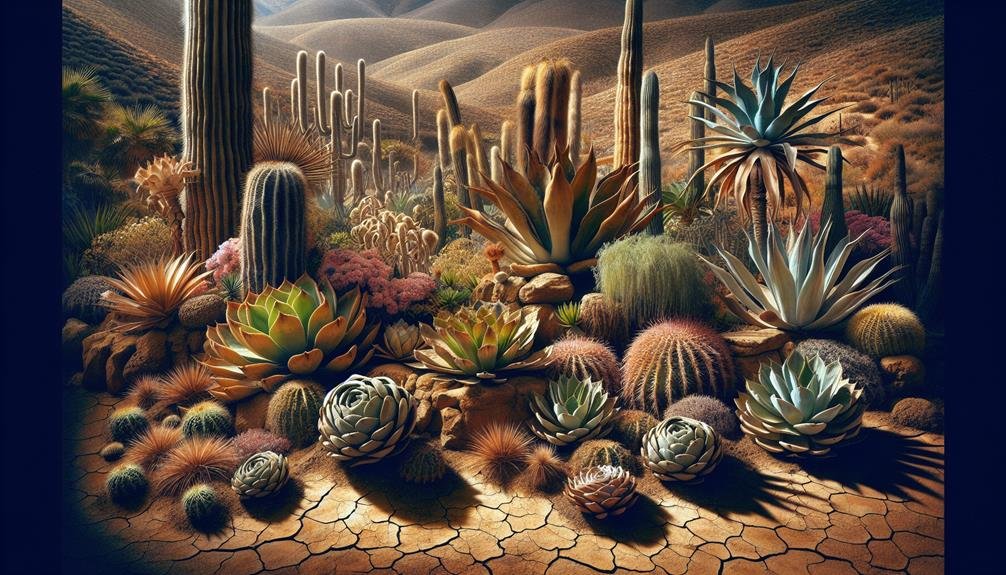
For a low-maintenance and water-efficient garden, consider incorporating succulents as ideal drought-tolerant options. Succulents are renowned for their ability to store water in their fleshy leaves, stems, or roots, making them well-suited to survive in arid conditions with minimal watering.

These plants come in a wide variety of shapes, sizes, and colors, allowing you to create diverse and visually appealing arrangements in your garden or indoor spaces.
Popular succulent choices include Echeverias, known for their rosette shapes and beautiful pastel hues, and Aloe Vera, prized not only for its drought resistance but also for its medicinal properties. Sedums, with their diverse foliage and ability to thrive in various climates, are another excellent option.
These plants require well-draining soil, ample sunlight, and infrequent watering to flourish.
Native Plants Known for Drought Resistance
Consider exploring native plants known for their drought resistance as an excellent choice for your water-efficient garden. Native plants are well-suited to the local climate and soil conditions, making them naturally resilient to drought. These plants have adapted over time to survive with minimal water, making them low maintenance and sustainable options for your landscaping needs.
Some popular native plants known for their drought resistance include the California poppy, purple coneflower, and yucca. California poppies add a vibrant splash of color to your garden while requiring little water once established. Purple coneflowers not only attract pollinators but also thrive in dry conditions. Yuccas, with their striking architectural form, are extremely drought-tolerant and can withstand hot, arid climates.
Low-Water Shrubs for Sustainable Landscaping
When selecting shrubs for sustainable landscaping with minimal water requirements, prioritize those known for their low-water needs and adaptability to dry conditions. Opt for varieties such as the Desert Sage (Salvia dorrii), a drought-tolerant shrub native to arid regions. Its silver-gray foliage and purple flowers not only add beauty to your landscape but also thrive in low-water conditions.
Another excellent choice is the Manzanita (Arctostaphylos), with its attractive reddish bark and evergreen leaves, perfect for water-wise gardens. The Texas Sage (Leucophyllum frutescens) is a hardy shrub that blooms with purple, pink, or white flowers, requiring little water once established.
Consider planting the Butterfly Bush (Buddleja davidii) for its fragrant blooms that attract pollinators while needing minimal watering. These low-water shrubs not only conserve water but also contribute to sustainable landscaping practices, enhancing the beauty of your outdoor space while requiring less maintenance.
Frequently Asked Questions
Can Drought-Resistant Plants Survive in Extremely Arid Conditions With Little to No Water?
In extremely arid conditions with little to no water, drought-resistant plants can survive by adapting to the limited water availability. These plants have developed mechanisms to conserve water.
Such mechanisms include deep root systems, succulent leaves, and thick cuticles to reduce water loss. By efficiently utilizing available moisture and minimizing transpiration, these plants can thrive even in the harshest of drought conditions.
Are There Any Specific Types of Soil That Are Best for Growing Drought-Resistant Plants?
When planting drought-resistant plants, sandy loam and well-draining soil are optimal for growth. These soil types allow for proper water drainage and aeration, which are essential for the plants to thrive in dry conditions.
How Often Should Drought-Resistant Plants Be Watered to Maintain Their Health and Vitality?
To keep your drought-resistant plants healthy, water them deeply but infrequently. Let the soil dry out between waterings to encourage deep root growth.
Depending on factors like plant type and local climate, aim to water once every 1-2 weeks. Adjust based on specific plant needs and environmental conditions to ensure they thrive with minimal water.
Proper watering is key to maintaining the vitality of your drought-resistant plants.
Are There Any Special Care Tips or Techniques for Helping Drought-Resistant Plants Thrive in a Garden or Landscape?
To help drought-resistant plants thrive in your garden or landscape, consider the following factors:
- Soil quality, proper spacing, and mulching are crucial for their growth.
- Ensure the plants receive adequate sunlight and avoid overwatering them.
- Regular pruning promotes growth and removes damaged parts.
- Monitor for pests and diseases and address them promptly.
- Choose plants that are suited to your specific climate and soil conditions for the best results in your drought-resistant garden.
Are There Any Potential Drawbacks or Challenges to Consider When Incorporating Drought-Resistant Plants Into a Landscaping Design?
When incorporating drought-resistant plants into your landscaping design, it's important to consider potential drawbacks or challenges.
Some plants may not offer the vibrant colors or lush foliage that other more water-dependent plants do. Additionally, certain drought-resistant species might require specific soil conditions or care routines to thrive.
Be sure to research and plan accordingly to ensure a visually appealing and sustainable landscape with these plants.
Conclusion
In conclusion, when choosing plants for your garden or landscaping, consider drought-resistant options for a low-maintenance and sustainable choice. Perennial plants like lavender and Russian sage, succulents such as agave and aloe, native plants like yarrow and penstemon, and low-water shrubs such as butterfly bush and potentilla are all reliable choices for withstanding dry conditions.
By incorporating these plants into your outdoor space, you can create a beautiful and resilient landscape that requires minimal watering.