Paying attention to your indoor plants' hydration needs is crucial, but are you unknowingly making mistakes that could harm them?
Avoiding common errors like overwatering or underwatering is essential for plant health. However, there's more to watering indoor plants than just the amount of water you give them.
Stay tuned to discover other common blunders that you might be making in your watering routine and how to rectify them for thriving indoor greenery.
Overwatering
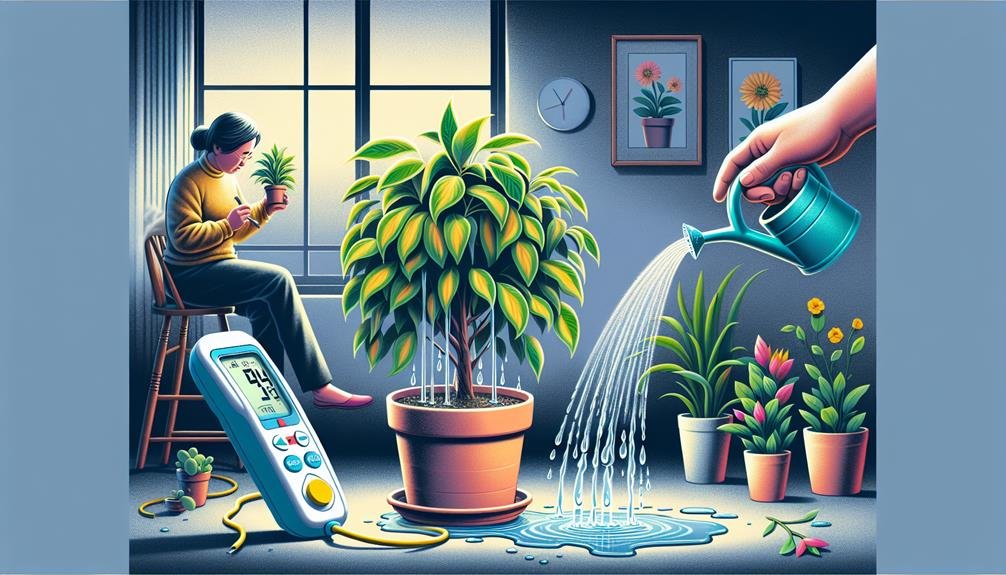
If your indoor plants are wilting and showing signs of yellowing leaves, you may be overwatering them. Overwatering is a common mistake that many plant owners make, often with the best intentions of keeping their plants healthy. However, excessive watering can lead to root rot and other issues that harm your plants.
When you water your plants too frequently, the roots become waterlogged, depriving them of essential oxygen. This lack of oxygen causes the roots to suffocate and rot, ultimately leading to the wilting and yellowing symptoms you may be observing.
To prevent overwatering, make sure to check the moisture level of the soil before watering again. Stick your finger into the soil about an inch deep – if it feels dry, then it's time to water. Additionally, ensure that your pots have proper drainage holes to allow excess water to escape.
Underwatering
Underwatering indoor plants can be just as damaging as overwatering them, leading to symptoms like drooping leaves and dry soil. When you underwater your plants, they're deprived of essential moisture needed for growth and health. The lack of water hinders photosynthesis, the process crucial for plants to produce energy. As a result, you may notice your plant's leaves becoming wilted, yellowing, or even falling off. The soil of an underwatered plant will also be dry to the touch, and in severe cases, it may pull away from the edges of the pot.
To prevent underwatering, make sure to establish a consistent watering schedule based on your plant's specific needs. Check the soil moisture regularly by inserting your finger into the soil; if it feels dry an inch below the surface, it's time to water. Remember, each plant has its preferences, so understanding the individual requirements of your indoor plants is key to avoiding the pitfalls of underwatering.
Incorrect Watering Frequency
To maintain the health of your indoor plants, it's essential to water them at the correct frequency based on their individual needs. Overwatering is a common mistake that can lead to root rot and other issues. Each plant has specific watering requirements, so it's crucial to understand the needs of your particular plants. Some plants, like succulents, prefer infrequent watering to prevent waterlogged soil, while others, such as ferns, may require more frequent watering to thrive.
One way to determine the correct watering frequency is by checking the soil moisture level. Stick your finger into the soil about an inch deep; if it feels dry, it's time to water. However, if it still feels moist, hold off on watering to avoid overhydration. Consider factors such as the plant's size, the pot's material, and the humidity levels in your home when deciding how often to water.

Improper Drainage
Check the drainage of your indoor plants to prevent waterlogging issues that can harm their health and growth. Proper drainage is essential to ensure that excess water can escape from the pot, preventing the roots from sitting in water and potentially rotting.
When pots lack drainage holes, water can accumulate at the bottom, leading to waterlogged soil and depriving the roots of oxygen. This can cause root rot and other health problems for your plants.
To improve drainage, consider repotting your plants into containers with drainage holes or adding a layer of rocks or pebbles at the bottom of the pot before adding soil. This will allow excess water to drain freely, keeping the soil consistently moist but not waterlogged.
Additionally, avoid using pots without drainage holes or saucers that trap excess water underneath, as this can lead to similar issues. By ensuring proper drainage for your indoor plants, you can help them thrive and avoid potential problems associated with waterlogging.
Watering at the Wrong Time
Avoid watering your indoor plants at the wrong time to prevent damage and promote healthy growth. Timing is crucial when it comes to watering your indoor plants. Watering at the wrong time, like during the hottest part of the day, can lead to water loss through evaporation before the plants can absorb it, potentially causing stress to the plants. Instead, opt to water your plants in the morning or evening when temperatures are cooler, allowing the water to penetrate the soil effectively.
Watering at night is generally discouraged as it can create a damp environment that might attract pests and promote fungal diseases. It's essential to strike a balance and ensure that the soil has enough time to dry before nightfall. Additionally, avoid watering during windy conditions as it can lead to uneven water distribution or water loss due to quick evaporation.
Frequently Asked Questions
Can Tap Water Harm Indoor Plants?
Tap water can harm indoor plants if it contains high levels of chemicals like chlorine or fluoride. These substances can build up in the soil over time, affecting the plant's health.
To prevent this, consider using filtered or distilled water. Remember to water your plants thoroughly but allow the soil to dry out between waterings to avoid overwatering, which can also harm your indoor plants.
How Can I Tell if My Indoor Plant Needs to Be Repotted Due to Water-Related Issues?
If your indoor plant needs repotting due to water issues, look for signs like roots growing out of drainage holes, waterlogged soil, or wilting despite regular watering.
To address this, gently remove the plant from its pot, check the roots for rot, and repot in fresh soil if necessary. Ensure proper drainage and monitor watering levels to prevent future problems.
Regularly inspecting your plants will help maintain their health and prevent water-related issues.
Are There Any Specific Types of Indoor Plants That Require Less Frequent Watering Compared to Others?
Some indoor plants require less frequent watering than others. Factors like the plant species, pot size, and environmental conditions play a role.
Succulents, cacti, and snake plants are known for needing minimal watering due to their ability to store water.
Research the specific needs of your plants to ensure you're providing the right amount of water for their optimal growth and health.
Can Using a Humidifier in the Room Affect the Watering Needs of Indoor Plants?
Using a humidifier in the room can definitely impact the watering needs of your indoor plants. Increased humidity levels can slow down the rate at which plants lose moisture, potentially reducing the frequency at which you need to water them.
However, it's important to monitor your plants closely and adjust your watering schedule accordingly to prevent overwatering or underwatering. Keep a close eye on your plants' soil moisture levels to ensure they're getting the right amount of water.
Is It Possible to Overwater Indoor Plants Even if They Have Proper Drainage?
You can still overwater indoor plants even with proper drainage. Excessive watering can lead to root rot and other issues.
Make sure to observe the plant's specific watering needs and check the soil moisture before watering. Remember, it's better to underwater than overwater.
Allow the soil to dry out slightly between waterings to prevent problems. Your plants will thank you for finding that perfect balance.
Conclusion
So remember, avoid these common mistakes when watering your indoor plants:
- Overwatering
- Underwatering
- Incorrect watering frequency
- Improper drainage
- Watering at the wrong time.
By following these tips, you can ensure that your indoor plants thrive and stay healthy.
Happy watering!