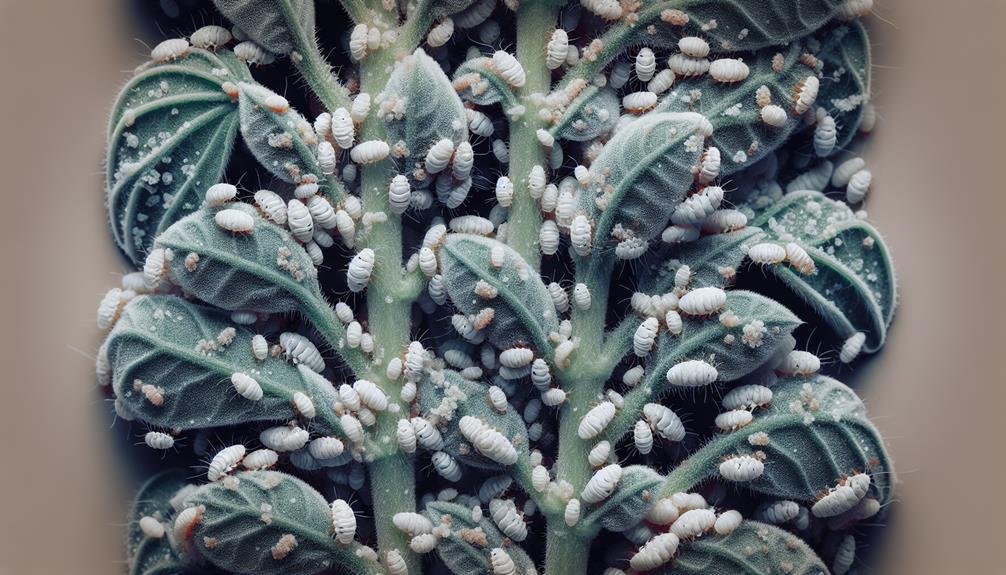
Imagine mealybugs as silent invaders on a secret mission within your indoor garden. Their small size and unassuming appearance might deceive you, but beneath their cottony exterior lies a threat that can compromise the vitality of your beloved plants.
As they feed on the sap of your green companions, they bring forth a cascade of detrimental effects that can gradually diminish the beauty and health of your indoor oasis.
Damage to Plant Health
Mealybugs consistently weaken indoor plants by sucking sap from their leaves and stems, leading to stunted growth and yellowing foliage. As these pesky pests feed on your plant, they inject toxic saliva that causes further damage. This saliva not only weakens the plant but also introduces the risk of secondary infections, making your plant more susceptible to diseases.
You may notice that your once vibrant plant starts to look droopy and lackluster. This is a direct result of the mealybugs' draining activities, depriving your plant of essential nutrients. Additionally, the stress caused by these pests can hinder the plant's ability to photosynthesize effectively, further compromising its health.
If left untreated, the damage caused by mealybugs can be irreversible. Your plant may struggle to recover even after the pests are removed. Therefore, it's crucial to address mealybug infestations promptly to prevent extensive harm to your indoor plants.
Weakening of Plant Structure
The continuous sap extraction by mealybugs gradually compromises the structural integrity of indoor plants, making them more susceptible to physical damage. As these pests feed on the plant's sap, they weaken the stems and leaves, causing them to become less rigid and sturdy. This structural weakening can lead to symptoms such as drooping leaves, wilting branches, and overall frailty in the plant's appearance.
When mealybugs infest indoor plants, they create entry points for diseases and other opportunistic pests that can further damage the weakened plant structure. Additionally, the compromised integrity makes the plant more prone to breaking or snapping under its weight or even mild environmental stressors like wind or accidental bumps.
To prevent the weakening of plant structure by mealybugs, it's crucial to promptly address any infestations. Regularly inspect your indoor plants for signs of mealybug presence and take immediate action to eliminate these pests. By protecting your plants from mealybug infestations, you can help maintain their structural integrity and overall health.
Stunted Growth and Development
Addressing mealybug infestations promptly is vital to prevent stunted growth and development in your indoor plants. These pesky pests feed on the sap of plants, depriving them of essential nutrients needed for healthy growth. As mealybugs pierce the plant tissue to suck out sap, they weaken the plant's ability to photosynthesize effectively, leading to stunted growth.
When mealybugs infest your indoor plants, they can cause yellowing of leaves, wilting, and overall poor plant health. The honeydew they excrete can promote the growth of sooty mold, further hindering photosynthesis and nutrient absorption. This combination of factors can significantly impede the plant's development and overall health.

If left unchecked, mealybug infestations can stunt the growth of new leaves and shoots, preventing your plant from reaching its full potential. To ensure your indoor plants thrive, regularly inspect them for signs of mealybugs and take immediate action to eliminate these pests. By doing so, you can help your plants grow vigorously and stay healthy.
Spread of Plant Diseases
Prompt action against mealybug infestations is crucial to prevent the spread of plant diseases on your indoor plants. Mealybugs aren't only harmful on their own, but they also act as vectors for various plant diseases. These pesky insects feed on plant sap, weakening the plant and making it more susceptible to infections.
When mealybugs feed on your indoor plants, they create wounds that allow pathogens to enter the plant more easily. This can lead to the spread of diseases such as fungal infections, bacterial diseases, and viruses. The honeydew excreted by mealybugs also promotes the growth of sooty mold, which can further harm your plants.
If left unchecked, a mealybug infestation can quickly escalate into a full-blown plant health crisis. Diseases spread by mealybugs can be challenging to manage and may result in irreversible damage to your beloved indoor plants. By taking swift action to eliminate mealybugs, you can effectively reduce the risk of plant diseases and ensure the health and vitality of your indoor garden.
Attraction of Other Pests
To effectively combat mealybugs on your indoor plants, consider how their presence can attract other pests as well. Mealybugs excrete a sticky substance called honeydew, which not only promotes the growth of sooty mold but also attracts ants.
Ants are drawn to the sweet honeydew left behind by mealybugs, leading to a secondary infestation that can be challenging to manage. Additionally, the weakened state of plants infested by mealybugs makes them more susceptible to attacks from other common indoor plant pests such as spider mites and aphids.
These pests can quickly take advantage of the plant's compromised defenses, further stressing and damaging the already struggling plant. By allowing mealybug infestations to persist, you inadvertently create an environment that invites a host of other pests to your indoor plants.
Therefore, swift and thorough action against mealybugs is crucial not only to address their direct damage but also to prevent the attraction and proliferation of additional harmful pests.
Frequently Asked Questions
How Do Mealybugs Communicate With Each Other to Infest Plants?
To infest plants, mealybugs communicate through pheromones and vibrations. These signals help them coordinate their movements and locate suitable hosts.
Pheromones attract other mealybugs to areas with abundant food sources, while vibrations help them stay connected and navigate their environment efficiently.
Do Mealybugs Have Any Natural Predators That Can Help Control Their Population?
Yes, mealybugs do have natural predators that can help control their population. Ladybugs, lacewings, and parasitic wasps are some of the beneficial insects that feed on mealybugs.
Introducing these predators into your indoor garden can be an effective way to keep mealybug infestations in check. By maintaining a balance of predator-prey relationships, you can help protect your plants from these pesky pests.
Can Mealybugs Survive in Extreme Temperature Conditions?
Yes, mealybugs can survive in extreme temperature conditions. These pests are adaptable and can withstand a range of temperatures, although they thrive in warmer environments.
Extreme heat or cold may slow down their reproduction temporarily, but they can still persist.
It's important to address mealybug infestations promptly, as they can be resilient and continue to cause damage to your indoor plants if left unchecked.
What Steps Can Be Taken to Prevent Mealybug Infestations in Indoor Plants?
To prevent mealybug infestations in indoor plants, start by inspecting new plants before bringing them indoors. Quarantine any suspicious ones. Regularly check your plants for signs of mealybugs, like white fluffy patches. Wipe leaves with a damp cloth to remove these pests.
Avoid over-fertilizing as mealybugs are attracted to new growth. Introduce natural predators like ladybugs. Lastly, keep your indoor plants healthy to prevent mealybug attacks.
Are There Any Natural Remedies or DIY Solutions to Get Rid of Mealybugs From Indoor Plants?
To get rid of mealybugs from indoor plants naturally, try mixing water and dish soap in a spray bottle and apply it to the affected areas.
Another option is to use a solution of neem oil and water. Both methods can help suffocate and kill the mealybugs.
Remember to repeat the treatment every few days until the infestation is under control.
These DIY solutions are effective and safer for your plants.
Conclusion
In conclusion, mealybugs can be harmful to indoor plants in various ways. They can damage the plant's health, weaken its structure, stunt its growth, spread diseases, and attract other pests.
It's important to regularly inspect your plants for signs of mealybug infestations and take prompt action to prevent further damage. Proper care and maintenance are essential to keeping your indoor plants healthy and thriving.