
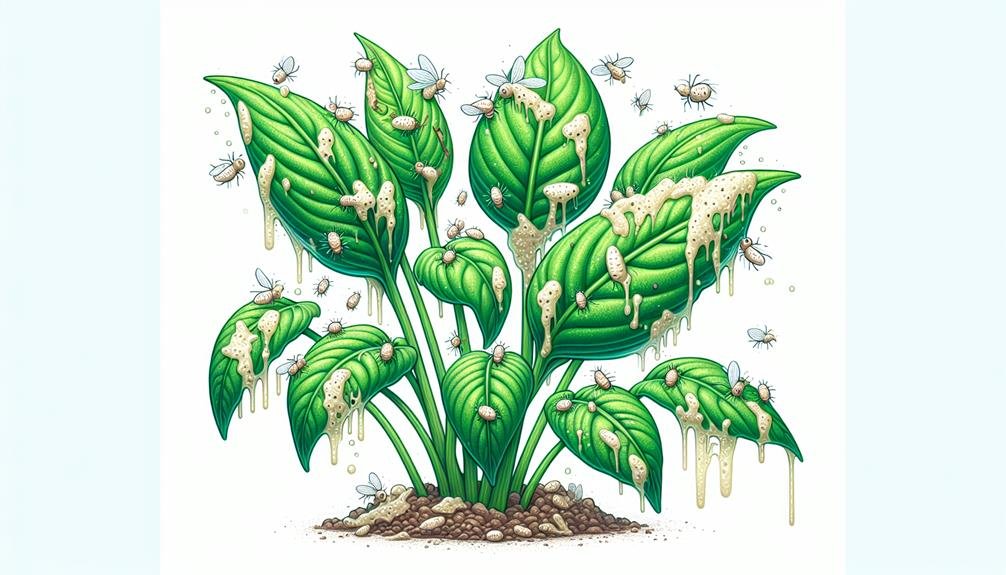
You might think whiteflies are just a minor nuisance, but the reality is that these tiny insects can wreak havoc on your indoor plants.
Not only do they damage plant health and spread diseases, but their rapid reproductive capabilities and resistance to pesticides make them a formidable foe.
However, the most alarming aspect of whiteflies is their direct impact on plant growth – a factor that could make or break your indoor garden.
So, what exactly makes them such a threat? Stay tuned to find out.
Damage to Plant Health
Whiteflies actively sap vital nutrients from indoor plants, leading to stunted growth and weakened defenses against diseases. As these tiny pests feed on the plant's sap, they deprive it of essential nutrients, hindering its ability to grow and develop properly. The lack of nutrients can result in stunted growth, causing your plants to be smaller and weaker than they should be. Additionally, whiteflies weaken the plant's natural defenses, making them more susceptible to diseases and other pests.
When whiteflies infest your indoor plants, they not only cause visible damage but also compromise the overall health of your green companions. By draining the plants of their vital nutrients, whiteflies put them at risk of various health issues that can impact their longevity. It's essential to address whitefly infestations promptly to prevent further damage and ensure the well-being of your indoor plants. Regular monitoring and appropriate pest control measures are crucial in protecting your plants from the harmful effects of whiteflies.
Spread of Plant Diseases
Depleting essential nutrients, these tiny pests contribute significantly to the spread of plant diseases, weakening the natural defenses of your indoor greenery. Whiteflies act as vectors, carrying harmful pathogens from plant to plant as they feed on the sap. This transmission of diseases such as viruses, fungi, and bacteria can lead to devastating consequences for your beloved plants.
Once a whitefly carrying a pathogen settles on a healthy plant, it can quickly infect it, spreading the disease throughout your indoor garden. The weakened state of the plants due to whitefly infestation makes them more susceptible to these diseases, further exacerbating the problem.
Common plant diseases that whiteflies help spread include powdery mildew, sooty mold, and various types of plant viruses. Identifying and addressing whitefly infestations promptly is crucial to prevent the rapid spread of these harmful diseases among your indoor plants. By controlling whitefly populations, you can effectively reduce the risk of disease outbreaks and protect the health of your indoor greenery.
Reproductive Capabilities
How do whiteflies reproduce and contribute to the growth of their populations indoors?

Whiteflies are known for their rapid reproductive capabilities, making them a significant threat to indoor plants. These pests lay their eggs on the underside of plant leaves, which hatch into mobile nymphs in about one to two weeks. These nymphs then develop into adult whiteflies in as little as three weeks, ready to start the cycle again.
One of the key factors contributing to the growth of whitefly populations indoors is their ability to reproduce continuously under favorable conditions. Female whiteflies can lay hundreds of eggs throughout their lifespan, ensuring a steady increase in their numbers. Additionally, whiteflies have a short development time, allowing for multiple generations to overlap within a short period. This rapid reproduction cycle can lead to exponential population growth, quickly infesting indoor plants and causing significant damage if left unchecked. Understanding their reproductive capabilities is crucial in implementing effective control measures to prevent whitefly infestations and protect indoor plants.
Resistance to Pesticides
Despite efforts to control them, whiteflies have developed resistance to pesticides. This resistance poses a significant challenge for indoor plant owners like yourself. Over time, repeated use of the same pesticides has allowed whiteflies to adapt and build up a tolerance to these chemicals. As a result, the once-effective pesticides are no longer as potent against these resilient pests.
When whiteflies become resistant to pesticides, it becomes harder to eradicate them from your indoor plants. You may find yourself needing to use higher concentrations of pesticides or resorting to different chemicals, which can be harmful to both the whiteflies and your plants. Additionally, the repeated exposure to pesticides can have negative consequences on the environment and beneficial insects that help control pest populations.
To combat this resistance, it's essential to implement integrated pest management strategies that incorporate various control methods. These methods can include physical removal of whiteflies, introducing natural predators, and rotating between different types of pesticides to prevent further resistance development. By taking a holistic approach to pest control, you can effectively manage whitefly infestations and protect your indoor plants.
Impact on Plant Growth
As whiteflies develop resistance to pesticides, their presence can directly impact the growth of your indoor plants. These tiny insects feed on plant sap, weakening the plant and depriving it of essential nutrients. This constant feeding can lead to stunted growth, yellowing of leaves, wilting, and overall poor plant health.
Whiteflies also secrete a sticky substance called honeydew, which promotes the growth of black sooty mold. This mold can cover the plant's leaves, blocking sunlight absorption and hindering the process of photosynthesis. As a result, the plant struggles to produce the energy it needs for healthy growth.
Moreover, whiteflies can transmit harmful plant viruses as they feed, further compromising the plant's ability to thrive. These viruses can cause a range of symptoms, from leaf discoloration to deformities, ultimately impacting the plant's overall growth and development.
To ensure the optimal growth of your indoor plants, it's crucial to address whitefly infestations promptly and effectively.
Frequently Asked Questions
Can Whiteflies Infest Plants That Are Kept Indoors Year-Round?
Yes, whiteflies can infest plants that are kept indoors year-round. They're sneaky pests that can easily find their way into your indoor plants and cause damage if not dealt with promptly.
Regularly inspecting your plants for signs of whiteflies and taking quick action to control them is crucial to prevent infestations from spreading and harming your beloved indoor greenery.
How Do Whiteflies Impact the Overall Aesthetic of Indoor Plants?
Whiteflies can seriously affect the overall aesthetic of your indoor plants. They leave sticky honeydew on leaves, causing mold growth and a sticky mess.
Additionally, whiteflies weaken plants by feeding on their sap, leading to yellowing, wilting, and stunted growth. Keeping these pests at bay is crucial for maintaining the beauty and health of your indoor plant collection.
Regular monitoring and appropriate pest control measures can help safeguard your plants.
Are There Any Natural Predators That Can Help Control Whitefly Populations Indoors?
When dealing with whiteflies indoors, natural predators can be beneficial in controlling their population. Look for options like ladybugs or lacewings that feed on whiteflies. These predators can help manage the infestation without the need for chemical treatments.
Are There Any Specific Indoor Plant Species That Are More Susceptible to Whitefly Infestations?
Certain indoor plant species are more susceptible to whitefly infestations. Factors such as plant health, environmental conditions, and species characteristics can influence their vulnerability.
Inspect your plants regularly for signs of whiteflies, especially on species like hibiscus, poinsettia, and fuchsia. By staying vigilant and taking proactive measures, you can help protect your indoor plants from these pesky pests.
Can Whiteflies Cause Damage to Indoor Plants That Are Not Immediately Visible?
Whiteflies can indeed cause damage to indoor plants that may not be immediately visible. These pests can weaken plants by feeding on their sap, leading to stunted growth and reduced overall health.
Additionally, whiteflies can transmit plant viruses, further compromising the plant's well-being.
Regularly inspecting your indoor plants for signs of whitefly infestations and taking prompt action can help protect your plants from these threats.
Conclusion
Overall, whiteflies pose a serious threat to indoor plants due to their ability to damage plant health, spread diseases, reproduce rapidly, resist pesticides, and hinder plant growth.
It's important to stay vigilant and take proactive measures to control and prevent infestations of whiteflies in order to protect the health and vitality of your indoor plants.
Don't underestimate the potential harm these tiny pests can cause to your greenery.



