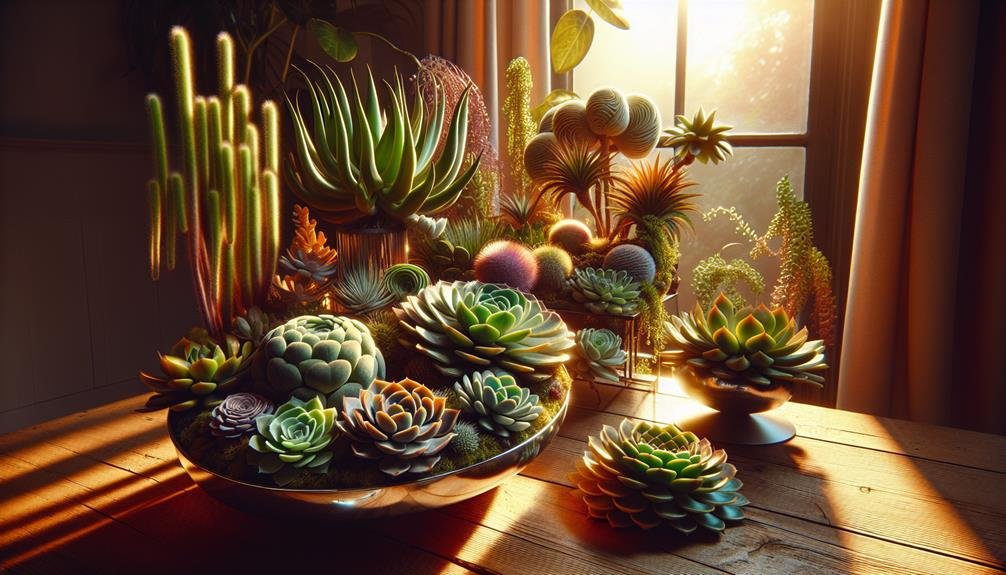
Imagine walking into your living room to find a stunning Echeveria 'Lola' perched elegantly on your windowsill, its rosettes casting a soft, serene ambiance over the space.
But wait, there's more to discover beyond the allure of Echeverias. Different succulent varieties offer a plethora of options to enhance your indoor environment with their unique shapes, colors, and textures.
Stay tuned to uncover the top succulent picks that not only thrive indoors but also elevate your interior décor effortlessly.
Popular Indoor Succulent Varieties
When selecting succulents for your indoor space, consider popular varieties like aloe vera, echeveria, and jade plants.
Aloe vera, known for its soothing gel, isn't only a practical plant to have indoors but also adds a touch of green to your space.
Echeveria, with its rosette-shaped leaves in various colors like green, purple, and blue, brings a vibrant and elegant look to your indoor garden.
Jade plants, also known as money plants, are believed to bring good luck and prosperity. Their thick, glossy leaves and tree-like structure make them a visually appealing addition to any room.
Aloe vera, echeveria, and jade plants are popular choices for indoor succulent gardening due to their easy maintenance and aesthetic appeal. These varieties thrive in indoor environments with bright, indirect light and minimal watering.
Colorful Succulents for Indoor Settings
For vibrant indoor spaces, consider incorporating succulents in a variety of colors to add visual interest and charm. Colorful succulents can brighten up any room and bring a lively touch to your indoor decor. Some striking options include the Echeveria 'Perle von Nurnberg' with its purple and pink hues, the Aeonium 'Kiwi' displaying shades of green, yellow, and pink, or the Sedum rubrotinctum 'Aurora' with its vibrant yellow and pink tips. These colorful succulents not only look beautiful but also require minimal care, making them perfect for indoor settings.
Adding a mix of colorful succulents in different sizes and shapes can create a dynamic and eye-catching display. Whether you prefer pastel tones or bold, bright colors, there's a diverse range of colorful succulents to choose from. Grouping together succulents with contrasting colors can create a stunning visual impact, while placing them in unique containers or arrangements can further enhance their beauty. Experimenting with various combinations of colorful succulents can help you create a personalized indoor oasis that reflects your style and personality.

Low-Maintenance Indoor Succulent Picks
Consider selecting low-maintenance indoor succulents to effortlessly enhance your living space with greenery that requires minimal care. These plants are perfect for busy individuals or those new to gardening.
A top pick for low-maintenance succulents is the Zebra Plant (Haworthiopsis attenuata). With its striking striped leaves and the ability to thrive in low light conditions, it's a hassle-free addition to any indoor setting.
Another excellent choice is the Snake Plant (Sansevieria trifasciata), known for its air-purifying qualities and resilience to neglect.
If you prefer a hanging succulent, the String of Pearls (Senecio rowleyanus) is a beautiful option that needs infrequent watering.
For a touch of color, the Echeveria 'Lola' is a low-maintenance succulent with stunning rosettes and pastel hues.
These low-maintenance indoor succulents not only add charm to your space but also provide an easy way to enjoy the beauty of nature without demanding much of your time.
Unique Succulent Varieties for Indoors
Enhance your indoor space with unique succulent varieties that bring a touch of individuality and charm to your home decor. Consider adding the String of Pearls, a trailing succulent with spherical leaves that resembles a string of beads, perfect for hanging planters or high shelves.
Another distinctive option is the Echeveria 'Black Prince', known for its striking dark purple, almost black, rosettes that add a sophisticated flair to any room.
For a more whimsical touch, opt for the Haworthia Cooperi, a small succulent with translucent leaves that give it a jelly-like appearance, making it a conversation starter among guests.
If you prefer a more architectural look, the Crassula 'Buddha's Temple' features stacked triangular leaves that resemble a miniature pagoda, adding a unique focal point to your space.
These unique succulent varieties not only thrive indoors but also serve as eye-catching statement pieces that reflect your personal style.
Best Succulents for Indoor Décor
Adding succulents to your indoor décor can effortlessly elevate the aesthetic appeal of your living space. When choosing the best succulents for indoor décor, consider varieties like Echeveria, known for their striking rosette shapes and vibrant colors. These succulents thrive in bright, indirect light, making them perfect for windowsills or well-lit shelves.
Another excellent option is the Haworthia, with its unique, striped appearance and compact size, ideal for small spaces or as part of a succulent arrangement.
For a touch of elegance, consider the Aloe Vera plant, not only beautiful but also known for its healing properties. Aloe Vera thrives in sunny locations and requires minimal maintenance, making it a perfect addition to your indoor oasis.
If you prefer a hanging succulent, the String of Pearls is a fantastic choice, cascading gracefully from hanging planters or shelves, adding a whimsical charm to any room.
Frequently Asked Questions
Can Succulents Be Grown Indoors Without Any Natural Light?
Yes, succulents can be grown indoors without any natural light, although it's not ideal. They need light to thrive, so you'll need to provide artificial light sources like grow lights. Make sure to place them close enough to mimic natural sunlight.
Even though they're hardy plants, low light conditions can still cause them to become leggy or lose their vibrant colors. Regularly rotate them to ensure even growth.
How Often Should Indoor Succulents Be Fertilized?
You should fertilize indoor succulents sparingly. Over-fertilizing can harm them, so aim for once a month during the growing season. Use a balanced fertilizer diluted to half strength.
Water the plants first, then apply the fertilizer. Remember, less is more when it comes to fertilizing succulents. Keep an eye on your plants and adjust the frequency based on their growth and health.
Are There Any Succulent Varieties That Are Safe for Pets to Be Around Indoors?
When choosing succulents safe for pets indoors, opt for varieties like Haworthia, Echeveria, and Burro's Tail. These plants are non-toxic to cats and dogs, making them a great choice for pet-friendly homes.
Remember to still keep your furry friends from nibbling on them too much, as some animals might still experience mild gastrointestinal upset if they ingest large amounts.
Enjoy your greenery while keeping your pets safe and happy!
What Are Some Common Pests That Can Affect Indoor Succulents?
Common pests that can affect indoor succulents include mealybugs, spider mites, and aphids. These critters often feast on the sap of your plants, causing damage and stress.
Keep an eye out for any signs of infestation, such as sticky residue, webbing, or tiny moving bugs. Regularly inspect your succulents and take action promptly if you notice any unwanted visitors to keep your plants healthy and thriving.
How Can Indoor Succulents Be Propagated for New Plants?
To propagate indoor succulents for new plants, start by choosing a healthy, mature plant. Then, gently remove a leaf or cutting and allow it to callus over for a day or two.
Plant the cutting in well-draining soil and place it in a bright spot with indirect sunlight. Keep the soil lightly moist until roots develop.
With patience and care, you'll soon have new succulents thriving in your indoor space.
Conclusion
In conclusion, when it comes to choosing succulents for your indoor spaces, there are plenty of options to suit your style and care preferences.
Whether you prefer popular varieties, colorful options, low-maintenance picks, or unique specimens, there's a succulent out there for everyone.
With the right care and attention, these plants can thrive indoors and add a touch of greenery to your décor. Happy planting!