When it comes to multiplying your indoor plants in water, it's like unlocking a secret garden within your home. Imagine the satisfaction of watching roots sprout and transform your cuttings into thriving plants.
By following a few dependable techniques, you can easily propagate your favorite indoor plants. But what are these reliable methods, and how can you ensure success in this green endeavor?
Let's explore the steps that will help you achieve a flourishing indoor plant collection through water propagation.
Choosing Healthy Plant Cuttings
When selecting plant cuttings for water propagation, ensure they're free from any signs of disease or damage. Healthy cuttings increase the likelihood of successful propagation. Look for stems that are firm and free from soft spots or discoloration. Leaves should be vibrant and without blemishes.
It's crucial to choose plant cuttings with at least two sets of leaves intact. This ensures that the cutting has enough energy to develop roots in water. Selecting a cutting with a node, the part of the stem where the leaves emerge, is also essential. Nodes are where roots will form, aiding in the propagation process.
Avoid using cuttings with flowers or buds, as these can divert energy away from root development. By carefully choosing healthy plant cuttings, you set yourself up for a higher chance of successful water propagation. Remember, the quality of the cutting plays a significant role in the overall propagation process.
Preparing the Water Propagation Vessel
To properly prepare the vessel for water propagation, ensure it's clean and filled with room temperature water. Start by selecting a clear glass or plastic container that allows light to pass through easily. Clean the vessel thoroughly with mild soap and water to remove any dirt or residue that could potentially harm the plant cuttings. Rinse it well to ensure no soap residue remains.
Once the vessel is clean, fill it with room temperature water. Avoid using cold water straight from the tap, as it can shock the plant cuttings. Let the water sit for a day to allow any chlorine to dissipate. If you have well water, consider letting it sit out for 24 hours to allow any excess minerals to settle.
Make sure the water level is sufficient to submerge the nodes where the roots will form on the plant cuttings. Place the vessel in a location that receives indirect sunlight to promote healthy root growth. By preparing the water propagation vessel correctly, you create an optimal environment for your plant cuttings to thrive.
Ensuring Proper Light and Temperature
Ensure optimal growth conditions by providing adequate light and maintaining consistent temperature levels for your indoor plants. Place your water propagation vessel in a spot that receives bright, indirect sunlight. Direct sunlight may overheat the water and harm the plants, while too little light can slow down the growth process.

If natural light is limited, consider using artificial grow lights to supplement. Keep an eye on the temperature around your plants; most indoor plants thrive in temperatures between 65-75°F (18-24°C). Avoid placing your plants near drafts or heat sources like radiators, as extreme temperatures can stress the plants.
Use a thermometer to monitor the temperature regularly and make adjustments as needed. Remember that maintaining a stable environment is crucial for successful water propagation. By ensuring your indoor plants receive adequate light and are kept in a suitable temperature range, you provide them with the best conditions to thrive and multiply.
Monitoring Root Growth Progress
As you observe your indoor plants in water propagation, track the development of their roots to gauge progress effectively. Monitoring root growth progress is crucial in ensuring the success of your propagation efforts.
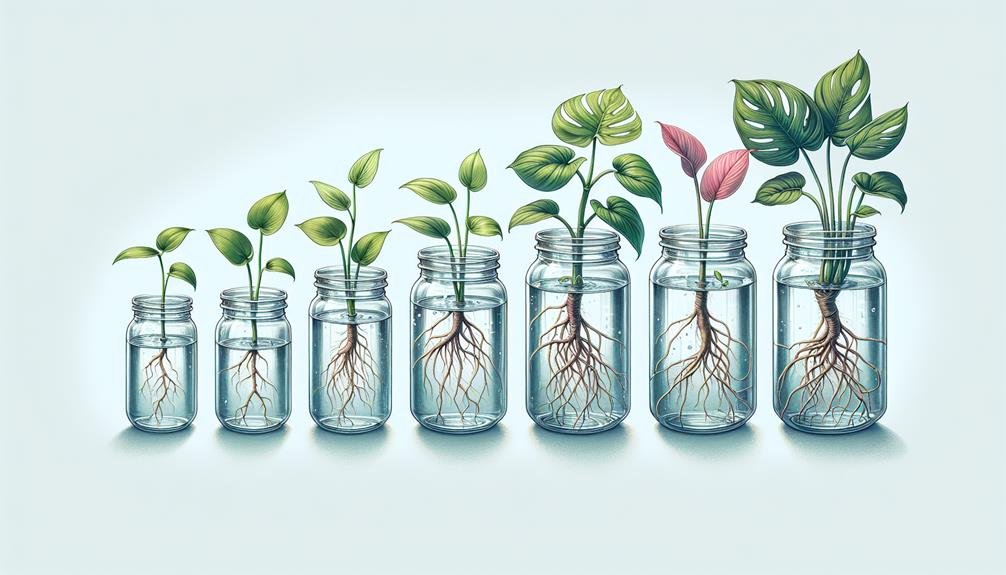
Begin by checking the cuttings regularly to see if any roots have started to form. Look for tiny white root bumps emerging from the nodes or the base of the stems. Keep a journal or log to record the changes you observe over time. This record will help you track the speed of root growth and identify any issues that may arise.
To monitor root growth accurately, gently wiggle the cuttings to see if they're firmly anchored in the water. A slight resistance indicates that roots are developing well. Additionally, observe the color and texture of the roots as they grow. Healthy roots are typically white and firm, while mushy or discolored roots could indicate rot or other problems.
Transferring Rooted Cuttings to Soil
Check the firmness of the rooted cuttings in water to determine if they're ready for transfer to soil for further growth. Once the roots have developed a good network and feel sturdy, it's time to move them to soil.
Prepare a small pot with well-draining soil, creating a hole with your finger or a stick to accommodate the cutting. Gently remove the cutting from the water, being careful not to damage the delicate roots. Place the cutting into the hole in the soil, ensuring that the roots are completely covered. Press the soil around the cutting to provide stability and water the newly potted plant thoroughly.
Find a warm, well-lit spot for the plant to continue growing, but avoid direct sunlight initially as the cutting adjusts to the soil. Monitor the soil moisture regularly, ensuring it stays damp but not waterlogged.
With proper care, your rooted cutting should thrive in its new soil environment and begin to flourish.
Frequently Asked Questions
How Often Should the Water Be Changed When Propagating Plants in Water?
When propagating plants in water, it's crucial to change the water regularly to keep it fresh and free from harmful bacteria. To ensure your plant cuttings thrive, make a habit of changing the water every 2-3 days.
Can Any Type of Plant Cutting Be Propagated in Water, or Are There Specific Types That Work Best?
When propagating plant cuttings in water, not all types will thrive. It's best to choose plants that root well in water, like pothos, philodendron, or spider plants. These species are known to have higher success rates when propagated in water.
Selecting the right plant will increase your chances of successful propagation. Make sure to research the specific plant you want to propagate to ensure it's suitable for water propagation.
Are There Any Additives or Supplements That Can Be Added to the Water to Promote Root Growth?
To promote root growth in water, you can add some additives like rooting hormone or a small amount of liquid fertilizer. These supplements can help stimulate root development and overall plant growth.
Just make sure to follow the instructions on the products you use and monitor the plant's progress regularly.
With proper care and the right additives, you can encourage healthy root growth and successfully propagate your indoor plants in water.
How Long Does It Typically Take for Roots to Develop When Propagating Plants in Water?
When propagating plants in water, roots typically take a few weeks to develop. It's a process that requires patience and care. Make sure to change the water regularly and keep the plant in a well-lit area.
As the roots start to form, you'll notice small white or translucent growths appearing from the stem. Once the roots are established, you can transfer the plant to soil for continued growth.
What Should Be Done if Mold or Algae Start to Grow in the Water Propagation Vessel?
If mold or algae start to grow in the water propagation vessel, you should change the water more frequently to prevent their growth.
Consider using filtered or distilled water to reduce the chances of mold or algae developing.
Ensure the vessel is placed in a well-lit area but not in direct sunlight to discourage these unwanted organisms.
Cleaning the vessel regularly and providing proper air circulation can also help in preventing mold and algae growth.
Conclusion
Overall, multiplying indoor plants in water is a simple and effective way to expand your plant collection. By selecting healthy cuttings, providing the right environment, and monitoring root growth, you can successfully propagate your plants.
Remember to transfer rooted cuttings to soil once they've developed strong roots. With a little patience and care, you can enjoy a thriving indoor garden filled with beautiful plants.